Leave Your Message

Blog

China Top Electric Hot Air Furnace Manufacturers?

China Top Electric Hot Air Furnace Manufacturers?

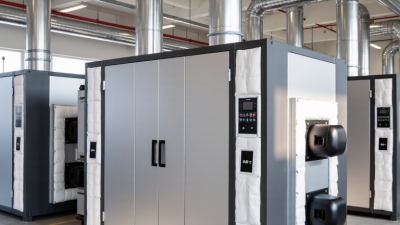
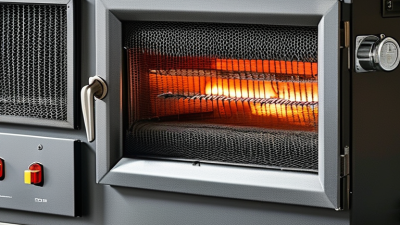
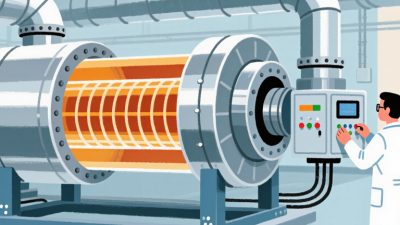
China has become a big player in industrial heating equipment — including things like the Electric Hot Air Furnace. You'll find manufacturers supplying workshops, warehouses, drying rooms, and production lines all over the world. But when people say “top,” they don't always mean the biggest factory or the cheapest quote. A good comparison really starts with how the equipment actually runs. Look at heating capacity, airflow, temperature accuracy, insulation, and how the control system is designed. A suitable Electric Hot Air Furnace should give you steady heat without big temperature swings across the chamber. Ask if the manufacturer can share test reports, wiring diagrams, material specs, and installation guidance. Those things tell you a lot about their practical engineering skills. Take a closer look. Suppliers with real experience tend to explain their equipment clearly. They'll talk about heater materials, fan protection, thermal safety, maintenance access, and replacement parts. They should also know the local electrical requirements and offer reliable technical support after delivery. Factory photos can help, sure, but they're no substitute for a live inspection or a documented performance test. Some manufacturers are great at custom work. Others mostly tweak standard models. That difference matters a lot if your process needs precise drying or continuous operation. If you're an experienced buyer, ask for references from similar applications — not just general product brochures. And be careful with efficiency claims. Real results depend on insulation, loading, ambient temperature, and how people actually operate the equipment. This guide looks at leading Chinese Electric Hot Air Furnace manufacturers through product capability, manufacturing experience, quality control, customization, service, and communication. It won't pretend every supplier is equally suitable. A few details may still be unclear without an independent factory audit, and that's a limitation worth being honest about.
Read more »
Emma By:Emma - October 11, 2026
7 Tips for Choosing the Best Salt Packing Machine

7 Tips for Choosing the Best Salt Packing Machine

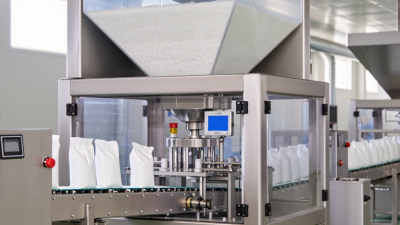
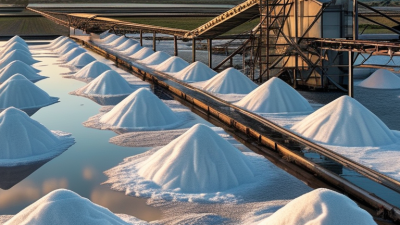
Picking the right Salt Packing Machine? It can affect product quality, labor costs, and honestly, how much customers trust you. Salt seems simple, but those crystals don’t always behave the same when humidity shifts. Fine salt can bridge up inside a hopper. Coarse salt can chew through weak auger parts. So a good machine has to handle both without losing accuracy. Dr. Ioannis S. Arvanitoyannis, a food packaging researcher, put it well: “Packaging is not merely a container; it is part of food preservation.” That’s very true for salt production. The machine should keep moisture, contamination, and bad seals away from the product. Pay close attention to stainless steel construction, dependable weighing sensors, and a dust-control setup that actually works in real life. And ask for test results—not just pretty photos. These seven tips look at the details people often overlook. They cover filling technology, target weight, bag materials, sealing performance, cleaning access, operating speed, and after-sales support. A solid Salt Packing Machine should fit your salt type, package size, and daily output. It should also give you room for future changes. A lot of buyers get too focused on speed. That can be a mistake. If you can, inspect the discharge area yourself. Watch how salt moves through the feeder. See whether operators can clear buildup without hunting for special tools. A machine from a known supplier, like Premier Tech or All-Fill, may come with better documentation and easier service access. But brand reputation alone isn’t enough. Every factory has its own dust levels, space limits, and maintenance habits. These recommendations help, sure, but they’re not perfect. Real production trials are still the most reliable test.
Read more »
Isabella By:Isabella - October 7, 2026
China Best Bromine Extraction Equipment Manufacturer?

China Best Bromine Extraction Equipment Manufacturer?

Picking the best Bromine Extraction equipment from China isn’t just about comparing prices or flipping through catalogs. What really matters is finding a supplier who truly gets the ins and outs of brine chemistry, steam stripping, absorption, corrosion control, and wastewater management. These details can make all the difference in whether your Bromine extraction line runs smoothly or faces issues down the line. Trevor Kletz, a well-known expert in process safety, once said, “If you think safety is expensive, try an accident.” That’s a good reminder when you're choosing equipment—safety shouldn’t be an afterthought. Look into how they design pressure vessels, what their emergency shutdown systems are like, ventilation setups, and whether they use chemical-resistant materials. Also, see if they provide proper operator training. Materials like Hastelloy, titanium, lined steel, or specialized plastics are all choices depending on the process zone, temperature, bromide levels, pH, and pressure—so it pays to get that right. Let’s not forget—performance data is key. A trusted manufacturer based in China should be able to share process flow diagrams, detailed equipment drawings, material certifications, factory testing records, and references from similar projects. Getting an independent inspection can really boost your confidence. Transparent warranty terms and solid support during commissioning are just as important. And, of course, energy consumption shouldn’t be overlooked—an efficient system that recovers well but uses too much steam can end up costing more in the long run. Now, no supplier is perfect—admitting that is just realistic. Sometimes brochures make operating conditions seem easier than they really are. And some buyers want results without fully sharing their feed data, which can make things tricky. So, it’s wise to include pilot testing, work with real-world operating assumptions, and ensure everything meets environmental and safety regs. The best manufacturer isn’t just the biggest or cheapest; it’s the one that explains their limitations honestly, updates designs when necessary, and stands by your Bromine Extraction equipment throughout its life.
Read more »
Isabella By:Isabella - October 1, 2026
2026 Top Electric Hot Air Furnace Manufacturers for Global Buyers

2026 Top Electric Hot Air Furnace Manufacturers for Global Buyers

Buying a commercial Electric Hot Air Furnace isn’t just about comparing the rated output on paper. From a global buyer’s perspective, there’s a lot more to consider—like how consistent the temperature really stays, how the airflow design works, insulation quality, control precision, ease of service access, and whether replacement parts are readily available. Sometimes, a unit that looks fantastic in a brochure might behave totally differently once you set it up in a dusty workshop or a humid production zone, especially if there’s a lot of door opening. Little details actually matter quite a bit. It’s a good idea to ask manufacturers for operational data in conditions that closely mimic your own environment—don’t just rely on the flashy efficiency numbers in their brochures. This guide is meant to help you compare different manufacturers who serve international buyers, and it points out some key questions to ask before you request a quote. Important stuff includes heating capacity, airflow volume, temperature range, control options, installation requirements, warranty details, and technical support. And don’t forget to consider expert insights—like what industrial-heating pro Elena Park suggests: “Pick a furnace based on the process and airflow you actually need, not just the biggest number on the nameplate.” That’s an easy thing to overlook, but it’s pretty crucial. It also reminds us that specs need context—you can’t just go by what’s published without some due diligence. Use these comparisons as a jumping-off point, but always follow up with the supplier to verify real-world performance, setup options, and ongoing support. It’s all about making an informed choice that really matches your needs.
Read more »
Amelia By:Amelia - September 27, 2026
China Top 10 Salt Sieving Machine Manufacturers?

China Top 10 Salt Sieving Machine Manufacturers?

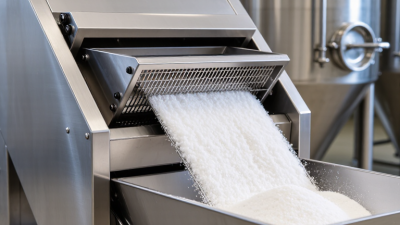
Picking out the top 10 Salt Sieving Machine manufacturers in China isn't just about crunching numbers or browsing slick websites. To really get a sense of who’s reliable, you need to dig deeper—think about how accurate the screening is, the quality of the stainless steel, whether they have proper food-contact certifications, how much they can produce in a given time, and even things like noise levels, how dust is managed, and how easy it is to clean the machine. After all, when salt flows through a vibrating mesh and lands in a hopper, you want to be sure it’s free from any visible contamination—that’s pretty crucial. Dr. Richard G. Holdich, a well-known expert in particle technology, once said, “Particle size is a key quality factor in powder processing.” That’s a good rule of thumb guiding what you should look for. A solid Salt Sieving Machine isn’t just about size; it should reliably separate bigger crystals, keep the product free from avoidable dirt or contamination, and support smooth production runs. Plus, it has to match the salt’s moisture levels, crystal shape, throughput needs, and the mesh size you require. Sometimes, bigger isn’t actually better. Now, keep in mind, this list of “top” isn’t set in stone. Things like visiting factories, talking to previous customers, reviewing technical drawings, and checking how they respond after sales can give you a lot more insight than just looking at rankings. Some manufacturers may boast impressive capacity but give limited info on how they perform over the long haul. That’s worth thinking about. Others might make simpler machines with fewer features, but they’re easier to maintain and less likely to cause headaches during operation. What I’ve put together here is a overview of Chinese manufacturers who really stand out when it comes to practical strength—things like good design, quality fabrication, options for customization, and strong customer service. It’s about choosing equipment that fits your needs, rather than just going for the flashy marketing stuff. Of course, you should still check for certifications, test samples if you can, see if spare parts are easy to get, and make sure everything complies locally. Remember, the machine is just one piece of the puzzle—your overall process is what really counts.
Read more »
Amelia By:Amelia - September 22, 2026
What Is the Best Salt Equipment from China?

What Is the Best Salt Equipment from China?

So, you're wondering what’s the best salt equipment from China? Honestly, it all comes down to a few key things—quality of the salt, how big your operation is, energy costs, and after-sales support. It's not just about grabbing the cheapest machine you find. Did you know that in 2023, the U.S. Geological Survey reported around 270 million metric tons of salt being produced worldwide? China’s still heavy hitters in this game, producing roughly 53 million tons. That really shows just how big this market is. But it also highlights a tricky part: small improvements in efficiency can add up over thousands of hours of operation, so you can't just buy blindly. According to research from Grand View, the main sectors demanding salt are food processing, chemical manufacturing, and water treatment. Each of these needs equipment that performs differently—no one-size-fits-all kind of thing. Dr. Peter Fellows, who knows his stuff with food-processing equipment, says, “Choose your equipment based on the process, not just what’s in the brochure.” That really hits home when you're comparing Chinese suppliers. A supplier worth your time should be able to back up their claims with clear data—stuff like capacity, moisture control, corrosion resistance, power use, and how easy it is to clean. When it comes to refined salt, you might need extra gear—like washing units, hydro-extractors, dryers, screens, and dust control systems. The physical stuff really matters. For instance, wet salt shouldn’t leave sticky deposits around bearings, and tiny crystals shouldn’t get lost in overloaded cyclones. Chinese manufacturers are pretty good at customization and often offer competitive prices. But keep in mind—just because their catalog looks good doesn’t mean their equipment performs well in the field. Be sure to ask for test reports, material certificates, spare parts lists, and references from similar plants. Some companies might not have complete info, and that’s okay—honesty counts. Ultimately, the best salt equipment is the one that keeps performing reliably once installed, not just the one that wins in a tender process.
Read more »
Amelia By:Amelia - September 19, 2026
How to Choose the Best Salt Sieving Machine in 2026?

How to Choose the Best Salt Sieving Machine in 2026?

Picking the right Salt Sieving Machine in 2026 isn’t just about tossing around prices, screen sizes, or motor specs. Seriously, salt processors need to think about things like moisture levels, crystal shapes, how much salt they’re processing, hygiene requirements, and how easy it is to maintain the machine. What works great in a dry, controlled testing room might totally flunk in a humid coastal warehouse—that’s a big deal to keep in mind. Daniel Mercer, a seasoned salt-processing engineer with 18 years of hands-on experience, puts it simply: “A reliable sieve isn’t just about speed—it’s about protecting your product quality first and foremost.” And he’s right. Sure, a super fine mesh might get you high purity, but it can also cut down capacity and cause salt to clog up. When choosing a machine, make sure you really check out the tension of the screen, how well the contact parts fit, the vibration system, and how the discharge is designed. Don’t just glance at it—look closely. Most folks start with food-grade stainless steel, which makes sense. But just because it’s stainless doesn’t automatically mean it’s hygienic enough. You also gotta pay attention to weld quality, how smooth the surface is, how easily you can access it for cleaning, and overall hygiene practices. And, yeah, ask your supplier for throughput data based on salt similar to what you’re working with. Don’t rely solely on lab test results; real-world salt with fine particles, moisture, or anti-caking agents behaves quite differently. A good Salt Sieving Machine should also make operation safer and service predictable. Think about noise levels, if spare parts are easy to get, warranty terms, and whether your staff will need training. Remember, you’re investing for the long haul—not just the initial purchase. I’ve seen people zero in on capacity per hour and forget about cleaning times—that’s an easy trap to fall into and can end up costing more in the long run. Finding the right balance between accuracy, durability, hygiene, energy efficiency, and your actual plant conditions is key. Sure, you might have to compromise on some things, but with careful research beforehand, you’ll clearly see what that is before you even hit "go."
Read more »
Isabella By:Isabella - September 15, 2026
How to Choose the Best Salt Washer for Global Sourcing?

How to Choose the Best Salt Washer for Global Sourcing?

Choosing the right Salt Washer isn’t just about comparing capacity and price — there’s more to consider. When you’re sourcing globally, factors like how far the equipment has to travel, the reliability of the supplier, spare parts availability, and how support is handled during installation all come into play. Something that works really well in coastal areas might not perform so great when used with rock salt, high clay content, or unstable moisture levels in the feed. Salt-processing engineer David A. Brookes wisely points out, “Wash for purity, but design for recovery.” That’s a key idea especially when you're looking at a Counter Flow Salt Washer. Using counter-current water flow can boost washing efficiency while cutting down on freshwater use, but honestly, how well it works depends on the salt size, impurity levels, how long the material stays in the system, and the quality of the water. First, start with the material itself. Don't hesitate to ask your suppliers for test results using your actual salt — real data always beats guesswork. Get clear numbers on washing capacity, how much salt gets lost, the moisture content after discharge, and energy usage. And don’t forget to check the parts that come into contact with the salt — stainless steel, protected bearings, corrosion-resistant components — these can really save you headaches down the line, especially in harsh brine environments. Keep in mind, the cheapest machine upfront might cost you more in the long run. When you're shopping around globally, it makes sense to look into a supplier’s experience, how they handle commissioning, whether they provide proper operator training, and how quickly they respond to technical issues. A supplier that has real installations under their belt is usually a safer bet than just fancy brochure claims. But, honestly, nothing beats testing a machine under real conditions before you commit. I’d recommend comparing at least three different options — and don’t just take their word for it. Question everything: Does that capacity assume wet or dry salt? Are water, labor, and energy costs included? Can the system handle seasonal fluctuations in your operation? In the end, a good Salt Washer should fit your specific raw materials, quality goals, site conditions, and long-term plans. Going for the biggest machine isn’t always the answer — it’s about choosing the one that consistently delivers the desired purity, good recovery rates, and manageable maintenance. That’s how you get the best value and peace of mind in the long run.
Read more »
Emma By:Emma - September 12, 2026
2026 Best PTFE Lined Elbow for Global Buyers?

2026 Best PTFE Lined Elbow for Global Buyers?

Picking out the best PTFE lined elbow for 2026 isn't just about glancing at prices or flipping through catalog photos. Buyers around the world really need solid proof of chemical resistance, precise dimensions, traceability, and reliable support. You might look at two fittings that seem identical at first glance, but their actual performance can be worlds apart. Industry data back this up. According to Grand View Research, the fluoropolymers market is driven by demands from industries like chemical processing, semiconductor manufacturing, and industrial piping. And MarketsandMarkets keeps emphasizing how fluoropolymer growth continues, mainly because it’s essential for corrosion control and maintaining strict process reliability. That's why, when you're looking at an Lined Ptfe Elbow, it's important to remember it often operates in tough environments—exposing acids, solvents, chlorides, or super high-purity fluids that would just eat away at normal metal fittings. So, what really matters? The specs. Buyers should dig into details like the PTFE grade, lining thickness, vacuum suitability, flange drilling patterns, maximum temperature, and weld quality. While referencing standards like ASME, ASTM, and ISO can help compare suppliers, don’t just take their word for it—always ask for supporting documents. Material certificates, inspection reports, pressure test results, even photos of the manufacturing process—they all help paint a clearer picture. Little things count too—like a smooth bore, a clean flange face, and consistent lining around the elbow curve—that can really impact how long the fitting lasts. And the little details are often the difference between something that lasts and something that doesn’t. Experience matters, too. Sometimes, you’ll find suppliers boasting about high pressure ratings but leaving out crucial info about how temperature affects those ratings or what the installation conditions should be. That’s a red flag worth noting. A solid decision for 2026 should be based on a mix of official data, independent inspections, overall cost, and the supplier’s track record in real-world applications. This guide aims to walk buyers through those key points so they can confidently choose a dependable, high-performing product around the globe.
Read more »
Amelia By:Amelia - September 7, 2026
How to Choose the Right Industrial Hot Air Furnace for Your Needs?

How to Choose the Right Industrial Hot Air Furnace for Your Needs?

Picking out the right Industrial Hot Air Furnace isn’t exactly a walk in the park. I mean, it can get pretty overwhelming! I remember chatting with John Smith from HeatTech Solutions—he’s pretty much the go-to guy—and he told me, "Understanding what you really need in terms of heating is key to getting the most out of your equipment." That really stuck with me because it highlights how important it is to pick a furnace that’s a good fit for your operation. Now, these furnaces aren’t just for one thing; their uses are pretty much everywhere. Whether you’re drying stuff, curing, or doing some kind of processing, each situation calls for a bit of thought. One thing I’ve noticed people often overlook, though, is how energy-efficient their choice actually is. A furnace that’s perfect for one task might totally fall flat on another, and that can end up costing you a lot more in the long run with higher energy bills and less productivity. And let’s not forget about quality. Not all brands are created equal. Some companies are more about cutting corners than delivering reliable, safe equipment. Going with a well-known, reputable brand might cost a bit more upfront, but it’s worth it to avoid costly repairs down the line. So, really, taking the time to understand your specific needs and chatting with some experts will steer you in the right direction for sure.
Read more »
Isabella By:Isabella - August 27, 2026
Top Polypropylene Lined Tanks for Global Buyers in 2026?

Top Polypropylene Lined Tanks for Global Buyers in 2026?

The global tank market is really on the move these days, thanks to a mix of innovation and growing environmental worries. If you look at the options out there, the Polypropylene Lined Tank definitely catches your attention — it's known for being tough and resistant to chemicals. According to a report from Grand View Research, the worldwide market for polypropylene is expected to hit around $200 billion by 2026. Needless to say, that kind of growth really pushes up the demand for tanks, especially in industries like chemicals and food processing. Thanks to advances in technology, the design and manufacturing of these polypropylene-lined tanks are getting better and better. Companies like Tuffa Tanks and ATECH are stepping up their game with top-notch solutions that meet stricter safety standards. But of course, it’s a pretty competitive market, with lots of players trying to improve efficiency. Some manufacturers still struggle with quality control, which shows just how important precise engineering is to make sure the tanks perform well. On top of that, new environmental rules are pushing everyone toward greener practices. Using Polypropylene Lined Tanks can really help cut down on leaching and contamination, especially where it matters most. Of course, sourcing sustainable materials isn’t always easy, and companies have to strike a balance between doing the right thing and keeping costs in check. All in all, the future for these tanks is full of potential, but it’s also got its fair share of challenges — meaning innovation and responsibility are more important than ever.
Read more »
Isabella By:Isabella - August 15, 2026