




PTFE Lined Tee Fitting - Corrosive Fluid Solution from Ruitu Automation China Suppliers & Factory
Core Overview
Basic Specifications
| Item | Details |
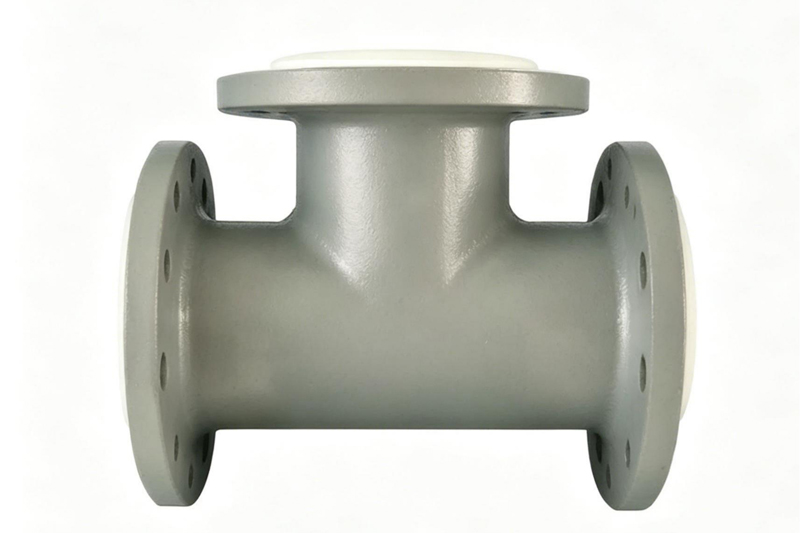
| Product Name | PTFE (Polytetrafluoroethylene) Lined Tee |
| Executive Standards | HG/T 21562, ASME B16.5, GB/T 12224 |
| Nominal Diameter | DN15 – DN300 (1/2" – 12") |
| Pressure Rating | PN10, PN16, PN25, PN40 / Class 150, Class 300 |
| Structure Type | Equal Tee, Reducing Tee |
| Shell Material | Carbon Steel (Q235B, 20#), Stainless Steel (304, 316L) |
| Lining Material | Polytetrafluoroethylene (PTFE) |
| Lining Thickness | 2.0–6.0 mm (Standard: 3.0–4.0 mm) |
| Connection Type | Flanged Connection (RF Raised Face, FM Female Face) |
| Operating Temperature | -20℃ to +180℃ |
| Applicable Medium | Strong acids, strong alkalis, oxidants, organic solvents and other highly corrosive media |
| Factory Inspection | Hydrostatic pressure test, Spark pinhole leakage test (5kV) |
| Main Applications | Chemical, petrochemical, pharmaceutical, metallurgy, environmental protection, fluorine chemical, sewage treatment industries |
Typical Dimensions Table
| Nominal Diameter DN | Outer Diameter (mm) | Center-to-End (mm) | Flange Outer Diameter (mm) | Bolt Circle Diameter (mm) | Lining Thickness (mm) |
| 15 | 21.3 | 40 | 90 | 60 | 3.0 |
| 20 | 26.9 | 50 | 100 | 70 | 3.0 |
| 25 | 33.7 | 65 | 115 | 80 | 3.5 |
| 32 | 42.4 | 80 | 140 | 100 | 3.5 |
| 40 | 48.3 | 100 | 150 | 110 | 3.5 |
| 50 | 60.3 | 125 | 165 | 125 | 4.0 |
| 65 | 76.1 | 160 | 185 | 145 | 4.0 |
| 80 | 88.9 | 190 | 200 | 160 | 4.0 |
| 100 | 114.3 | 250 | 220 | 180 | 4.5 |
| 125 | 139.7 | 310 | 250 | 210 | 4.5 |
| 150 | 168.3 | 380 | 285 | 240 | 5.0 |
| 200 | 219.1 | 500 | 340 | 295 | 5.5 |
| 250 | 273.0 | 630 | 405 | 355 | 6.0 |
| 300 | 323.9 | 750 | 460 | 410 | 6.0 |
Core Advantages
PTFE lining can resist corrosion from most acids, alkalis, and organic solvents, with a corrosion resistance coefficient of up to 0.99.
The friction coefficient of PTFE is only 0.04, which reduces the resistance of fluid transportation and saves energy.
Can work stably in the temperature range of -200℃ to 260℃, suitable for high and low-temperature environments.
The surface of PTFE is non-stick, which prevents medium deposition and facilitates cleaning.
The service life is 3-5 times longer than that of ordinary pipe fittings, reducing maintenance costs.
Frequently Asked Questions
A PTFE Lined Tee features a robust outer shell made of Carbon Steel (Q235B, 20#) or Stainless Steel (304, 316L) seamlessly lined with Polytetrafluoroethylene (PTFE) of 2.0 to 6.0 mm thickness, merging structural strength with superior chemical inertness.
Standard nominal diameters range from DN15 to DN300 (1/2" to 12"). Pressure ratings cover PN10, PN16, PN25, PN40, as well as ASME Class 150 and Class 300 in both Equal Tee and Reducing Tee configurations.
The standard operating temperature range is -20℃ to +180℃ for daily operations, while the PTFE material itself can withstand stable performance from -200℃ up to 260℃.
They are engineered for handling strong acids, strong alkalis, oxidants, salts, and aggressive organic solvents across chemical, petrochemical, pharmaceutical, metallurgy, fluorine chemical, and sewage treatment industries.
Each fitting undergoes stringent factory quality controls, including full hydrostatic pressure testing and a 5kV spark pinhole leakage test to ensure pinhole-free liner integrity.