




0102030405
PTFE-Lined Pneumatic Butterfly Valve from China - Top Suppliers and Factory for Corrosive Media Control
Core Overview
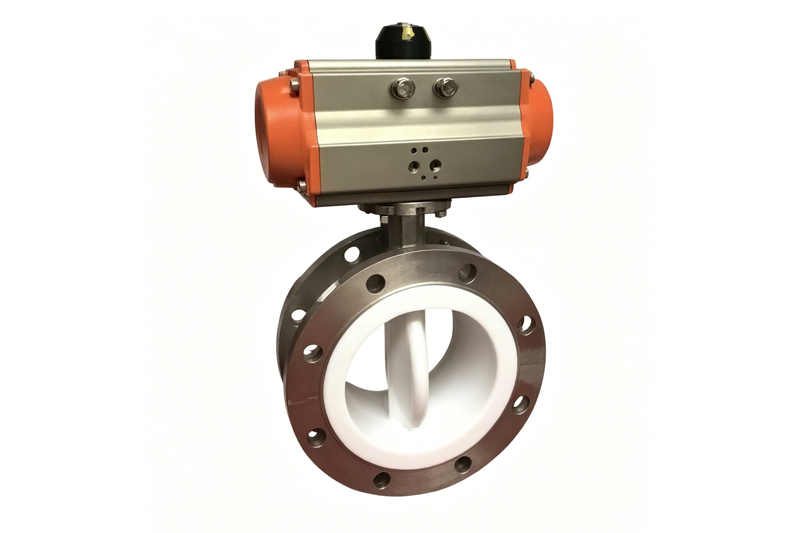
The PTFE-lined pneumatic butterfly valve is an automated flow control solution engineered for rapid and reliable operation in corrosive industrial environments. Combining a robust cast steel or stainless steel body with a seamless virgin Polytetrafluoroethylene (PTFE) lining, it ensures complete isolation of metal components from aggressive media such as strong acids, alkalis, and solvents. Integrated with a high-performance pneumatic actuator, this valve offers fast response times for on-off control or precise modulation. It is widely utilized in chemical processing, pharmaceutical manufacturing, water treatment, and power generation industries where automation, corrosion resistance, and tight shut-off are critical for process safety and efficiency.
Specifications & Dimensions
Technical Parameters
| Parameter | Specification |
|---|---|
| Body Material | WCB Carbon Steel, CF8/CF8M Stainless Steel |
| Lining/Disc Material | Virgin PTFE (Polytetrafluoroethylene) |
| Actuator Type | Double-acting or Spring-return Pneumatic |
| Air Supply Pressure | 0.4 – 0.7 MPa (Standard) |
| Nominal Diameter (DN) | DN50 – DN600 |
| Pressure Rating | PN1.0, PN1.6, PN2.5 MPa; Class 150/300 |
| Temperature Range | -20°C to +180°C |
| Connection Type | Wafer, Lug, Flange (ANSI, DIN, JIS, GB) |
| Protection Class | IP67 / IP68 (with limit switch box) |
| Control Signal | On-Off or 4-20mA (with positioner) |
Dimensional Data Table
| Nominal Size (DN) | Face-to-Face (L) mm | Height (H) mm | Width (W) mm | Flange Diameter (D) mm | Weight (kg) |
|---|---|---|---|---|---|
| DN50 | 43 | 320 | 160 | 165 | 9.5 |
| DN65 | 46 | 350 | 180 | 185 | 12.5 |
| DN80 | 64 | 380 | 200 | 200 | 16.0 |
| DN100 | 52 | 420 | 220 | 220 | 21.0 |
| DN125 | 56 | 460 | 250 | 250 | 28.0 |
| DN150 | 56 | 500 | 280 | 285 | 36.0 |
| DN200 | 60 | 590 | 340 | 340 | 52.0 |
| DN250 | 68 | 670 | 400 | 395 | 70.0 |
| DN300 | 78 | 760 | 460 | 445 | 90.0 |
| DN350 | 78 | 840 | 520 | 505 | 115.0 |
| DN400 | 102 | 920 | 580 | 565 | 145.0 |
Core Advantages
| Advantage | Description |
|---|---|
| Rapid Automated Response | Pneumatic actuation enables fast opening/closing cycles, ideal for emergency shut-off and high-frequency operations. |
| Exceptional Corrosion Resistance | Full PTFE lining protects against harsh chemicals, ensuring long-term durability and preventing metal contamination. |
| Zero Leakage Performance | Precision-machined PTFE seat and disc provide bubble-tight shut-off, meeting strict environmental and safety standards. |
| Low Operating Torque | The low friction coefficient of PTFE reduces actuator load, enhancing reliability and extending service life. |
| Compact & Lightweight | Wafer/lug design saves installation space and simplifies maintenance in complex piping systems compared to globe valves. |
Frequently Asked Questions (FAQ)
What media can PTFE-lined pneumatic butterfly valves handle?
These valves are specifically designed for aggressive and corrosive media, including strong acids (hydrochloric, sulfuric, nitric), caustic alkalis, organic solvents, and high-purity fluids across chemical and pharmaceutical operations.
What is the operating temperature range for PTFE lining?
The standard operating temperature range is -20°C to +180°C, providing continuous thermal stability without degradation or mechanical compromise under standard pressure ratings.
Can the pneumatic actuator support modulating control?
Yes. While basic configurations provide rapid on-off switching, adding an electro-pneumatic positioner (4–20mA input) enables precise proportional flow modulation for complex automation systems.
What is the difference between double-acting and spring-return actuators?
Double-acting actuators require air pressure for both opening and closing cycles. Spring-return (single-acting) actuators use mechanical springs for fail-safe automatic closing or opening upon air supply failure.
Which international flange standards are compatible with this valve?
The valves feature multi-standard mounting options compatible with ANSI/ASME B16.5 (Class 150/300), DIN/EN 1092-1 (PN10/PN16), JIS 10K/16K, and GB standards in wafer, lug, or flanged connection formats.