




0102030405
PTFE-Lined Pneumatic Butterfly Valve - Fast Response, Corrosion-Resistant, China Suppliers & Factory
Core Overview
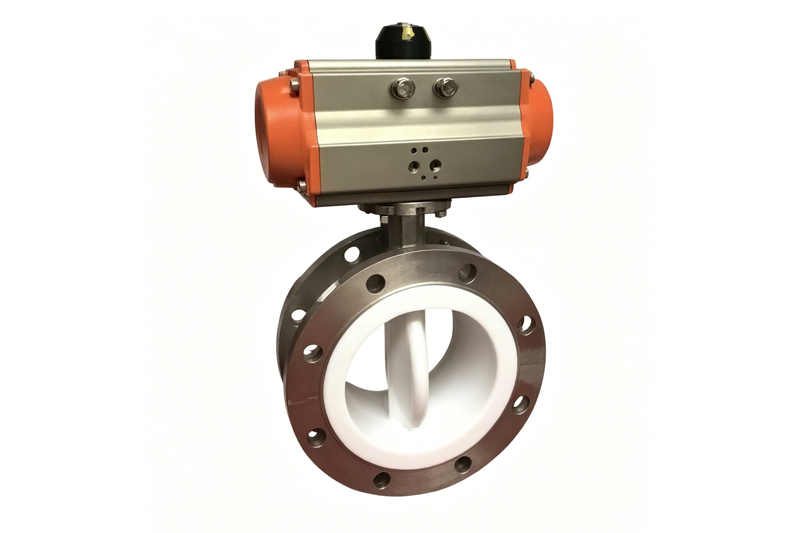
The PTFE-lined pneumatic butterfly valve is an automated flow control solution engineered for rapid and reliable operation in corrosive industrial environments. Combining a robust cast steel or stainless steel body with a seamless virgin Polytetrafluoroethylene (PTFE) lining, it ensures complete isolation of metal components from aggressive media such as strong acids, alkalis, and solvents. Integrated with a high-performance pneumatic actuator, this valve offers fast response times for on-off control or precise modulation. It is widely utilized in chemical processing, pharmaceutical manufacturing, water treatment, and power generation industries where automation, corrosion resistance, and tight shut-off are critical for process safety and efficiency.
Specifications & Dimensions
Technical Parameters
| Parameter | Specification |
|---|---|
| Body Material | WCB Carbon Steel, CF8/CF8M Stainless Steel |
| Lining/Disc Material | Virgin PTFE (Polytetrafluoroethylene) |
| Actuator Type | Double-acting or Spring-return Pneumatic |
| Air Supply Pressure | 0.4 – 0.7 MPa (Standard) |
| Nominal Diameter (DN) | DN50 – DN600 |
| Pressure Rating | PN1.0, PN1.6, PN2.5 MPa; Class 150/300 |
| Temperature Range | -20°C to +180°C |
| Connection Type | Wafer, Lug, Flange (ANSI, DIN, JIS, GB) |
| Protection Class | IP67 / IP68 (with limit switch box) |
| Control Signal | On-Off or 4-20mA (with positioner) |
Dimensional Data Table
| Nominal Size (DN) | Face-to-Face (L) mm | Height (H) mm | Width (W) mm | Flange Diameter (D) mm | Weight (kg) |
|---|---|---|---|---|---|
| DN50 | 43 | 320 | 160 | 165 | 9.5 |
| DN65 | 46 | 350 | 180 | 185 | 12.5 |
| DN80 | 64 | 380 | 200 | 200 | 16.0 |
| DN100 | 52 | 420 | 220 | 220 | 21.0 |
| DN125 | 56 | 460 | 250 | 250 | 28.0 |
| DN150 | 56 | 500 | 280 | 285 | 36.0 |
| DN200 | 60 | 590 | 340 | 340 | 52.0 |
| DN250 | 68 | 670 | 400 | 395 | 70.0 |
| DN300 | 78 | 760 | 460 | 445 | 90.0 |
| DN350 | 78 | 840 | 520 | 505 | 115.0 |
| DN400 | 102 | 920 | 580 | 565 | 145.0 |
Core Advantages
| Advantage | Description |
|---|---|
| Rapid Automated Response | Pneumatic actuation enables fast opening/closing cycles, ideal for emergency shut-off and high-frequency operations. |
| Exceptional Corrosion Resistance | Full PTFE lining protects against harsh chemicals, ensuring long-term durability and preventing metal contamination. |
| Zero Leakage Performance | Precision-machined PTFE seat and disc provide bubble-tight shut-off, meeting strict environmental and safety standards. |
| Low Operating Torque | The low friction coefficient of PTFE reduces actuator load, enhancing reliability and extending service life. |
| Compact & Lightweight | Wafer/lug design saves installation space and simplifies maintenance in complex piping systems compared to globe valves. |
Frequently Asked Questions
Q: What makes PTFE lining suitable for corrosive applications?
PTFE (Polytetrafluoroethylene) has exceptional chemical inertness. The seamless virgin PTFE lining completely isolates the valve's metal body and disc from aggressive media, preventing corrosion and contamination from strong acids, alkalis, and solvents.
Q: What is the operating temperature range for this valve?
The valve is designed to operate safely and reliably within a temperature range of -20°C to +180°C, making it suitable for a wide variety of industrial processes.
Q: Can this pneumatic butterfly valve be used for flow regulation?
Yes. While it is highly efficient for quick on-off control, it can also be configured with a positioner (accepting a 4-20mA control signal) for precise flow modulation.
Q: What air supply pressure is required to operate the pneumatic actuator?
The standard required air supply pressure for the double-acting or spring-return pneumatic actuator ranges from 0.4 to 0.7 MPa.
Q: What connection standards do these valves support?
These valves are available in Wafer, Lug, and Flanged connection types, designed to comply with major international standards including ANSI, DIN, JIS, and GB.