




0102030405
PTFE-Lined Pneumatic Ball Valve from China Suppliers | Ruitu Automation Factory Solutions
Core Overview
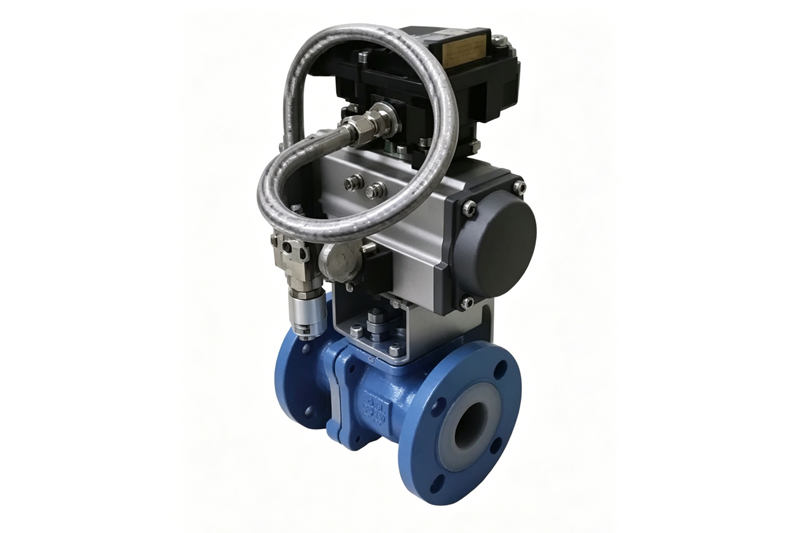
The PTFE-lined pneumatic ball valve is a high-performance automated quarter-turn valve engineered for critical shut-off and control applications in corrosive fluid handling systems. Featuring a robust carbon steel or stainless steel body with a complete virgin PTFE lining and an encapsulated PTFE-coated ball, it ensures full isolation from aggressive chemicals. Integrated with a reliable pneumatic actuator, this valve provides rapid, reliable operation for chemical processing, pharmaceutical, and water treatment industries where automation, safety, and zero leakage are paramount.
Specifications & Dimensions
Technical Parameters
| Parameter | Specification |
|---|---|
| Body Material | WCB Carbon Steel, CF8/CF8M Stainless Steel |
| Lining Material | Virgin PTFE (Polytetrafluoroethylene) |
| Ball/Seat Material | PTFE-Coated Stainless Steel / Reinforced PTFE |
| Actuator Type | Double-acting / Spring-return Pneumatic |
| Nominal Diameter (DN) | DN15 – DN300 |
| Pressure Rating | PN1.6, PN2.5, PN4.0 MPa |
| Temperature Range | -20°C to +180°C |
| Air Supply | 0.4 – 0.8 MPa |
| Connection Type | Flange, Threaded, Welded |
| Leakage Class | ANSI/FCI 70-2 Class VI |
Dimensional Data (Flanged)
| Size (DN) | Face-to-Face (mm) | Height (mm) | Flange Dia. (mm) | Weight (kg) |
|---|---|---|---|---|
| DN15 | 130 | 200 | 95 | 5.5 |
| DN25 | 160 | 240 | 115 | 9.0 |
| DN50 | 230 | 300 | 165 | 20.0 |
| DN80 | 310 | 380 | 200 | 35.0 |
| DN100 | 350 | 420 | 220 | 48.0 |
| DN150 | 480 | 550 | 285 | 80.0 |
| DN200 | 600 | 680 | 340 | 125.0 |
Core Advantages
| Advantage | Description |
|---|---|
| Full-Bore Design | Provides unrestricted flow with minimal pressure drop, ideal for high-flow applications. |
| Rapid Automation | Quarter-turn pneumatic actuation enables fast response for emergency shutdowns and process control. |
| Complete Corrosion Resistance | Full PTFE lining and coated ball withstand aggressive acids, alkalis, and solvents. |
| Bubble-Tight Sealing | Precision PTFE seats ensure zero leakage, meeting strict environmental and safety standards. |
| Low Maintenance | Simple design and non-stick surfaces reduce wear and maintenance requirements. |
Frequently Asked Questions
What are the primary applications for PTFE-lined pneumatic ball valves?
These valves are primarily used in chemical processing, pharmaceuticals, water treatment, and other industries handling highly corrosive fluids, aggressive acids, alkalis, and organic solvents.
Why is a virgin PTFE lining used?
Virgin PTFE offers excellent chemical inertness, high temperature stability, and a low coefficient of friction. This ensures complete isolation of the metal valve body from the corrosive media, preventing chemical attack and contamination.
What is the difference between double-acting and spring-return actuators?
Double-acting actuators use air pressure to both open and close the valve. Spring-return (fail-safe) actuators use air pressure to move the valve in one direction and internal springs to return it to a safe position (either open or closed) if the air supply is lost.
What temperature and pressure ranges can these valves handle?
The valves are designed to operate within a temperature range of -20°C to +180°C and support nominal pressure ratings of PN1.6, PN2.5, and PN4.0 MPa.
What leakage standards do these valves comply with?
These valves comply with the ANSI/FCI 70-2 Class VI standard, ensuring bubble-tight sealing and zero leakage for critical safety and environmental protection.