




0102030405
PTFE-Lined Control Valve from China - Precision Regulation Valve Suppliers & Factory for Chemical and Pharmaceutical Industries
Core Overview
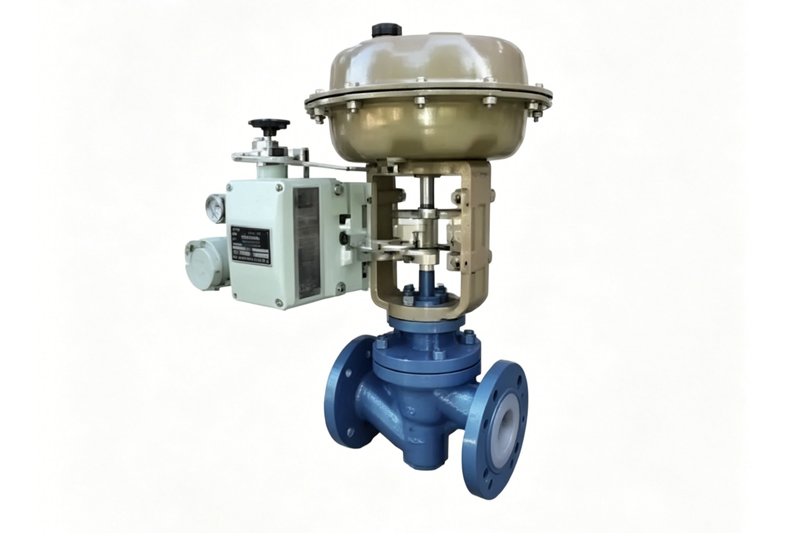
The PTFE-lined control valve is a precision flow regulation device engineered for demanding applications involving highly corrosive and abrasive media. Constructed with a durable cast steel or stainless steel body fully lined with virgin Polytetrafluoroethylene (PTFE), it ensures complete isolation of metal components from aggressive fluids. Equipped with a high-precision actuator (pneumatic or electric) and a customizable trim, this valve provides accurate modulation of flow rate, pressure, and temperature. It is extensively used in chemical processing, pharmaceutical manufacturing, power generation, and wastewater treatment industries where strict corrosion resistance and reliable control are paramount.
Specifications & Dimensions
Technical Parameters
| Parameter | Specification |
|---|---|
| Body Material | WCB Carbon Steel, CF8/CF8M Stainless Steel |
| Lining/Trim Material | Virgin PTFE, PFA (Perfluoroalkoxy) |
| Valve Type | Globe, Angle, Sleeve (Customizable) |
| Actuator Type | Pneumatic Diaphragm, Electric Motor |
| Nominal Diameter (DN) | DN15 – DN300 |
| Pressure Rating | PN1.0, PN1.6, PN2.5, Class 150/300 |
| Temperature Range | -20°C to +180°C (PTFE), up to +200°C (PFA) |
| Leakage Class | ANSI/FCI 70-2 Class IV, V, or VI |
| Flow Characteristic | Linear, Equal Percentage, Quick Opening |
| Connection Type | Flange (ANSI, DIN, JIS, GB), Wafer |
Dimensional Data Table
| Nominal Size (DN) | Face-to-Face Length (L) mm | Height (H) mm | Width (W) mm | Flange Diameter (D) mm | Weight (kg) |
|---|---|---|---|---|---|
| DN15 | 130 | 350 | 120 | 95 | 6.5 |
| DN20 | 150 | 380 | 130 | 105 | 8.0 |
| DN25 | 160 | 410 | 140 | 115 | 10.5 |
| DN32 | 180 | 450 | 160 | 140 | 14.0 |
| DN40 | 200 | 490 | 180 | 150 | 18.5 |
| DN50 | 230 | 540 | 200 | 165 | 24.0 |
| DN65 | 290 | 600 | 240 | 185 | 32.0 |
| DN80 | 310 | 660 | 280 | 200 | 42.0 |
| DN100 | 350 | 750 | 320 | 220 | 58.0 |
| DN150 | 450 | 900 | 400 | 285 | 95.0 |
| DN200 | 550 | 1050 | 480 | 340 | 140.0 |
Core Advantages
| Advantage | Description |
|---|---|
| Superior Corrosion Resistance | Full PTFE lining withstands strong acids, alkalis, and solvents, ensuring long-term integrity in harsh chemical environments. |
| Precise Flow Control | High-resolution actuator and optimized trim design provide accurate modulation for stable process control. |
| Zero Leakage Performance | Tight sealing mechanisms and soft-seat options achieve bubble-tight shut-off, preventing media loss and contamination. |
| Low Friction & Anti-Clogging | Smooth PTFE surface reduces fluid resistance and prevents material buildup, ideal for slurry or viscous media. |
| Versatile Actuation Options | Compatible with various pneumatic and electric actuators, allowing seamless integration into automated control systems (DCS/PLC). |
Frequently Asked Questions
Q:
In which industries are PTFE-lined control valves most commonly applied?
These valves are primarily used in chemical processing, pharmaceutical manufacturing, power generation, and wastewater treatment where aggressive, highly corrosive, or abrasive fluids require precise flow regulation.
Q:
What is the maximum working temperature for these lined valves?
The operating temperature range is -20°C to +180°C for virgin PTFE lining, and it can reach up to +200°C when utilizing PFA (Perfluoroalkoxy) lining.
Q:
What options are available for the valve's actuator?
They can be equipped with either high-precision pneumatic diaphragm actuators or electric motor actuators to integrate smoothly with automated control systems like DCS or PLC.
Q:
How does the PTFE lining prevent clogging in viscous media?
The lining features a very smooth, low-friction surface. This minimizes fluid resistance and prevents sticky, viscous, or slurry-like materials from building up inside the valve body.
Q:
What leakage standard class do these control valves conform to?
They comply with ANSI/FCI 70-2 Class IV, V, or VI leakage ratings, ensuring tight, bubble-tight shut-off performance to prevent media leakage and environmental contamination.