




0102030405
PTFE-Lined Butterfly Valve - Manual Wafer Valve from China Suppliers & Factory for Corrosive Fluids
Core Overview
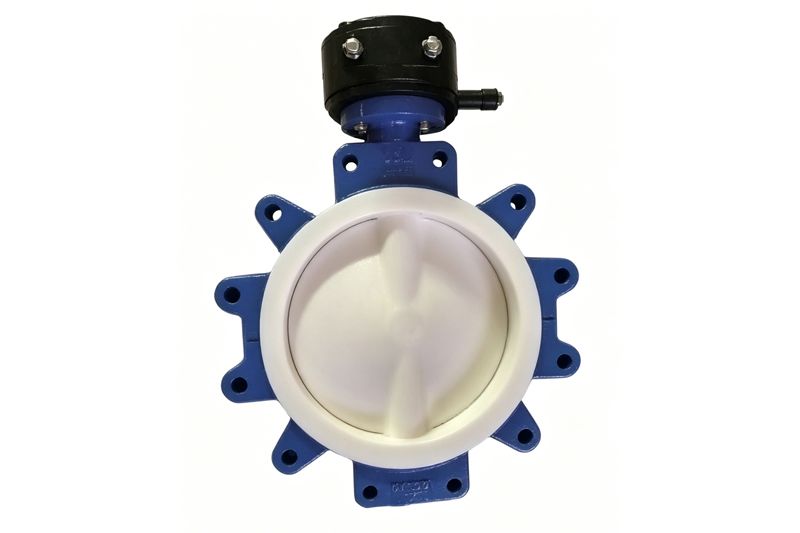
The PTFE-lined butterfly valve is a robust flow control solution engineered for handling highly corrosive and abrasive media in industrial pipelines. Featuring a cast steel or stainless steel body fully lined with virgin Polytetrafluoroethylene (PTFE), it ensures complete isolation of metal components from aggressive fluids. The valve disc, also coated or lined with PTFE, provides excellent sealing and resistance to chemical attack. Ideal for chemical processing, pharmaceuticals, water treatment, and power generation, this valve combines the mechanical strength of metal with the superior chemical inertness of fluoroplastics, offering reliable shut-off and regulation capabilities in harsh environments.
Specifications & Dimensions
Technical Parameters
| Parameter | Specification |
|---|---|
| Body Material | WCB Carbon Steel, CF8/CF8M Stainless Steel |
| Lining/Disc Material | Virgin PTFE (Polytetrafluoroethylene) |
| Seat Material | PTFE, Reinforced PTFE, or EPDM (Optional) |
| Nominal Diameter (DN) | DN50 – DN600 |
| Pressure Rating | PN1.0, PN1.6, PN2.5 MPa; Class 150/300 |
| Temperature Range | -20°C to +180°C |
| Operation Type | Manual (Handle/Gearbox), Pneumatic, Electric |
| Connection Type | Wafer, Lug, Flange (ANSI, DIN, JIS, GB) |
| Leakage Class | ANSI/FCI 70-2 Class VI (Bubble-tight) |
| Flow Characteristic | On-Off or Modulating (with actuator) |
Dimensional Data Table
| Nominal Size (DN) | Face-to-Face Length (L) mm | Height (H) mm | Width (W) mm | Flange Diameter (D) mm | Weight (kg) |
|---|---|---|---|---|---|
| DN50 | 43 | 280 | 160 | 165 | 8.5 |
| DN65 | 46 | 310 | 180 | 185 | 11.0 |
| DN80 | 64 | 340 | 200 | 200 | 14.5 |
| DN100 | 52 | 380 | 220 | 220 | 19.0 |
| DN125 | 56 | 420 | 250 | 250 | 25.0 |
| DN150 | 56 | 460 | 280 | 285 | 32.0 |
| DN200 | 60 | 550 | 340 | 340 | 48.0 |
| DN250 | 68 | 630 | 400 | 395 | 65.0 |
| DN300 | 78 | 720 | 460 | 445 | 85.0 |
| DN350 | 78 | 800 | 520 | 505 | 110.0 |
| DN400 | 102 | 880 | 580 | 565 | 140.0 |
| DN500 | 127 | 1050 | 700 | 670 | 210.0 |
| DN600 | 154 | 1200 | 800 | 780 | 300.0 |
Core Advantages
Exceptional Corrosion Resistance
Full PTFE lining protects against strong acids, alkalis, and solvents, ensuring long-term durability in harsh chemical environments.
Zero Leakage Performance
Precision-machined PTFE seat and disc provide bubble-tight shut-off, preventing media loss and environmental contamination.
Low Operating Torque
The low friction coefficient of PTFE reduces wear on the stem and actuator, enabling smooth operation and extended service life.
Versatile Installation
Compact wafer or lug design fits between standard flanges, saving space and simplifying maintenance in complex piping networks.
High Temperature Stability
Maintains structural integrity and sealing performance across a wide temperature range (-20°C to +180°C), suitable for steam and hot fluid applications.
Frequently Asked Questions (FAQ)
Q1
What aggressive media can a PTFE-lined butterfly valve handle?
Due to the chemical inertness of virgin PTFE, these valves can handle almost all strong acids (including nitric, sulfuric, and hydrochloric acids), strong alkalis, toxic chemicals, ultra-pure media, and corrosive industrial solvents.
Q2
How does the valve ensure bubble-tight zero leakage?
The valve disc edge and seat lining are precision-machined with continuous interference contact, conforming to ANSI/FCI 70-2 Class VI standards to guarantee bi-directional bubble-tight shut-off.
Q3
What is the working temperature limitation of PTFE-lined valves?
The standard operating temperature range is -20°C to +180°C (-4°F to +356°F). Exceeding this range may degrade the liner elasticity and compromise the sealing effectiveness.
Q4
Can these butterfly valves be used for both throttling and on-off service?
Yes. While primarily used for reliable on-off isolation, they can also perform flow modulation when equipped with positioners and pneumatic or electric actuators.
Q5
What are the main connection types available?
They are commonly manufactured in Wafer, Lug, and Double-Flanged configurations compatible with major international flange standards including ANSI Class 150/300, DIN PN10/16, JIS, and GB.