




0102030405
PTFE-Lined Butterfly Valve from China - Reliable Suppliers & Factory for Corrosive Fluid Control
Core Overview
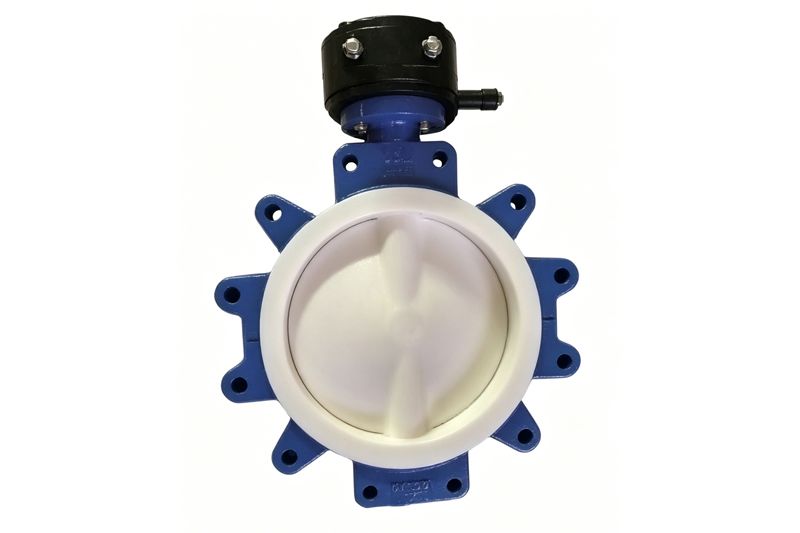
The PTFE-lined butterfly valve is a robust flow control solution engineered for handling highly corrosive and abrasive media in industrial pipelines. Featuring a cast steel or stainless steel body fully lined with virgin Polytetrafluoroethylene (PTFE), it ensures complete isolation of metal components from aggressive fluids. The valve disc, also coated or lined with PTFE, provides excellent sealing and resistance to chemical attack. Ideal for chemical processing, pharmaceuticals, water treatment, and power generation, this valve combines the mechanical strength of metal with the superior chemical inertness of fluoroplastics, offering reliable shut-off and regulation capabilities in harsh environments.
Specifications & Dimensions
Technical Parameters
| Parameter | Specification |
|---|---|
| Body Material | WCB Carbon Steel, CF8/CF8M Stainless Steel |
| Lining/Disc Material | Virgin PTFE (Polytetrafluoroethylene) |
| Seat Material | PTFE, Reinforced PTFE, or EPDM (Optional) |
| Nominal Diameter (DN) | DN50 – DN600 |
| Pressure Rating | PN1.0, PN1.6, PN2.5 MPa; Class 150/300 |
| Temperature Range | -20°C to +180°C |
| Operation Type | Manual (Handle/Gearbox), Pneumatic, Electric |
| Connection Type | Wafer, Lug, Flange (ANSI, DIN, JIS, GB) |
| Leakage Class | ANSI/FCI 70-2 Class VI (Bubble-tight) |
| Flow Characteristic | On-Off or Modulating (with actuator) |
Dimensional Data Table
| Nominal Size (DN) | Face-to-Face Length (L) mm | Height (H) mm | Width (W) mm | Flange Diameter (D) mm | Weight (kg) |
|---|---|---|---|---|---|
| DN50 | 43 | 280 | 160 | 165 | 8.5 |
| DN65 | 46 | 310 | 180 | 185 | 11.0 |
| DN80 | 64 | 340 | 200 | 200 | 14.5 |
| DN100 | 52 | 380 | 220 | 220 | 19.0 |
| DN125 | 56 | 420 | 250 | 250 | 25.0 |
| DN150 | 56 | 460 | 280 | 285 | 32.0 |
| DN200 | 60 | 550 | 340 | 340 | 48.0 |
| DN250 | 68 | 630 | 400 | 395 | 65.0 |
| DN300 | 78 | 720 | 460 | 445 | 85.0 |
| DN350 | 78 | 800 | 520 | 505 | 110.0 |
| DN400 | 102 | 880 | 580 | 565 | 140.0 |
| DN500 | 127 | 1050 | 700 | 670 | 210.0 |
| DN600 | 154 | 1200 | 800 | 780 | 300.0 |
Core Advantages
| Advantage | Description |
|---|---|
| Exceptional Corrosion Resistance | Full PTFE lining protects against strong acids, alkalis, and solvents, ensuring long-term durability in harsh chemical environments. |
| Zero Leakage Performance | Precision-machined PTFE seat and disc provide bubble-tight shut-off, preventing media loss and environmental contamination. |
| Low Operating Torque | The low friction coefficient of PTFE reduces wear on the stem and actuator, enabling smooth operation and extended service life. |
| Versatile Installation | Compact wafer or lug design fits between standard flanges, saving space and simplifying maintenance in complex piping networks. |
| High Temperature Stability | Maintains structural integrity and sealing performance across a wide temperature range (-20°C to +180°C), suitable for steam and hot fluid applications. |
Frequently Asked Questions
1. What are the primary applications for PTFE-lined butterfly valves?
These valves are specifically designed for handling highly corrosive, toxic, and aggressive media. They are widely used in chemical processing, pharmaceuticals, water treatment, power plants, and food processing industries.
2. What temperature range can a PTFE-lined butterfly valve withstand?
The valve operates reliably within a temperature range of -20°C to +180°C, making it suitable for both cold and elevated temperature fluid processes.
3. How does the valve achieve zero leakage?
It features a precision-machined PTFE seat and disc combination that ensures a tight sealing contact, meeting the ANSI/FCI 70-2 Class VI bubble-tight leakage standard.
4. What connection and operation options are available?
We offer Wafer, Lug, and Flanged connection designs complying with ANSI, DIN, JIS, and GB standards. Operation options include manual levers, gearboxes, pneumatic actuators, and electric actuators.
5. Why is PTFE chosen as the lining material?
PTFE (Polytetrafluoroethylene) offers near-total chemical inertness, a very low coefficient of friction (which minimizes operating torque), and excellent thermal stability, ensuring the valve's metal body is fully protected from chemical attacks.