




0102030405
PTFE-Lined Ball Valve from China - Reliable Suppliers & Factory for Corrosive Fluid Control
Core Overview
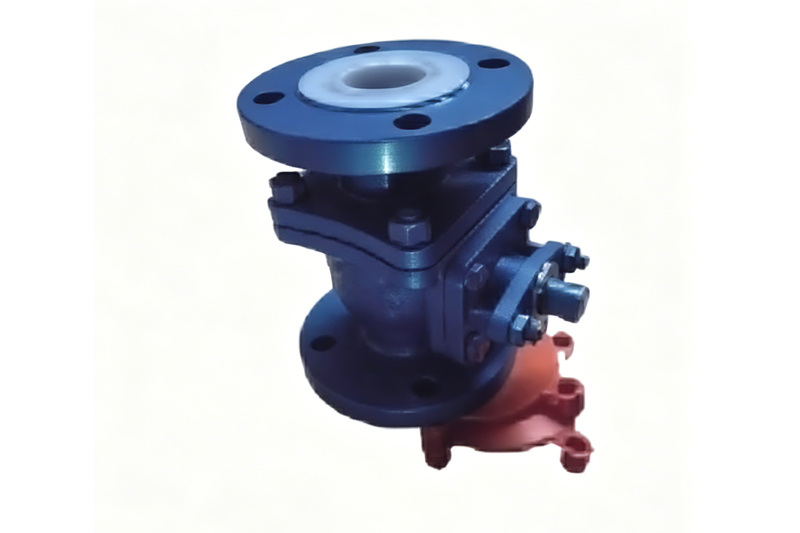
The PTFE-lined ball valve is a high-performance quarter-turn shut-off valve designed for handling highly corrosive and abrasive media in industrial pipelines. Constructed with a robust cast steel or stainless steel body fully lined with virgin Polytetrafluoroethylene (PTFE), it ensures complete isolation of metal components from aggressive fluids such as strong acids, alkalis, and organic solvents. The valve features a PTFE-encapsulated ball and reinforced PTFE seats, providing excellent sealing and low operating torque. It is widely used in chemical processing, pharmaceutical manufacturing, water treatment, and power generation industries where reliability, corrosion resistance, and zero leakage are critical.
Specifications & Dimensions
Technical Parameters
| Parameter | Specification |
|---|---|
| Body Material | WCB Carbon Steel, CF8/CF8M Stainless Steel |
| Lining/Ball Material | Virgin PTFE (Polytetrafluoroethylene) |
| Seat Material | Reinforced PTFE, PFA (Optional) |
| Nominal Diameter (DN) | DN15 – DN300 |
| Pressure Rating | PN1.6, PN2.5, PN4.0 MPa; Class 150/300 |
| Temperature Range | -20°C to +180°C |
| Operation Type | Manual (Handle/Gearbox), Pneumatic, Electric |
| Connection Type | Flange (ANSI, DIN, JIS, GB), Threaded (NPT/BSP) |
| Leakage Class | ANSI/FCI 70-2 Class VI (Bubble-tight) |
| Flow Characteristic | On-Off (Full Bore or Reduced Bore) |
Dimensional Data Table (Flanged End)
| Nominal Size (DN) | Face-to-Face (L) mm | Height (H) mm | Width (W) mm | Flange Diameter (D) mm | Weight (kg) |
|---|---|---|---|---|---|
| DN15 | 130 | 200 | 120 | 95 | 5.5 |
| DN20 | 150 | 220 | 130 | 105 | 7.0 |
| DN25 | 160 | 240 | 140 | 115 | 9.0 |
| DN32 | 180 | 260 | 160 | 140 | 12.0 |
| DN40 | 200 | 280 | 180 | 150 | 15.0 |
| DN50 | 230 | 300 | 200 | 165 | 20.0 |
| DN65 | 290 | 350 | 240 | 185 | 28.0 |
| DN80 | 310 | 380 | 280 | 200 | 35.0 |
| DN100 | 350 | 420 | 320 | 220 | 48.0 |
| DN150 | 480 | 550 | 400 | 285 | 80.0 |
| DN200 | 600 | 680 | 480 | 340 | 125.0 |
| DN250 | 730 | 800 | 560 | 395 | 160.0 |
| DN300 | 850 | 950 | 640 | 445 | 210.0 |
Core Advantages
Superior Corrosion Resistance
Full PTFE lining protects against virtually all industrial chemicals, ensuring long-term durability in harsh environments.
Zero Leakage Performance
Precision-machined PTFE seats and encapsulated ball provide bubble-tight shut-off, preventing media loss and contamination.
Low Operating Torque
The low friction coefficient of PTFE reduces wear on the stem and actuator, enabling smooth operation and extended service life.
Full-Bore Flow Design
Minimizes pressure drop and prevents material buildup, ideal for slurries and viscous fluids.
Versatile Actuation Options
Compatible with manual, pneumatic, and electric actuators, allowing seamless integration into automated control systems.
Frequently Asked Questions (FAQ)
Q
What types of media are PTFE-lined ball valves best suited for?
PTFE-lined ball valves are specifically engineered to handle extremely corrosive fluids, including concentrated acids (hydrochloric, sulfuric, nitric), strong alkalis, organic solvents, and toxic or high-purity media where metallic valves would degrade rapidly.
Q
What is the maximum operating temperature for these valves?
The standard operating temperature range for virgin PTFE-lined ball valves is -20°C to +180°C. For continuous operation near the upper temperature threshold, it is recommended to review operating pressure levels in accordance with pressure-temperature rating charts.
Q
How is bubble-tight shut-off (Class VI) achieved?
The combination of precision-machined PTFE seats and a fully encapsulated, spherically ground ball creates a resilient, tight seal capable of meeting ANSI/FCI 70-2 Class VI zero-leakage standards under rated pressure conditions.
Q
Can pneumatic or electric actuators be retrofitted in the field?
Yes. Most PTFE-lined ball valves are manufactured with standard ISO 5211 top mounting flanges, enabling direct and easy mounting of manual gearboxes, pneumatic double-acting/spring-return actuators, or smart electric actuators.
Q
What is the difference between full bore and reduced bore in lined ball valves?
A full-bore design has an internal diameter matching the pipeline, minimizing flow resistance and pressure drop, which is ideal for viscous liquids and slurries. A reduced-bore design has a slightly smaller internal flow path, offering a lighter weight and lower torque profile for clear liquid service.
Q
What flange standards are available for installation?
The valves are compatible with major global piping standards, including ASME/ANSI B16.5 (Class 150 & 300), EN 1092-1/DIN (PN16, PN25, PN40), as well as JIS and GB flange drilling specifications.