




0102030405
Double Stage Piston Pusher Centrifuge - High-Efficiency Solid-Liquid Separator from China Suppliers & Factory
Product Overview
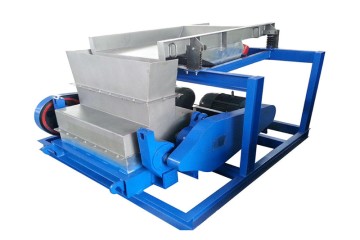
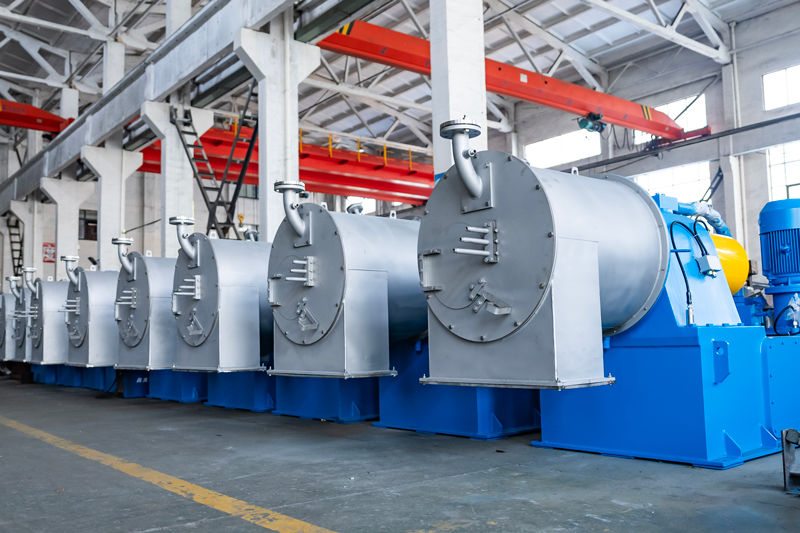
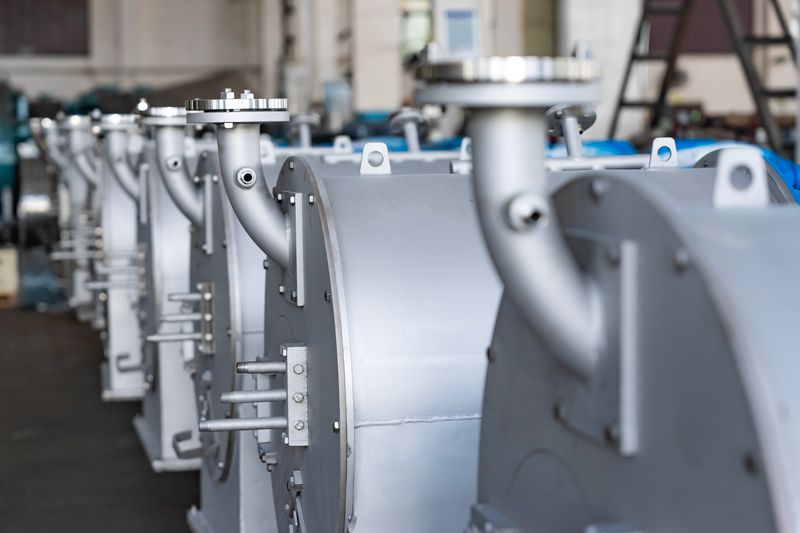
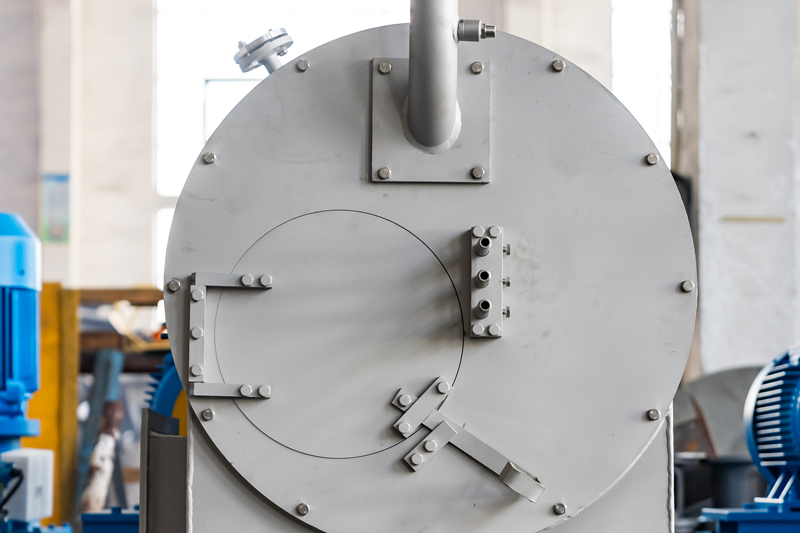
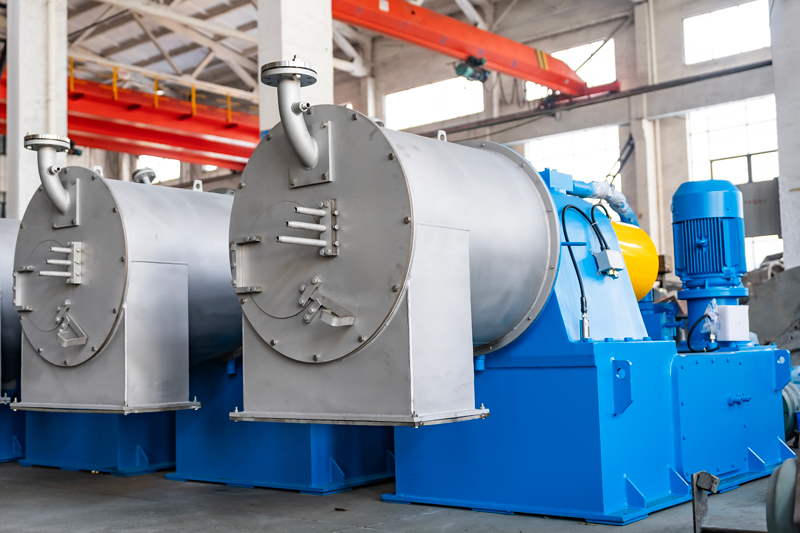
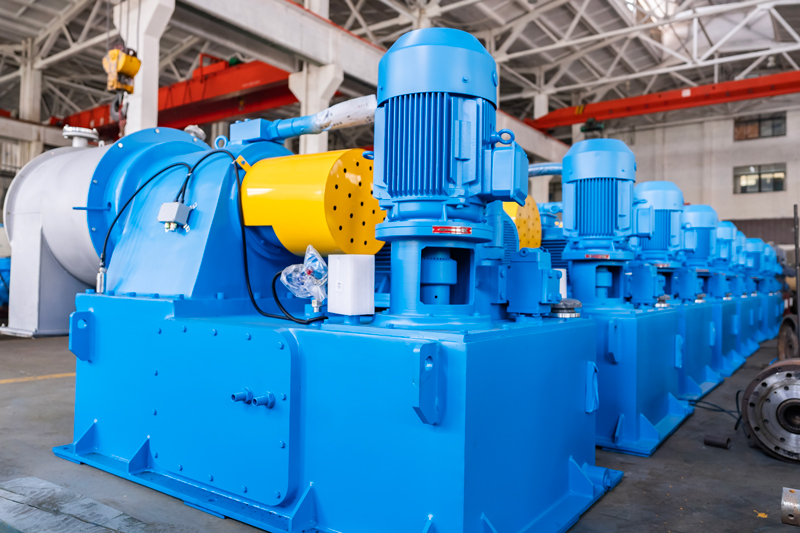
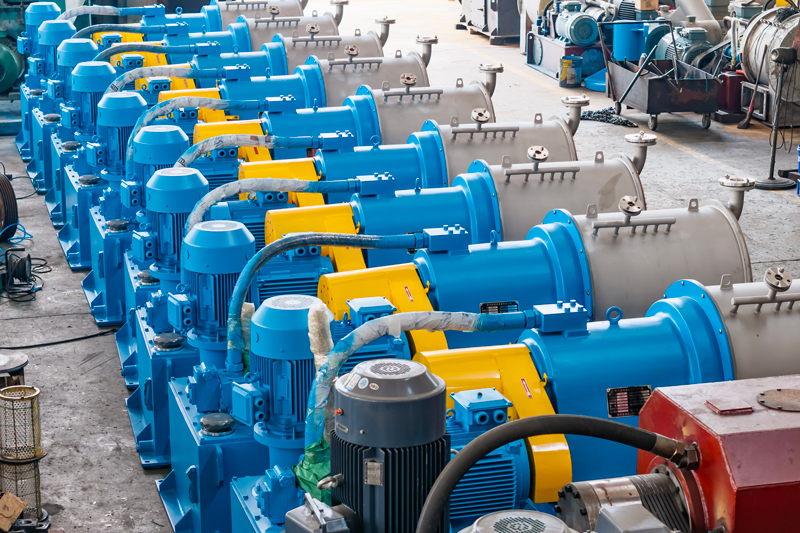
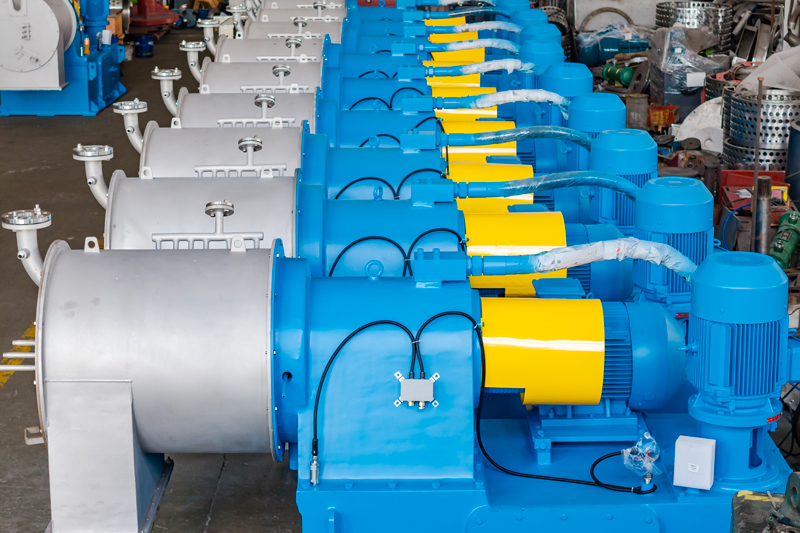
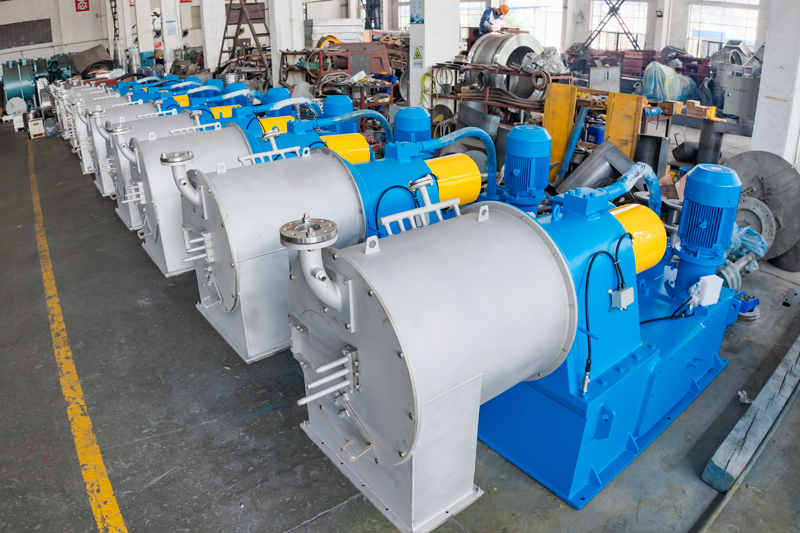
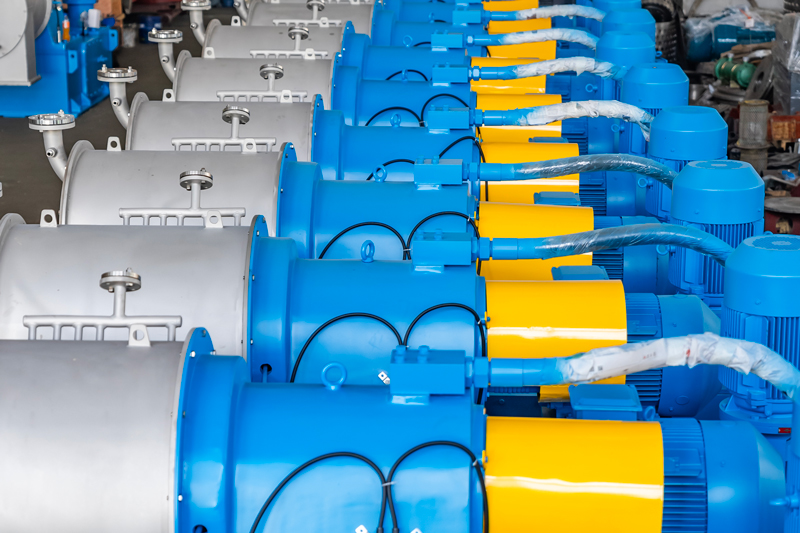
The Double stage piston pusher centrifuge is a horizontal continuous filtering centrifuge with a coaxial two-stage bowl structure. It performs fully automatic feeding, uniform distribution, primary separation, secondary deep dewatering, optional cake washing and continuous discharging at full rotating speed without shutdown. Wetted components can be customized with 304/316L stainless steel, duplex steel or titanium alloy to adapt to corrosive working conditions. As core separation equipment for large-scale industrial production, it is widely used for crystalline and granular solid-liquid separation in salt chemical, fertilizer, food, pharmaceutical and mining industries.
Suitable Materials & Application Scope
| Industry | Typical Materials | Feed Adaptation Requirements |
|---|---|---|
| Salt Chemical | Sodium chloride, ammonium chloride, ammonium sulfate, calcium chloride, magnesium chloride | Solid particle size ≥0.08mm, feed suspension concentration 30%-60% |
| Fertilizer | Urea, potassium sulfate, compound fertilizer crystals | Stable solid content, free of large hard impurities and winding fibers |
| Chemical | Organic salts, inorganic salts, chemical intermediate crystals | Custom anti-corrosion materials available for aggressive media |
| Food & Pharmaceutical | Citric acid, food additives, API crystals | Sanitary-grade 316L configuration for clean production standards |
| Mining & Environment | Mine tailings, industrial by-product salt, sludge dewatering | Uniform solid particles, moderate viscosity, no long fiber impurities |
Working Principle
Driven by the main motor, the inner and outer bowls rotate coaxially at high speed to generate a stable centrifugal force field inside the equipment. The hydraulic system drives the inner bowl to reciprocate axially to realize continuous material conveying and two-stage gradient separation. The feed suspension is continuously delivered into the inner bowl for initial solid-liquid separation, then pushed into the outer bowl for secondary deep dewatering. The final dewatered filter cake is discharged continuously, while mother liquor and washing liquid can be collected separately through independent chambers.
Refined Working Procedures
| Step | Procedure Name | Detailed Operation | Core Function |
|---|---|---|---|
| 1 | Uniform Distribution | Suspension is fed to the distributor plate and evenly spread on the inner bowl screen wall | Ensures uniform filter cake thickness and stable separation performance |
| 2 | Primary Separation | Liquid passes through the screen and bowl holes to the mother liquor chamber; solids are intercepted to form a filter cake layer | Removes most free moisture and completes initial solid-liquid separation |
| 3 | Cake Conveying | Hydraulic piston drives the inner bowl to reciprocate, pushing the cake gently to the outer bowl | Delivers material continuously with extremely low crystal breakage rate |
| 4 | Secondary Dewatering | Material is automatically loosened in the outer bowl for secondary centrifugal dewatering | Further reduces cake moisture content and improves final drying effect |
| 5 | Optional Cake Washing | Washing liquid sprays onto the cake to displace residual mother liquor, discharged separately | Improves product purity and enables classified filtrate recovery |
| 6 | Continuous Discharging | Cake is pushed toward the discharge end and discharged through the scraper trough uninterruptedly | Realizes non-stop production with high processing efficiency |
Core Advantages
| Advantage Category | Technical Feature | Customer Value |
|---|---|---|
| High Continuous Productivity | Full-speed continuous operation without shutdown for discharging | Max capacity up to 50T/H, reduces labor cost and improves production efficiency |
| Superior Separation Effect | Two-stage gradient separation with automatic cake loosening | Lower cake moisture, higher solid recovery rate, less solid loss in mother liquor |
| Low Crystal Damage | Gentle reciprocating piston pushing, no high-speed scraping impact | Maintains high crystal integrity, suitable for products with strict particle size requirements |
| Stable & Low Energy Consumption | High-precision dynamic balance, rigid base, stable power output | Low vibration and noise, no peak power load, reduces long-term operation cost |
| Wide Material Adaptability | Adjustable speed, pusher frequency and screen gap, multiple material options | Adapts to various materials with different particle sizes and corrosion properties |
| Easy Automation Control | Compatible with speed, temperature and pressure monitoring, supports DCS access | Reduces manual intervention, ensures stable and safe long-term operation |
Full Technical Specifications
| Parameter | HR300 | HR400 | HR420-N | HR500-N | HR530-N | HR630-N | HR800-N | HR1000-N |
|---|---|---|---|---|---|---|---|---|
| Bowl ID (inner/outer, mm) | 290/360 | 337/400 | 357/420 | 438/500 | 468/530 | 560/630 | 720/800 | 920/1000 |
| Filtration Length (inner/outer, mm) | 180/180 | 160/160 | 160/160 | 180/180 | 180/180 | 240/240 | 300/300 | 360/360 |
| Bowl Speed (r/min) | 1500~2500 | 1500~2500 | 1500~2500 | 1200~2000 | 1200~2000 | 1000~1900 | 800~1500 | 650~1250 |
| Separation Factor | 503~1400 | 503~1400 | 503~1400 | 402~1120 | 402~1120 | 350~1274 | 286~1145 | 236~875 |
| Pusher Stroke (mm) | 50 | 40 | 40 | 50 | 50 | 50 | 50 | 50 |
| Pusher Frequency (times/min) | 30~90 | 30~90 | 30~180 | 30~80 | 30~80 | 40~80 | 20~108 | 20~70 |
| Main Motor Power (kW) | 11 | 7.5~22 | 7.5~22 | 30~45 | 30~45 | 37~75 | 45~110 | 75~90 |
| Oil Pump Motor Power (kW) | 5.5 | 4~7.5 | 4~7.5 | 15~22 | 15~30 | 15~30 | 22~45 | 45 |
| Capacity (T/H) | 2~4 | 2~6 | 2~9 | 10~20 | 10~24 | 15~40 | 20~50 | 18~50 |
| Machine Weight (kg) | 2200 | 2480 | 2600 | 4200 | 4500 | 4860 | 6100 | 12000 |
| Overall Dimension (L×W×H, mm) | 2350×1340×1110 | 2460×1290×1030 | 2460×1290×1030 | 3365×1330×1628 | 3389×1330×1628 | 3130×1840×1265 | 3130×1840×1265 | 3990×2000×1530 |
Frequently Asked Questions
What is a double stage piston pusher centrifuge?
It is a horizontal, continuous filtering centrifuge featuring a coaxial two-stage bowl structure. It allows for continuous feeding, separation, washing, and discharging at full rotating speed without requiring shutdowns.
What are the feed requirements for materials processed by this centrifuge?
The centrifuge is best suited for suspensions with a solid particle size of ≥0.08mm and a feed concentration ranging from 30% to 60%. The feed should also be free of large hard impurities and winding fibers.
How does a two-stage bowl improve the separation process?
The two-stage design provides gradient separation. The inner bowl handles the primary solid-liquid separation, and as the material is pushed to the outer bowl, it is automatically loosened for a secondary deep dewatering, resulting in lower cake moisture.
Can this equipment handle corrosive chemicals?
Yes. The wetted components can be customized with corrosion-resistant materials such as 304 or 316L stainless steel, duplex steel, or titanium alloy depending on your specific chemical environment.
What is the advantage of the pusher design over scraper centrifuges?
The reciprocating piston pushes the filter cake gently without the high-speed mechanical impact of a scraper. This maintains high crystal integrity and significantly minimizes crystal breakage.
What capacity range does the HR series cover?
Depending on the model size, capacity ranges from 2–4 T/H for smaller models like the HR300, up to 20–50 T/H for large-scale industrial models like the HR800-N and HR1000-N.