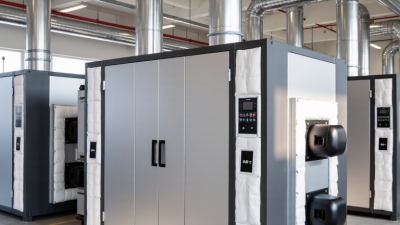
China has become a big player in industrial heating equipment — including things like the Electric Hot Air Furnace. You'll find manufacturers supplying workshops, warehouses, drying rooms, and production lines all over the world. But when people say “top,” they don't always mean the biggest factory or the cheapest quote.
A good comparison really starts with how the equipment actually runs. Look at heating capacity, airflow, temperature accuracy, insulation, and how the control system is designed. A suitable Electric Hot Air Furnace should give you steady heat without big temperature swings across the chamber. Ask if the manufacturer can share test reports, wiring diagrams, material specs, and installation guidance. Those things tell you a lot about their practical engineering skills.
Take a closer look.
Suppliers with real experience tend to explain their equipment clearly. They'll talk about heater materials, fan protection, thermal safety, maintenance access, and replacement parts. They should also know the local electrical requirements and offer reliable technical support after delivery. Factory photos can help, sure, but they're no substitute for a live inspection or a documented performance test.
Some manufacturers are great at custom work. Others mostly tweak standard models. That difference matters a lot if your process needs precise drying or continuous operation. If you're an experienced buyer, ask for references from similar applications — not just general product brochures. And be careful with efficiency claims. Real results depend on insulation, loading, ambient temperature, and how people actually operate the equipment.
This guide looks at leading Chinese Electric Hot Air Furnace manufacturers through product capability, manufacturing experience, quality control, customization, service, and communication. It won't pretend every supplier is equally suitable. A few details may still be unclear without an independent factory audit, and that's a limitation worth being honest about.
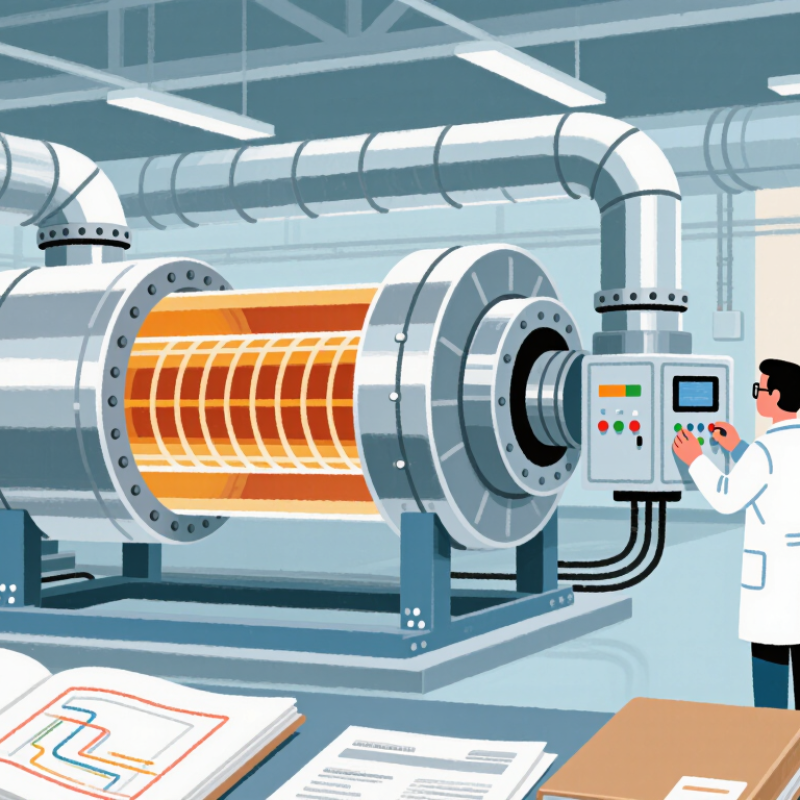
An electric hot air furnace heats air with electrical resistance elements, then moves it through a blower and duct system. The process is direct and easy to control. Cold air enters the chamber, passes across heated coils, and leaves through vents as a steady warm stream. Unlike a boiler, it does not require water circulation. Unlike a heat pump, it does not transfer heat from outside.
The U.S. Department of Energy notes that electric resistance heaters convert nearly 100% of incoming electricity into heat at the point of use. That figure sounds excellent. However, power generation and transmission losses occur before electricity reaches the furnace. The International Energy Agency reports that buildings consumed about 30% of global final energy in 2022. Heating efficiency still matters, even when the equipment appears simple.
In factories, workshops, and large halls, furnace performance depends on airflow, insulation, filter condition, and control accuracy. A blocked filter can reduce air volume and create uneven temperatures near workers or machinery. Proper sizing is also critical. An oversized unit may cycle too often, while an undersized unit may run continuously. Buyers should examine heating capacity, operating temperature, electrical load, safety controls, and maintenance access. Manufacturer claims need verification through test certificates and field records. A perfect efficiency number can mislead. Real performance often depends on installation details.
An electric hot air furnace converts electrical energy into controlled heat. Inside the unit, resistance elements glow beneath protective insulation. A blower draws room air across these elements. The heated air then moves through a chamber and exits through a duct or nozzle. This process produces clean heat without combustion gases, ash, or fuel storage. The Hot Air Blast Furnace term can describe systems using forceful heated airflow, although technical meanings may vary by application.
In practical operation, temperature sensors measure air near the outlet. A controller adjusts power in stages or through electronic modulation. If airflow drops, an overheat switch should interrupt heating. This protection matters because a blocked filter can make the outlet dangerously hot. Good insulation keeps the outer casing cooler and reduces energy loss. During equipment checks, technicians should inspect wiring, fan bearings, terminals, and sensor calibration. Small faults often appear as unusual noise or slow airflow.
Performance depends on more than rated power. A workshop with open doors needs greater airflow than a sealed drying room. Duct length, pressure resistance, humidity, and target temperature all affect results. I have found that oversized heaters cycle frequently, which may create uneven temperatures. Smaller units may run continuously and still struggle. The honest answer is not always obvious. Careful measurements should guide the selection, but site conditions can change after installation. Regular cleaning remains necessary, even with a simple electric design.
China’s leading electric hot air furnace manufacturers increasingly compete on measurable performance, not appearance. The National Energy Administration reported China’s electricity consumption reached 9.85 trillion kWh in 2024, rising 6.8% year on year. This growing load makes efficiency and control accuracy important purchasing criteria.
Experienced manufacturers typically provide stainless-steel heating chambers, insulated cabinets, variable-speed fans, and PID temperature controllers. Strong designs maintain stable airflow across drying rooms, workshops, and process lines. Factory acceptance tests should record temperature deviation, air volume, power consumption, and continuous operating time. The International Energy Agency’s Electricity 2025 report identified China as a major driver of global electricity demand growth. Therefore, energy monitoring is no longer an optional feature.
Safety details reveal technical maturity. Look for overheat protection, fan-delay cooling, emergency shutdowns, and clearly documented wiring. Suppliers serving export markets should explain applicable GB, IEC, or local certification requirements. A Biomass Hot Air Furnace may suit some fuel conditions, but electric systems usually offer cleaner indoor operation and simpler automation. Still, no manufacturer is perfect. Marketing claims can exceed field results. Buyers should request test data under comparable humidity, inlet temperature, and airflow conditions. After-sales response matters too, especially when heating elements or sensors fail during winter production.
Top Chinese Electric Hot Air Furnace Manufacturers
Top Chinese electric hot air furnace manufacturers are increasingly assessed through efficiency, control accuracy, and service reliability. China’s manufacturing base supports custom designs for drying rooms, paint lines, food processing, and industrial workshops. The U.S. Department of Energy’s Industrial Decarbonization Roadmap reports that process heating represents about 51% of onsite manufacturing energy use. This makes heater performance a serious operating concern, not only a purchasing detail.
The IEA’s Electricity 2024 report expects China to provide around 60% of global electricity demand growth through 2026. Electric hot air furnaces may therefore gain attention where clean electricity, precise temperature control, or lower local emissions matter. Reliable Chinese manufacturers should provide heating-load calculations, airflow data, insulation specifications, and factory test records. Stainless steel chambers, ceramic insulation, and independent over-temperature protection are useful indicators. However, rated efficiency can mislead. Duct losses, poor sealing, and unstable airflow may reduce actual performance.
Tips: Request a full-load test video, not only a catalogue figure. Check temperature uniformity at several points. Confirm spare-part availability and controller compatibility before ordering. A lower quotation is not always cheaper after installation. I would also question vague claims such as “zero energy loss”; practical systems always lose some heat.
The chart shows typical operating temperature ranges for common electric hot air furnace applications in China. These technical ranges are intended for supplier comparison and equipment selection; they do not represent company market share or brand performance.
Comparing a Vertical Hot Air Furnace requires more than checking heating capacity. Start with the workshop’s room size, insulation, target temperature, and operating hours. A small unit may reduce purchase costs but struggle during cold mornings. An oversized furnace can cycle frequently and waste electricity. Measure twice.
Review the heating element material, fan airflow, temperature range, control accuracy, and noise level. Ask for measured performance data, not only catalog claims. Inspect how easily technicians can replace filters, motors, and electrical components. I have found that accessible parts often matter more than a slightly higher efficiency rating. Request test records, wiring diagrams, and clear installation instructions.
Supplier comparison needs equal care. Check manufacturing experience, quality-control procedures, response times, spare-part availability, and warranty conditions. Ask whether each furnace is tested before shipment. A reliable supplier should explain production steps without avoiding difficult questions. Verify applicable safety documentation and electrical compliance for your destination. Speak with recent customers when possible, but remember that one successful installation proves little. Some quotations look complete while excluding controls, delivery, commissioning, or maintenance support. That detail can distort the real cost. I may still miss a hidden risk, so written specifications and independent inspection deserve serious attention.
China Top Electric Hot Air Furnace Manufacturers?
Electric hot air furnaces serve workshops, warehouses, drying rooms, and process areas. Their value depends on correct sizing, not only heating capacity. A Low Noise Hot Air Furnace can support offices, laboratories, and enclosed production areas where conversation matters. In my maintenance experience, poor airflow causes more trouble than weak heating. Check room volume, insulation, target temperature, humidity, and operating hours before selection. A unit that heats quickly may still waste energy if doors remain open.
Safety begins with installation. Keep clear space around air inlets, outlets, cables, and combustible materials. Use correctly rated breakers, grounding, and overheat protection. A qualified electrician should verify connections and emergency shutdown access. Never cover the intake with boxes or cloth. Dust can collect on filters and heating elements, especially in woodworking or textile areas. This is easy to underestimate. Hot surfaces also need guards where workers pass nearby.
Tips: Inspect filters weekly during dusty production. Clean vents after switching off and cooling the unit. Test thermostats and safety cutouts on a planned schedule. Listen for rattling fans, uneven airflow, or burning odors. Record temperatures, faults, cleaning dates, and replaced parts. If output drops, inspect airflow before increasing power. That choice may hide a blocked filter. Maintenance intervals should follow the manual, but real site conditions may require shorter intervals.
| Category | Evaluation Dimension | Typical Technical Data or Application Information | Safety and Maintenance Considerations |
|---|---|---|---|
| Product Configuration | Electric heating method | Common designs use finned tubular, open-coil, or ceramic heating elements. The selected element type depends on air temperature, airflow, corrosion risk, and required service life. | The element surface temperature should be compatible with the process and airflow. Prevent direct contact between combustible deposits and exposed heating elements. |
| Product Configuration | Airflow arrangement | Typical arrangements include forced-circulation cabinet furnaces, duct heaters, recirculating ovens, and fresh-air heating systems. Recirculation can reduce energy consumption when the process permits it. | Provide airflow proving or fan-interlock controls so heating cannot operate without adequate airflow. Keep filters, ducts, and fan inlets clear. |
| Performance | Operating temperature | Many industrial hot-air systems are configured for approximately 50–500 °C. The actual maximum depends on the chamber insulation, heating element, fan, seals, sensor, and control system. | Use an independent high-temperature limit controller where overheating could damage the product, furnace, or surrounding equipment. |
| Performance | Temperature uniformity | Uniformity is influenced by chamber size, air velocity, load arrangement, insulation, and sensor location. A temperature survey with multiple measurement points is required for critical processes. | Do not block supply or return air passages. Validate temperature uniformity under an actual or representative load rather than relying only on an empty-chamber test. |
| Applications | Drying and preheating | Used for drying powders, components, coatings, plastics, printed parts, electrical assemblies, and moisture-sensitive materials before further processing. | Confirm the material’s allowable temperature and identify solvents, vapors, or dust that may create a fire or explosion hazard. |
| Applications | Curing and heat treatment | Suitable for curing paints, adhesives, composites, and polymer coatings, as well as selected low- and medium-temperature heat-treatment processes. | The furnace should provide stable temperature control, adequate ventilation, and a documented process recipe. Exhaust treatment may be needed for solvent-based coatings. |
| Applications | Food, pharmaceutical, and clean processes | Hot-air systems may be used for controlled drying or sterilization-related processes when the chamber materials, airflow design, and validation requirements are suitable. | Use appropriate stainless-steel surfaces, cleanable internal geometry, suitable filtration, and process validation. The equipment must comply with the applicable local regulations. |
| Energy and Sizing | Heating capacity | A preliminary estimate can include sensible heating of air and product, moisture evaporation, wall losses, leakage, and warm-up time. For air heating, the sensible-load relationship is approximately Q = m × Cp × ΔT. | Select heater capacity with a reasonable operating margin, but avoid excessive oversizing that can cause short cycling, poor control resolution, and unnecessary electrical demand. |
| Energy and Sizing | Electrical supply | Industrial units commonly use three-phase AC supplies such as 380–400 V, 50 Hz, depending on the installation region. Required current is determined by total heater power, voltage, phase arrangement, and power factor. | Verify cable sizing, circuit protection, disconnect requirements, grounding, enclosure rating, and local electrical-code compliance before installation. |
| Control System | Temperature control | A thermocouple or resistance temperature detector is commonly connected to a PID controller or PLC. Solid-state relays or contactors may control staged or modulated heater output. | Place the primary sensor where it represents the process condition. Protect sensors from direct radiant heating and calibrate them at defined intervals. |
| Safety | Over-temperature protection | A separate high-limit device should interrupt the heating circuit when the measured temperature exceeds a defined safe value. | The high-limit circuit should be independent from normal temperature regulation where practical and should require a deliberate reset after a trip. |
| Safety | Airflow and fan interlock | Air-pressure switches, airflow sensors, fan-status feedback, or differential-pressure monitoring can confirm that circulation is available before heating is energized. | A loss of airflow can rapidly overheat elements. Interlocks should stop heating during fan failure, blocked filters, or abnormal duct pressure. |
| Safety | Fire and explosion risk | Solvent vapors, combustible dust, and flammable materials require a specific hazard assessment. A standard hot-air furnace is not automatically suitable for hazardous-area service. | Consider ventilation, vapor concentration control, purge cycles, explosion-protected equipment, grounding, and applicable hazardous-location requirements before use. |
| Safety | Electrical protection | Typical protective measures include circuit breakers or fuses, residual-current protection where required, protective earthing, emergency stop controls, and guarded live parts. | Lock out and tag out the electrical supply before inspection or service. Heating elements can remain hot after power is disconnected. |
| Maintenance | Daily or shift checks | Inspect abnormal noise, vibration, odors, temperature alarms, fan operation, door seals, visible wiring damage, and unusual changes in heating time. | Record alarms and operating abnormalities. Stop operation if there is exposed wiring, overheating, smoke, or a failed safety interlock. |
| Maintenance | Periodic cleaning | Remove dust, product residue, and deposits from the chamber, filters, fan, air passages, and heating-element area according to the process environment. | Accumulated deposits can restrict airflow, reduce heat transfer, and increase fire risk. Use cleaning methods compatible with insulation, sensors, and electrical components. |
| Maintenance | Electrical inspection | Check terminal tightness, contactor condition, relay operation, insulation condition, grounding continuity, and heater resistance during scheduled maintenance. | Inspection frequency should reflect operating hours, heater power, dust level, vibration, and local regulations. Only qualified personnel should perform energized testing. |
| Maintenance | Calibration and validation | Verify temperature sensors, controllers, high-limit devices, and data-recording equipment against traceable reference instruments. | Maintain calibration records and define acceptance limits. Recheck the system after sensor replacement, control changes, or major repairs. |
| Supplier Selection | Technical documentation | A qualified supplier should provide electrical schematics, operating instructions, spare-parts information, heater and fan ratings, control logic, test results, and recommended maintenance intervals. | Review whether documentation covers the actual delivered configuration and whether safety functions can be tested and maintained locally. |
| Supplier Selection | Factory acceptance testing | For critical equipment, define tests for temperature ramp time, steady-state stability, uniformity, airflow, alarm functions, emergency stop, door interlocks, and power consumption. | Agree on test conditions, load configuration, measurement instruments, and acceptance criteria before manufacturing or commissioning. |
| Compliance | Applicable standards framework | Industrial equipment may need to address applicable requirements such as electrical-machine safety, low-voltage installation, electromagnetic compatibility, enclosure ingress protection, and local machinery regulations. | The exact standards depend on the country, industry, installation environment, and furnace design. Request a compliance declaration and verify local approval requirements. |
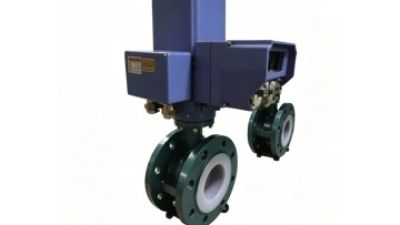
PTFE-lined electric butterfly valves from China are designed for reliable on-off control in pipeline systems that handle highly corrosive media. By covering both the valve body and disc with PTFE, the valve provides strong resistance to chemical attack and supports compatibility with a broad range of aggressive fluids. This lining also helps protect key flow-control surfaces, contributing to longer service life and stable performance in demanding industrial environments.
Driven by an electric actuator, the valve enables automatic operation and remote control, making it suitable for systems that require frequent opening and closing without manual intervention. Its compact butterfly structure reduces flow resistance and energy loss during fluid transportation, while supporting efficient installation and operation. These features make PTFE-lined electric butterfly valves a practical choice for chemical processing, water treatment, and other corrosive-fluid applications. China-based suppliers and factory manufacturers commonly provide configurations suited to different pipeline sizes, operating conditions, and control requirements.
Common features include stainless-steel heating chambers, insulated cabinets, variable-speed fans, and PID temperature controllers. Stable airflow matters. Ask for measured temperature deviation, air volume, power use, and operating time.
Consider room volume, insulation, target temperature, humidity, and daily operating hours. A small unit may struggle on cold mornings. An oversized unit may cycle often and waste electricity. Measure twice.
Request test results under similar humidity, inlet temperature, and airflow conditions. Catalog ratings may not reflect field performance. Compare actual energy consumption and temperature stability.
Look for overheat protection, fan-delay cooling, emergency shutdowns, grounding, and correctly rated breakers. Keep air inlets and outlets clear. Never cover an intake with cloth or boxes.
They can support workshops, warehouses, drying rooms, laboratories, and enclosed process areas. Quiet operation may suit workplaces requiring conversation. Correct sizing remains essential.
Inspect filters weekly during dusty production. Clean vents after shutdown and cooling. Check thermostats, safety cutouts, fans, and electrical connections regularly. Listen for rattling or uneven airflow.
Compare manufacturing experience, quality procedures, response times, spare parts, warranty terms, and testing before shipment. Confirm whether quotations include controls, delivery, commissioning, and maintenance support.
Not completely. Marketing claims can exceed field results. Request written specifications, wiring diagrams, and inspection records. Speak with recent customers, but one successful installation proves little. No checklist catches every hidden risk.
An Electric Hot Air Furnace is a heating system that converts electrical energy into heat and distributes warm air through a room, duct network, or industrial workspace. Its operation is generally clean, responsive, and easy to control, making it suitable for homes, workshops, warehouses, drying rooms, and other commercial or industrial environments. Leading Chinese manufacturers typically focus on efficient heating elements, durable housings, accurate temperature controls, compact designs, and flexible airflow configurations. Many models are also developed with attention to energy management, user safety, and convenient installation.
When comparing an Electric Hot Air Furnace, buyers should consider heating capacity, airflow volume, temperature range, power requirements, control systems, construction quality, maintenance access, and after-sales support. Application conditions should guide the choice between portable, ducted, or fixed equipment. Safe operation requires proper electrical installation, ventilation where necessary, protection against overheating, and regular inspection of filters, wiring, heating elements, and fans. With suitable model selection and routine maintenance, these furnaces can provide stable, controllable, and reliable heat for various applications.