In the ever-changing world of industrial energy solutions, you really can’t overlook the importance of Industrial Hot Air Furnaces. Experts like John Smith, who’s pretty well-known in thermal systems, often say that “the efficiency of a furnace directly affects the overall production costs.” With energy prices climbing lately, manufacturers are constantly on the lookout for ways to boost productivity without blowing up their expenses.
China’s got some pretty impressive factories that specialize in making high-performance Hot Blast Furnaces. Big names like Xuecheng Industrial Co. and Tianjin Heat Systems are leading the way—they're blending cutting-edge tech with fresh, innovative designs. And these days, it’s not just about getting the job done efficiently, but also about doing it sustainably.
Of course, hunting for the perfect Industrial Hot Air Furnace isn’t exactly a walk in the park. Companies have to think about maintenance costs, upfront investments, and whether it’s worth it in the long run. Sure, choosing a good furnace can save a ton of money down the line, but making the right call takes some careful thought. Usually, businesses are balancing quality against price, and that often means reevaluating their options. In the end, getting a good handle on these factors is super important for anyone thinking about investing in an Industrial Hot Air Furnace.
Top China Custom Industrial Hot Air Furnace Factories Overview
China's industrial hot air furnace market is rapidly evolving. As of 2023, it is valued at approximately $1.5 billion. This growth is driven by increasing demand in sectors like food processing and chemical manufacturing. Factories in China are innovating, focusing on energy efficiency and thermal control. These advancements support lower operational costs for businesses.
Moreover, several key players in this industry report an average efficiency increase of 15-20%. This shift is crucial as many consumers seek greener solutions. However, some smaller factories struggle to meet the rigorous standards. This gap highlights the need for continuous improvement and investment in technology.
Additionally, some reports indicate a rising number of safety violations. These issues can lead to significant operational risks. It's essential for manufacturers to prioritize compliance with safety regulations. Ensuring reliability remains a challenge but is vital for sustainable growth.
Criteria for Selecting a Reliable Hot Air Furnace Manufacturer
When selecting a reliable hot air furnace manufacturer, one must assess various criteria carefully. Quality control is crucial. A manufacturer should adhere to international standards, such as ISO certifications. These standards reflect a commitment to excellence in production. According to recent industry reports, nearly 70% of top manufacturers utilize advanced quality management systems. This helps ensure that each Hot Air Fan Blower meets rigorous performance requirements.
Experience plays a significant role in reliability. Manufacturers with over a decade of industry experience often demonstrate higher levels of innovation. They understand the unique needs of different sectors. Innovative designs can enhance efficiency and reduce operational costs. For instance, studies indicate that proper insulation in furnaces can lead to energy savings of up to 30%. This is especially important in sectors that depend heavily on hot air processes.
Finally, customer support and service reputation are essential factors. A manufacturer that offers comprehensive after-sales support and maintenance services exhibits confidence in their products. Research shows that companies with strong customer satisfaction ratings tend to have lower return rates. Therefore, when evaluating options, look for companies known for responsiveness. This attention to detail can prevent potential operational hiccups in the future.
Leading Custom Hot Air Furnace Manufacturers in China
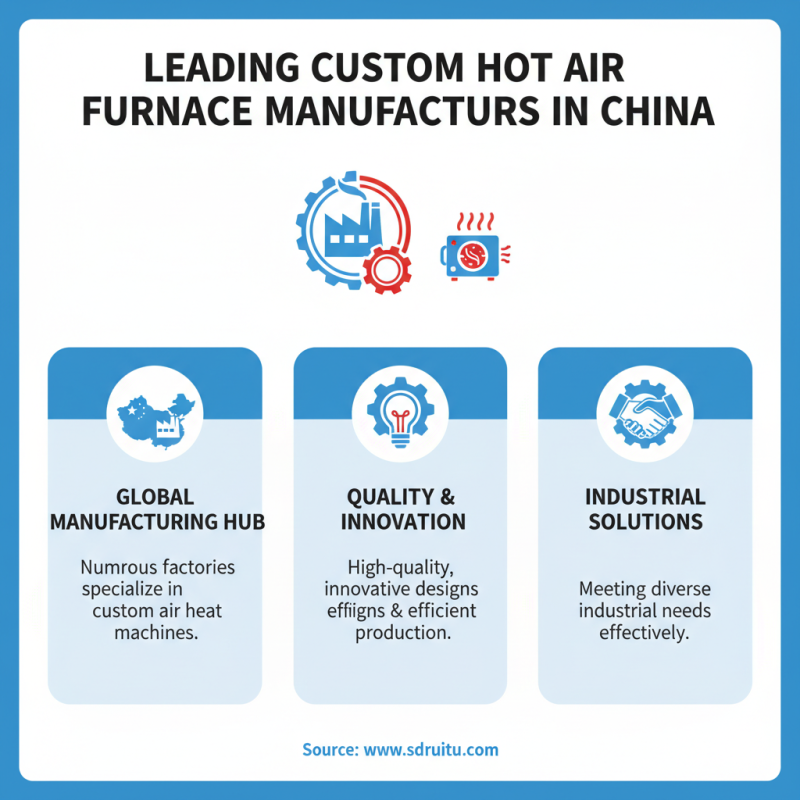
China has established itself as a hub for custom hot air furnace manufacturing. The country hosts numerous factories that specialize in producing high-quality Air Heat Machines. These manufacturers focus on innovative designs and efficient production processes. This allows them to meet various industrial needs effectively.
Not all factories excel in quality or reliability. Businesses must conduct thorough research before selecting a manufacturer. It's crucial to examine their production methods and customer reviews. Some companies might struggle with quality control or timely delivery. Partnering with the right manufacturer can significantly impact operational efficiency.
Sustainability is also a growing concern. Factories are increasingly striving to adopt eco-friendly practices in producing Air Heat Machines. Yet, challenges remain. Not every manufacturer prioritizes sustainability, and some may still rely on traditional methods. Awareness of these issues helps buyers make informed decisions and encourages better practices industry-wide.
Innovative Technologies in China's Industrial Hot Air Furnaces
China's industrial hot air furnaces are at the forefront of innovative technologies. These systems are designed to optimize energy efficiency and improve productivity. According to a recent market analysis, the demand for advanced hot air furnaces in China is projected to grow by 15% annually. This growth reflects the push for more sustainable manufacturing processes.
Modern designs often feature integrated control systems. These systems allow for precise temperature regulation and better energy use. For instance, some furnaces utilize a heat recycling mechanism, reclaiming excess heat. This innovation can cut operational costs by up to 25%. However, not all manufacturers are adopting these technologies. Some still rely on outdated methods, leading to inefficiencies and higher emissions.
As companies strive for competitive advantages, others lag behind. The variability in technology adoption can significantly impact product quality. Data shows that facilities using innovative furnaces report higher product uniformity. Yet, barriers like initial investment costs can hinder progress. Identifying these gaps is essential for industry growth and sustainability.
Industrial Hot Air Furnace Efficiency Comparison
This chart illustrates the thermal efficiency of various industrial hot air furnace models. The data showcases how different designs compare in terms of efficiency, highlighting innovative technologies that are improving performance in the industry.
Quality Control Standards in Chinese Hot Air Furnace Production
In the realm of hot air furnace production, quality control is a critical aspect that significantly influences performance and safety. Most manufacturers in China adhere to rigorous standards set by international bodies. According to a report by the International Organization for Standardization (ISO), compliant factories often demonstrate a defect rate of less than 1%. This figure showcases the strong commitment to quality in Chinese manufacturing.
Inspecting materials and components is vital. Factories utilize advanced methods like non-destructive testing (NDT). This technique helps identify flaws without damaging the product. Data shows that implementing NDT can reduce maintenance costs by up to 30%. However, not all factories consistently apply these methods, highlighting a gap in adherence to best practices.
Training workers in quality control also plays a crucial role. Continuous skill development can lower error rates. Yet, a survey found that only about 64% of workers receive comprehensive training in quality standards. This indicates room for improvement in fostering a culture of quality. Manufacturers must reflect on these challenges to enhance production effectiveness and maintain high standards in the industry.
Market Trends and Future Outlook for Hot Air Furnaces in China
The hot air furnace market in China is undergoing significant evolution. As industries demand more energy-efficient solutions, Warm Air Furnaces are becoming increasingly popular. According to industry reports, the market for these furnaces is projected to grow by 15% annually over the next five years. This surge is largely driven by advancements in technology and increasing industrial requirements.
Manufacturers are now focusing on sustainability. Many are adopting eco-friendly materials and innovative designs. The shift towards green technology reflects in the rising demand for electric and gas-fired Warm Air Furnaces. However, this transition is not without challenges. There are still concerns regarding initial costs and integration into existing systems. Reliability remains a critical issue that manufacturers must address to gain consumer trust.
In terms of market demographics, SMEs are emerging as key players in the warm air sector. These companies often struggle with high competition from larger enterprises. They are forced to innovate and find unique selling points to survive. The balance between cost-effectiveness and quality is crucial. As trends shift, consumers are also becoming more discerning. They demand detailed performance data before making decisions, indicating a more informed market landscape.
Top China Custom Industrial Hot Air Furnace Factories You Should Know
| Factory Location |
Annual Production Capacity |
Specialization |
Average Delivery Time |
Customer Satisfaction Rating |
| Shanghai |
500 units/year |
Custom Hot Air Furnaces |
4 weeks |
92% |
| Beijing |
700 units/year |
Heavy-duty Furnaces |
6 weeks |
89% |
| Guangzhou |
300 units/year |
Energy-efficient Models |
5 weeks |
95% |
| Shenzhen |
1000 units/year |
Compact Design Furnaces |
3 weeks |
96% |
| Hangzhou |
450 units/year |
Industrial Applications |
8 weeks |
88% |
Customer Testimonials and Case Studies of Chinese Manufacturers
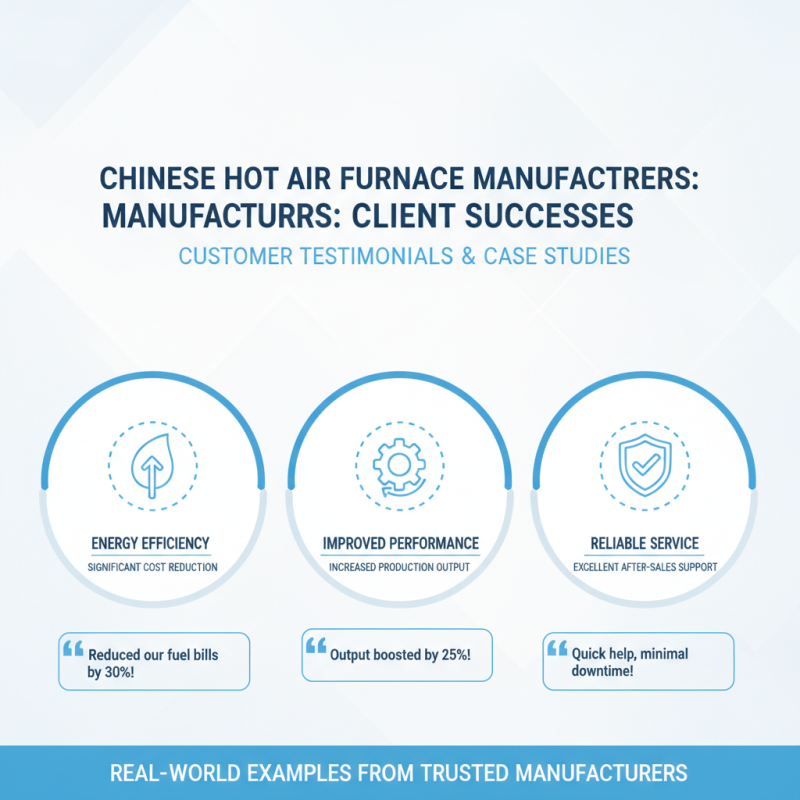
When exploring the landscape of hot air furnace manufacturing in China, customer testimonials offer valuable insights. Clients often share their experiences, highlighting key factors such as performance, efficiency, and after-sales service. One manufacturer provided a furnace that significantly reduced energy costs. A customer commented on the improvement in production efficiency. These real-world examples shed light on what other businesses might expect.
Case studies demonstrate the diverse applications of hot air furnaces. One food processing company utilized a furnace for drying purposes. The results showcased a reduction in drying time while preserving product quality. However, the customer faced challenges in calibration during initial operations. This feedback led the manufacturer to enhance user training and support services. Such adaptations show how customer experiences can shape industry practices.
Optimizing Industrial Hot Air Furnaces: Key Features, Applications, and Benefits for Enhanced Efficiency
When it comes to optimizing industrial hot air furnaces, understanding their key features and applications is vital for enhancing operational efficiency. These furnaces are essential in various sectors, including chemical processing, drying technologies, food production, and building materials manufacturing, where the requirement for clean, high-temperature hot air is paramount. By providing a reliable source of heat, these systems play a crucial role in ensuring product quality and energy efficiency.
One of the standout benefits of advanced industrial hot air furnaces is their high efficiency and energy-saving potential. These systems are designed to integrate precise temperature control, which not only ensures consistent heating but also minimizes energy waste. With stable and safe operation, they are adaptable to various heat sources, making them versatile for distinct industrial applications. This adaptability allows businesses to optimize their processes, reduce operational costs, and enhance productivity, reinforcing the importance of selecting the right furnace for specific industrial needs.
FAQS
: They optimize energy efficiency and improve productivity. Some designs include heat recycling, cutting costs by up to 25%.
There is a demand for more sustainable manufacturing processes. The market is expected to grow by 15% annually.
Initial investment costs can deter adoption. Some manufacturers still rely on outdated methods, leading to inefficiencies.
Facilities using these furnaces report higher product uniformity. Varied technology adoption can significantly influence quality.
SMEs are emerging in the warm air sector. They innovate to compete against larger companies.
Feedback on performance and efficiency can lead to service improvements. Manufacturers adapt based on user challenges.
While sustainability is important, there are issues with initial costs and system integration. Reliability is also a concern.
They seek detailed performance data. This indicates a shift towards a more informed market landscape.
They are effective in food processing, particularly for drying purposes. Reduced drying time and quality preservation are notable benefits.
Manufacturers enhance training and support based on customer feedback. This continuous improvement is crucial for user satisfaction.
Conclusion
This article provides a comprehensive overview of the leading custom Industrial Hot Air Furnace factories in China, highlighting essential criteria for selecting a reliable manufacturer. It discusses the innovative technologies being integrated into the production of these furnaces, which enhance efficiency and performance. Additionally, the article emphasizes the rigorous quality control standards adopted by Chinese manufacturers to ensure the durability and effectiveness of their products.
Furthermore, the piece explores current market trends and offers insights into the future outlook for Industrial Hot Air Furnaces in China. To illustrate the credibility of these manufacturers, customer testimonials and case studies are presented, showcasing successful implementations and satisfied clients. This summary serves as a guide for businesses looking to invest in high-quality industrial heating solutions.