Choosing the right Ptfe Lined Elbow begins with understanding the process, not the catalogue image. A clean white lining may look reassuring, but appearance alone proves little. In chemical piping, one incorrect radius or flange dimension can create leakage, turbulence, or difficult maintenance. These risks become clearer when examining temperature, pressure, media concentration, and flow direction together.
This guide presents seven practical tips for selecting a dependable Ptfe Lined Elbow. It considers PTFE grade, lining thickness, operating limits, connection standards, and supplier quality controls. Experienced engineers also inspect the steel backing, welds, flange faces, and lining continuity. A reliable Lined Ptfe Elbow should match the complete piping system, including gaskets, bolts, pumps, and nearby valves. Small mismatches often become expensive problems.
Details matter.
Technical datasheets should state maximum working temperature, pressure ratings, dimensional tolerances, and testing methods. Suppliers with strong manufacturing experience can explain how they control pinholes, bonding, vacuum conditions, and flange alignment. Independent inspection records may provide additional confidence, especially for corrosive or high-purity services. Still, no selection guide replaces a project-specific review. We may overlook an unusual chemical blend or a sudden temperature change. That weakness deserves attention. By comparing real operating data with verified product information, buyers can choose more confidently and avoid relying on attractive but incomplete specifications.
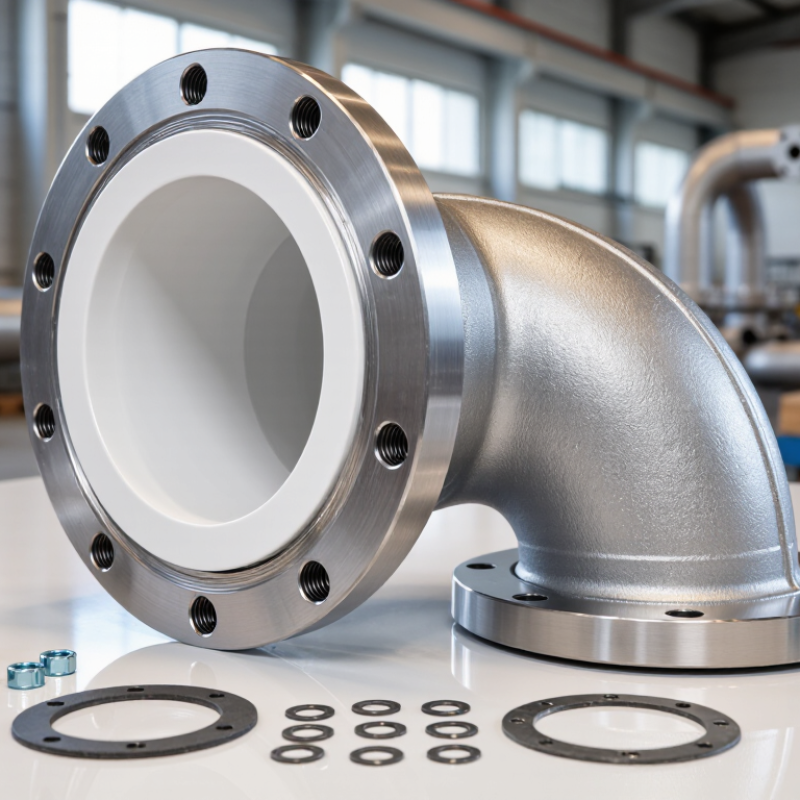
Define the Operating Conditions Before Selecting a PTFE Lined Elbow
Define the operating conditions before selecting a Ptfe Lined Elbow. Record fluid composition, concentration, temperature, pressure, flow velocity, and cleaning cycles. Include startup and shutdown temperatures. These short periods often create the highest stress. Standard PTFE is commonly rated near 260°C continuously, but the exact limit depends on design, pressure, and lining quality. It is not a universal number.
Tip 1
Check chemical compatibility at actual concentration and temperature.
Tip 2
Verify vacuum resistance, especially on suction lines.
Tip 3
Calculate pressure drop through the elbow.
Tip 4
Review abrasion risk from crystals or suspended solids.
Tip 5
Confirm flange alignment and bolt loading.
Tip 6
Allow for thermal expansion.
Tip 7
Request inspection records and lining test results.
NACE’s IMPACT study estimated global corrosion costs at about US$2.5 trillion, equal to 3.4% of global GDP. That figure supports careful material selection, not automatic reliance on fluoropolymer lining. ASME B31.3 provides process-piping guidance, while ASTM F1545 addresses plastic-lined ferrous pipe and fittings. Use both as references, not substitutes for engineering review. I have seen designs overlook vacuum conditions. The elbow looked suitable on paper, yet cycling pressure changed the decision. Ask about permeation, liner thickness, radius, and field repair limits before approval.
Match the PTFE Lining to the Chemical Media
Choosing the right Ptfe Lined Pipe Elbow starts with the chemical media, not the pipe diameter. Identify every substance, concentration, temperature, pressure, and cleaning chemical. A 10% acid solution at 25°C may behave differently at 80°C. Trace contaminants can also change permeability and swelling risks.
ASTM D543 provides a recognized method for evaluating plastic resistance against chemical reagents. ASTM F1545 also addresses plastic-lined ferrous pipe and fittings. Use compatibility data based on these standards, then compare it with the actual process conditions. PTFE generally handles many strong acids, bases, and solvents, with common continuous-service references near 260°C. That figure is not a permission slip. Pressure, cycling, and liner thickness still matter.
Ask for test evidence, not broad claims. Check whether the lining was tested with your exact media and concentration. Inspect the flange face, vent holes, and elbow radius; these areas often reveal installation stress first. In field service, a clean white liner can still hide permeation behind the flared edge. Small details matter.
Do not rely on one chart.
An experienced engineer should review mixed chemicals, sudden temperature changes, and abrasive particles. Compatibility tables may simplify reality. I would treat them as a starting point, then require documented qualification data before approving the Ptfe Lined Pipe Elbow.
Choose the Correct Elbow Size, Angle, and Connection Type
7 Tips for Choosing the Right PTFE Lined Elbow
Tip: Confirm the nominal size first. Measure the pipe’s inside diameter, not only its outside diameter. A small mismatch can create turbulence, leakage, or difficult installation.
Tip: Check the elbow angle against the actual route. A 90-degree elbow makes a sharp turn, while a 45-degree elbow usually reduces pressure loss. Do not choose by habit.
Tip: Review the operating pressure and temperature. PTFE resists many aggressive chemicals, but its performance changes under heat and pressure. Ask for tested limits, not general promises.
Tip: Match the connection type carefully. Flanged ends suit many industrial systems and simplify maintenance. Threaded connections can work for smaller lines, but they require correct thread standards and careful sealing.
Tip: Inspect the flange details. Confirm the nominal rating, bolt-hole pattern, facing, and gasket arrangement. One overlooked hole pattern can stop the entire installation.
Tip: Consider flow direction and cleaning needs. A smooth PTFE lining helps reduce buildup, but dead spaces may still collect residue. The best angle is not always the easiest to clean.
Tip: Check the lining and outer shell together. Look for even lining thickness, secure flaring, and visible damage around the ends. A fitting can look acceptable and still need closer inspection.
In field work, I have seen teams measure the pipe correctly but ignore thermal movement. That mistake caused misalignment after startup. Leave suitable flexibility, and verify the drawing against the real site. Recheck everything.
7 Tips for Choosing the Right PTFE Lined Elbow
Choose the correct elbow size, angle, and connection type by matching the elbow to the pipe’s nominal size, flow direction, operating conditions, and installation method.
1. Match the Nominal Size
Select the same nominal pipe size as the connected pipeline. The chart shows common nominal pipe outside diameters in millimetres; the actual PTFE lining bore can vary by construction and wall thickness.
2. Select the Elbow Angle
A 45° elbow provides a gradual direction change, while a 90° elbow creates a standard right-angle turn. A 180° return bend reverses the flow direction and requires additional layout space.
3. Confirm the Connection Type
Choose flanged, threaded, or welded ends according to the adjoining pipe, maintenance requirements, pressure rating, and available installation space.
4. Check Service Conditions
Verify chemical compatibility, operating temperature, pressure, vacuum conditions, and the required PTFE lining thickness before final selection.
Chart reference: common standardized nominal pipe outside diameters. Final PTFE lined elbow dimensions and ratings must be confirmed from the applicable product drawing and piping specification.
Verify Pressure and Temperature Performance
Verify pressure and temperature performance before selecting a PTFE lined elbow. A pipe class rating alone is not enough. ASME B16.5 pressure-temperature tables apply to flanges and metals, while ASTM F1545 addresses plastic-lined pipe and fittings. The lining and steel shell must be checked separately.
Virgin PTFE is commonly rated for continuous service near 260°C, but the allowable pressure usually falls as temperature rises. At 200°C, for example, a lining may need a lower working pressure than its room-temperature value. Exact limits depend on liner thickness, backing material, vacuum conditions, and thermal cycling. Ask for a pressure-temperature curve, not only a maximum number.
Check both directions of stress. Internal pressure can test the shell, while vacuum can collapse the liner. Rapid changes from hot cleaning to cold flushing may create wrinkles or separation. ASME B31.3 also requires process piping designs to consider temperature, pressure, flexibility, and occasional loads. Do not ignore flange bolt torque. Uneven compression may damage the flare.
A practical review should include design pressure, design temperature, fluid concentration, flow velocity, and cycle frequency. Request hydrostatic and vacuum test records when the service is severe. Some specifications look complete, yet omit vacuum limits. That omission deserves attention. A conservative selection may cost more initially, but an underspecified elbow can leak after only a few thermal cycles.
Check Manufacturing Standards and Quality Certifications
When choosing a Dn50 Ptfe Lined Elbow, examine manufacturing standards before comparing price or delivery time. The lining should match the chemical service, temperature range, and pressure conditions. Ask for the applicable design standard, not a vague statement about “industrial quality.” Requirements can differ by region and application.
Request current quality certificates, inspection records, and material traceability documents. ISO 9001 certification can indicate a controlled quality system, but it does not automatically prove that every elbow is suitable for your process. Check whether the manufacturer performs dimensional checks, lining thickness checks, spark testing, and pressure testing. Test results should identify the batch, date, inspector, and acceptance criteria. Small details matter.
Inspect the flange faces and bore carefully. Uneven lining, exposed metal, or rough edges may create early failure points. I have seen purchasing teams accept a certificate without checking whether it covered the actual production batch. That mistake is easy to repeat. Ask for an independent inspection when the service is critical. It costs more. Sometimes it prevents a shutdown. Keep in mind that documentation may be incomplete, and a perfect-looking file can still require technical review by a qualified engineer.
Inspect Installation Requirements and Supplier Support
Choosing the right PTFE lined elbow starts with installation reality, not a catalogue photo.
Confirm pipe size, flange standard, pressure class, temperature range, and available space. For a
Dn80 Ptfe Lined Elbow,
measure the actual outside diameter and bolt-hole pattern before ordering. Small alignment errors can load the liner and damage the flange face.
ASTM F1545 provides recognized requirements for fluoropolymer-lined pipe and fittings, while ASME B16.5 supports dimensional and pressure-class checks.
Use both references during design review.
Supplier support becomes critical when conditions are uncertain.
Request a dimensional drawing, lining thickness, vacuum limitations, chemical compatibility statement, inspection records, and hydrostatic test results. The supplier should explain installation torque, gasket selection, storage, and acceptable bolt tightening sequence.
According to ISO 9001 quality guidance, documented traceability helps connect materials, inspections, and corrective actions.
That evidence is useful when a leak appears months later. Ask whether technical staff can review photographs and site measurements before shipment.
Do not ignore thermal movement.
PTFE expands significantly more than steel, so fixed supports and tight piping can create hidden stress. A site checklist should record temperature, pressure, media concentration, cleaning method, and support spacing.
Field teams often focus on flange bolts and overlook vacuum service. That is a mistake.
Supplier advice may also be incomplete, especially when the chemical mixture changes during operation. Recheck the selection with process engineers.
A perfect fitting on paper can still fail during installation.
Conclusion
Choosing the right Ptfe Lined Elbow starts with a clear understanding of the operating environment. Define the flow conditions, chemical media, pressure, temperature, and expected service life before making a selection. The PTFE lining should be compatible with the transported chemicals, while the elbow’s size, angle, and connection type must match the piping system to ensure efficient flow and secure installation. Pressure and temperature ratings should also be verified against both normal and peak operating conditions.
Lining thickness is another important factor, as it affects chemical protection, mechanical durability, and resistance to wear. Buyers should check whether the product is manufactured according to recognized industry standards and supported by appropriate quality certifications. Finally, review installation requirements, inspection procedures, technical documentation, and supplier support. A reliable supplier should provide accurate specifications and practical guidance, helping ensure that the Ptfe Lined Elbow performs safely and consistently throughout its expected service life.