Picking the right Salt Sieving Machine in 2026 isn’t just about tossing around prices, screen sizes, or motor specs. Seriously, salt processors need to think about things like moisture levels, crystal shapes, how much salt they’re processing, hygiene requirements, and how easy it is to maintain the machine. What works great in a dry, controlled testing room might totally flunk in a humid coastal warehouse—that’s a big deal to keep in mind.
Daniel Mercer, a seasoned salt-processing engineer with 18 years of hands-on experience, puts it simply: “A reliable sieve isn’t just about speed—it’s about protecting your product quality first and foremost.” And he’s right. Sure, a super fine mesh might get you high purity, but it can also cut down capacity and cause salt to clog up. When choosing a machine, make sure you really check out the tension of the screen, how well the contact parts fit, the vibration system, and how the discharge is designed. Don’t just glance at it—look closely.
Most folks start with food-grade stainless steel, which makes sense. But just because it’s stainless doesn’t automatically mean it’s hygienic enough. You also gotta pay attention to weld quality, how smooth the surface is, how easily you can access it for cleaning, and overall hygiene practices. And, yeah, ask your supplier for throughput data based on salt similar to what you’re working with. Don’t rely solely on lab test results; real-world salt with fine particles, moisture, or anti-caking agents behaves quite differently.
A good Salt Sieving Machine should also make operation safer and service predictable. Think about noise levels, if spare parts are easy to get, warranty terms, and whether your staff will need training. Remember, you’re investing for the long haul—not just the initial purchase. I’ve seen people zero in on capacity per hour and forget about cleaning times—that’s an easy trap to fall into and can end up costing more in the long run.
Finding the right balance between accuracy, durability, hygiene, energy efficiency, and your actual plant conditions is key. Sure, you might have to compromise on some things, but with careful research beforehand, you’ll clearly see what that is before you even hit "go."
What a Salt Sieving Machine Does and Why It Matters
Salt rarely arrives as a perfect, free-flowing crystal. It may contain compacted lumps, fine dust, or uneven moisture. In 2024, the U.S. Geological Survey estimated global salt production at approximately 270 million metric tons. At that scale, particle consistency directly affects packing, blending, and downstream processing.
A Salt Maker Machine separates particles through controlled screening and vibration. It removes oversized lumps while allowing usable salt to pass through the selected mesh. That matters. Consistent sizing improves flow through hoppers and reduces blockages near filling points. During plant trials, operators should inspect the screen deck, discharge outlets, and dust-control points. Small details often expose large problems.
The USGS also reported U.S. salt production near 42 million metric tons in 2024. High-volume operations therefore need more than impressive capacity claims. They need stable throughput, accessible cleaning areas, and materials suitable for food-contact environments. Moisture readings should guide the screen choice, because damp salt can blind mesh openings. Choose carefully.
A specification can look perfect on paper, yet fail beside a humid storage room. I have seen this overlooked in equipment evaluations. Testing real salt samples remains more reliable than trusting catalog figures. Codex food-hygiene principles also support cleanable designs and controlled contamination risks. Operators should record mesh size, feed rate, moisture, and rejected material during every trial.
Which Salt Properties Determine the Right Sieving Method
Choosing the right sieving method starts with the salt, not the machine catalog. Salt crystals may look similar, yet their behavior can differ sharply. Moisture is often the deciding factor. Damp salt clogs fine mesh, forms soft lumps, and reduces screening accuracy. A dry, free-flowing grade usually suits a vibrating screen. Sticky material may need gentle pre-drying or a wider aperture. This small detail is easy to underestimate.
Particle size distribution matters just as much. A narrow grade needs precise mesh openings and stable vibration. Mixed crystals require multiple decks or staged screening. Crystal shape also affects movement. Angular grains can bridge openings, while rounded grains pass more easily. Bulk density influences feeding speed and screen loading. A Salt Making Machine should not be selected by capacity alone. An impressive hourly figure may collapse when the feed contains fines, moisture, or irregular crystals.
Temperature and impurity levels deserve practical testing. Warm salt can release moisture during operation, changing its flow after the trial begins. Insoluble particles may require a tougher screen surface and easier cleaning access. Operators should test a representative sample at the intended feed rate. Then inspect oversize, fines, dust, and retained salt. Small losses matter over a full shift. I would also question laboratory results if the sample was unusually dry. Real production is less cooperative. Check vibration adjustment, mesh replacement time, sealed areas, and cleaning access. These details often determine performance more than headline specifications.
How to Match Machine Capacity with Production Requirements
How to Choose the Best Salt Sieving Machine in 2026?
Matching machine capacity with production requirements starts with the real feed rate, not the catalog’s maximum figure. The USGS Mineral Commodity Summaries 2025 estimated global salt production at about 270 million metric tons in 2024. That scale shows why small differences in screening efficiency can affect operating costs.
Measure your hourly requirement during normal and peak production. Then add a practical reserve, usually 15–25%, for moisture changes, cleaning, and uneven feeding. A plant requiring 2 tons per hour should not select a machine rated at exactly 2 tons. That leaves no breathing room. However, excessive capacity can reduce screening accuracy and increase energy use.
Check salt moisture, crystal size, bulk density, and target mesh before comparing equipment. Wet salt may blind the screen, while oversized crystals can overload the inlet. Ask suppliers for test results using your actual salt sample. Capacity claims often assume dry, evenly fed material. That assumption may fail in winter or after long storage.
A 2023 report from the European Commission on food, drink, and milk processing emphasizes hygienic design, cleanability, and process control. These factors matter beside throughput. Record the feed rate for several shifts, including startup and stoppage periods. My own preference is cautious sizing, but I would revisit the margin after two weeks of measured data. Real production rarely behaves like a brochure.
How to Choose the Best Salt Sieving Machine in 2026?
How to Match Machine Capacity with Production Requirements
Select a salt sieving machine with enough rated capacity to handle the required continuous output without operating at full load. This chart uses an 80% operating-load assumption, so the recommended machine capacity is calculated as 1.25 times the target production rate.
Capacity is shown in metric tonnes per hour. Actual performance can vary with salt moisture, crystal size distribution, screen aperture, feed consistency, and the number of screening decks.
Which Screen Designs and Materials Suit Salt Processing
How to Choose the Best Salt Sieving Machine in 2026?
Salt processing needs more than a powerful motor. Screen design controls purity, crystal damage, and bagging consistency. The USGS Mineral Commodity Summaries 2025 estimated global salt production at about 270 million metric tons in 2024. That scale makes stable screening essential. However, higher capacity does not always mean better separation.
For dry, free-flowing salt, woven stainless-steel mesh offers accurate sizing and simple inspection. Grade 304 suits many applications, while 316 provides stronger resistance to chloride corrosion. Perforated plates handle heavier loads and reduce blinding, but may offer less precise separation. Polyurethane screens can reduce noise and wear. They may not suit every temperature or cleaning process. Choose apertures from actual particle-size data, not catalogue assumptions. A 2 mm opening can behave differently when humidity causes crystals to bridge. This choice is easy to get wrong.
Tips: Request a test using your own salt. Measure feed moisture, bulk density, and crystal distribution. Check screen tension after continuous operation. A Salt Bagging Machine can fill accurately only when the upstream fraction remains consistent. Inspect welds, seals, and contact surfaces closely. Food-processing guidance from EHEDG emphasizes cleanable designs and minimized product-retention areas. I would also record blinding frequency for several shifts. One trial is rarely enough. Temperature, dust, and operator cleaning habits can change the result.
How to Compare Cleaning, Maintenance, and Operating Costs
How to Choose the Best Salt Sieving Machine in 2026?
Cleaning, maintenance, and operating costs often matter more than the purchase price. A salt sieving machine should open quickly for inspection and cleaning. Check whether workers can remove screens without special tools. Salt dust collects around clamps, seals, and discharge chutes. These areas can increase cleaning time and contamination risks. Ask suppliers for a realistic cleaning schedule, not a perfect laboratory estimate.
Measure labor minutes, water use, compressed air, and replacement parts separately. A simple cost sheet can reveal hidden expenses. For example, twenty minutes of daily cleaning becomes over one hundred hours annually. Screen wear also depends on salt moisture, crystal size, and production hours. Request test data using salt similar to yours. Generic figures may look impressive but prove unreliable in practice.
Operating cost includes electricity, stoppages, and rejected material. Compare motor power, throughput, and actual screening efficiency together. A lower-powered unit is not always cheaper if it causes repeated blockages. Keep spare screens, seals, and bearings in a planned maintenance cabinet. This reduces emergency delays. My first estimate was too optimistic. I ignored inspection time between shifts. That mistake changed the yearly cost significantly. If a Salt Packing Machine runs after sieving, check whether inconsistent particle size increases packing adjustments and waste. A short factory trial can expose problems that brochures hide.
How to Choose the Best Salt Sieving Machine in 2026? - How to Compare Cleaning, Maintenance, and Operating Costs
| Machine Type |
Typical Capacity |
Typical Purchase Range
(USD) |
Screening Accuracy |
Cleaning Method |
Typical Cleaning Time |
Routine Maintenance |
Estimated Annual Maintenance
(% of Purchase Price) |
Typical Installed Power |
Estimated Energy Cost
per Metric Ton |
Estimated Total Operating Cost
per Metric Ton* |
Best Use Case |
| Vibratory Screener |
0.5–30 metric tons/hour |
$8,000–$45,000 |
High for separating dry salt into defined size fractions; commonly uses one or more screen decks |
Dry brushing, vacuuming, and screen removal; wet cleaning only when the design permits it |
15–45 minutes per cleaning cycle |
Inspect screen tension, clamps, springs, bearings, seals, and vibration motor; replace worn mesh or gaskets |
3–8% |
0.75–7.5 kW |
$0.05–$0.35 |
$0.80–$3.50 |
General-purpose salt grading, high screening accuracy, and moderate-to-high throughput |
| Linear Vibratory Screener |
1–40 metric tons/hour |
$10,000–$55,000 |
High for scalping, dewatering, and multi-size separation when product flow is relatively uniform |
Accessible screen decks support brushing, vacuuming, and controlled washdown where suitable |
20–60 minutes per cleaning cycle |
Check vibration motors, springs, screen panels, fasteners, seals, and discharge chutes |
4–9% |
1.5–11 kW |
$0.08–$0.50 |
$0.90–$3.80 |
Larger continuous lines requiring high throughput and straightforward screen access |
| Rotary Trommel Screener |
2–80 metric tons/hour |
$18,000–$90,000 |
Moderate to high; well suited to coarse screening and removing oversized particles |
Brushes, scrapers, vacuuming, and washdown; the rotating screen requires thorough drying afterward |
30–90 minutes per cleaning cycle |
Inspect drum mesh, drive chain or gearbox, rollers, seals, bearings, and internal lifters |
5–12% |
3–22 kW |
$0.15–$0.90 |
$1.10–$4.80 |
High-volume coarse screening, heavy feed loads, and applications with relatively large particles |
| Centrifugal Sifter |
0.2–10 metric tons/hour |
$15,000–$75,000 |
High for fine screening and de-lumping when the salt is dry and consistently fed |
Open the inspection cover, remove the screen basket, brush or vacuum product residue, and sanitize contact parts as required |
20–60 minutes per cleaning cycle |
Inspect rotor, screen basket, bearings, seals, drive coupling, and product-contact surfaces |
5–10% |
2.2–18.5 kW |
$0.20–$1.10 |
$1.20–$5.50 |
Fine salt, de-lumping, compact layouts, and applications needing enclosed screening |
| Gyratory Screener |
1–25 metric tons/hour |
$25,000–$120,000 |
Very high for precise grading across multiple fractions, subject to correct screen selection and feed control |
Screen trays are removed for brushing, vacuuming, or approved washdown; cleaning access is generally good |
30–75 minutes per cleaning cycle |
Inspect drive mechanism, screen frames, seals, tray supports, and tensioning components |
5–10% |
2.2–15 kW |
$0.12–$0.75 |
$1.30–$5.20 |
Multiple product cuts, high separation precision, and low-to-moderate feed rates |
| Air Classifier with Screen Stage |
0.5–15 metric tons/hour |
$35,000–$150,000 |
High for controlled separation of fine particles, but performance depends strongly on moisture and airflow |
Dry cleaning of screens, ducts, filters, and cyclone parts; filter cleaning is essential |
30–90 minutes per cleaning cycle |
Inspect fan, filters, air seals, ducts, classifier rotor, and screen surfaces |
6–12% |
15–75 kW |
$0.90–$4.50 |
$2.50–$9.00 |
Specialized fine-particle control where dust management and air separation are required |
Cost basis: The figures are planning ranges for new industrial equipment in 2026 and exclude taxes, building work, conveyors, dust collection, packaging integration, freight, and installation. Energy costs assume an electricity price of $0.10–$0.15 per kWh. Total operating cost includes indicative labor, routine consumables, screen wear, and energy, but excludes salt, packaging, financing, and depreciation. Actual costs vary with feed moisture, salt abrasiveness, required hygiene level, operating hours, local labor rates, and cleaning frequency.
For a reliable comparison, request a test run using the actual salt grade, moisture level, target particle-size distribution, required throughput, and cleaning procedure.
What Safety and Quality Standards Should the Machine Meet
How to Choose the Best Salt Sieving Machine in 2026?
A reliable salt sieving machine should meet recognized safety and food-processing standards. Check the machine’s safety documentation, risk assessment, and electrical test records before purchase. Guards must cover moving parts, while emergency-stop controls should remain easy to reach. Clear warning labels matter, especially near rotating shafts and discharge points.
Food-contact surfaces should use corrosion-resistant, food-grade materials with smooth welds. Salt can accelerate corrosion when moisture remains inside the frame. Look for tool-free access, removable screens, and cleanable corners. These details reduce residue buildup and support hygienic production. The machine should also control dust, limit excessive noise, and include suitable grounding and overload protection.
Quality verification needs practical evidence, not attractive claims. Request sieve test results, mesh specifications, production capacity data, and calibration records. Ask whether the screening accuracy was tested with salt similar to yours. A small sample test can reveal blinding, uneven flow, or unexpected breakage. Very useful.
Standards may differ by location, so confirm applicable electrical, machinery, workplace-safety, and food-hygiene requirements with a qualified inspector. Certification alone is not enough. I would also inspect welds, seals, fasteners, and cleaning access during a factory visit. One overlooked detail can become a maintenance problem. No machine is perfect, and my own assessment may miss hidden wear, so independent verification remains wise.
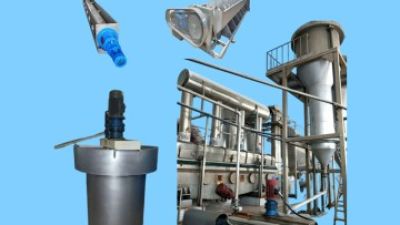
Modern Salt Processing Solutions: From Water Washing Equipment to Refined Edible Salt Production Lines
Modern salt processing is moving toward integrated, resource-efficient production lines that convert raw sea salt, lake salt, and rock salt into consistent edible products. The U.S. Geological Survey reported global salt production of approximately 270 million metric tons in 2023, highlighting the need for scalable equipment that can serve small, medium, and large processing plants. In this context, water washing machinery plays a central role by removing clay, dust, insoluble minerals, and surface impurities before refining, drying, and grading.
A modern washing system typically combines controlled feeding, agitation, brine separation, centrifugal dewatering, and recycled-water management. Compared with conventional open washing methods, a well-designed closed or semi-closed process can reduce freshwater demand while maintaining effective cleaning and stable product quality. Lower mechanical load and optimized material transfer also help reduce energy consumption. These benefits are particularly important where water availability, operating costs, and environmental performance directly affect production efficiency.
Quality control must remain aligned with food-safety requirements. The Codex Alimentarius Standard for Food Grade Salt specifies a sodium chloride content of not less than 97% on a dry basis, while national regulations may impose additional limits on moisture, insoluble matter, and contaminants. By combining efficient washing with drying, screening, and optional iodization units, refined edible salt production lines can deliver high-purity crystals with uniform particle size and reliable packaging performance.
FAQS
Measure the real feed rate during normal and peak production. Add a practical reserve of 15–25%. A plant needing two tons hourly should not choose a two-ton machine. That leaves no breathing room. Excessive capacity may reduce accuracy and increase energy use. Recheck the margin after two weeks of measured operation.
Check moisture, crystal size, bulk density, and required mesh size. Wet salt can block screen openings. Large crystals may overload the inlet. Stored salt can behave differently after humid weather. Small details matter.
Woven stainless-steel mesh suits dry, free-flowing salt and precise sizing. A corrosion-resistant grade may suit chloride-rich conditions better. Perforated plates handle heavier loads and reduce blinding. They may provide less accurate separation. The best choice depends on testing.
No. A stated opening does not guarantee identical separation in every condition. Humidity can make crystals bridge across a two-millimeter opening. Feed speed and screen tension also affect results. Use actual particle-size data before selecting apertures.
Request tests using your own salt sample. Check moisture, bulk density, crystal distribution, and feed rate. Observe blinding, uneven flow, dust, and crystal damage. One short trial is rarely enough. Run several shifts if possible.
Choose smooth food-contact surfaces and cleanable corners. Look for removable screens and tool-free access. Inspect welds, seals, fasteners, and product-retention areas. Salt residue can remain inside damp frames. Cleaning access matters.
Moving parts need secure guards. Emergency stops should remain easy to reach. The machine should include grounding and overload protection. Warning labels help near shafts and discharge points. Noise and dust controls are also useful. Small oversights become maintenance problems.
No. Verify safety documents, risk assessments, electrical records, sieve results, and calibration data. Confirm requirements with a qualified local inspector. Inspect the machine directly when possible. Certification alone may not reveal hidden wear. My assessment could still miss something.
Conclusion
Choosing the right Salt Sieving Machine in 2026 requires more than comparing price or appearance. The ideal machine should match the salt’s particle size, moisture level, purity requirements, and tendency to clump. Production capacity is equally important: manufacturers should assess hourly output, available space, feeding methods, and future expansion plans to avoid underperformance or unnecessary investment. Screen design, mesh size, and construction materials must also support efficient separation while resisting corrosion and wear in salt-processing environments.
A reliable selection should include practical cleaning systems, easy screen replacement, accessible maintenance points, and reasonable energy and operating costs. Safety and quality features are essential, including secure covers, stable operation, dust control, hygienic contact surfaces, and consistent screening performance. By evaluating processing requirements, machine durability, maintenance convenience, and compliance with applicable safety and quality standards, businesses can choose equipment that improves product consistency, reduces downtime, and delivers dependable long-term value.