In the bustling world of salt production, staying ahead often comes down to using the latest technology. John Smith from SaltTech Innovations, a real industry leader, puts it simply: a Salt Sieving Machine really helps save time and boost product quality. Honestly, it’s a game-changer.
Using a Salt Sieving Machine has some pretty big perks. It makes sorting salt grains much easier and more consistent, which means your customers are happier because they get uniform salt every time. Plus, it cuts down on labor costs because you don’t need as many folks manually sorting, freeing up the team to focus on other important stuff.
Of course, it’s not all smooth sailing. These machines can be pricey upfront, and keeping them in good shape requires ongoing maintenance. It’s a bit of a balancing act—thinking about the initial investment versus the long-term gains. As the industry moves forward and new tech keeps popping up, adapting can feel overwhelming, but in the end, it’s totally worth it for the growth and efficiency it brings.
Advantages of Enhanced Purity and Quality in Salt Products
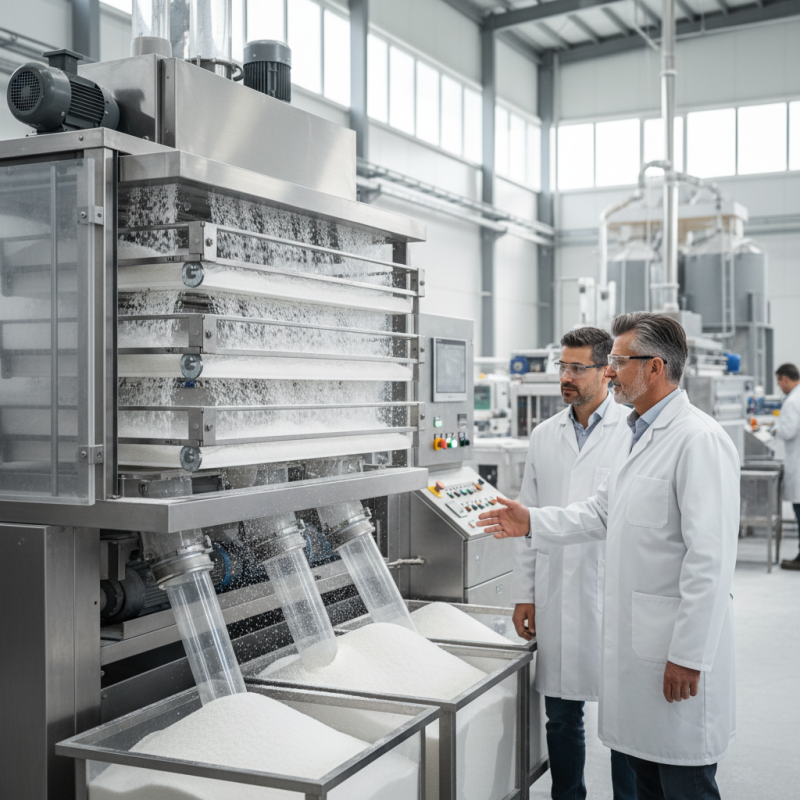
Using a salt sieving machine significantly enhances the purity of salt products. This purity directly affects consumer trust. When consumers buy salt, they expect the highest quality. A sophisticated sieving process removes impurities and larger particles. This ensures that the final product is more refined.
Incorporating advanced technology in sieving means producing salt with a consistent grain size. Consistency is crucial. It affects both flavor and texture in culinary uses. An uneven salt grain can lead to over or under-seasoning. Such missteps can impact customer satisfaction. Higher quality salt also means better packaging and presentation. Customers are drawn to visually appealing products.
The salt industry faces challenges. Inconsistent quality and impurities can arise during production. This affects reputation and sales. Investing in a reliable sieving machine may require upfront costs. However, the long-term benefits often outweigh these initial expenditures. Enhanced purity and quality will ultimately lead to increased consumer loyalty. This is vital for any business striving for growth in a competitive market.
Increased Efficiency and Productivity through Automated Sieving
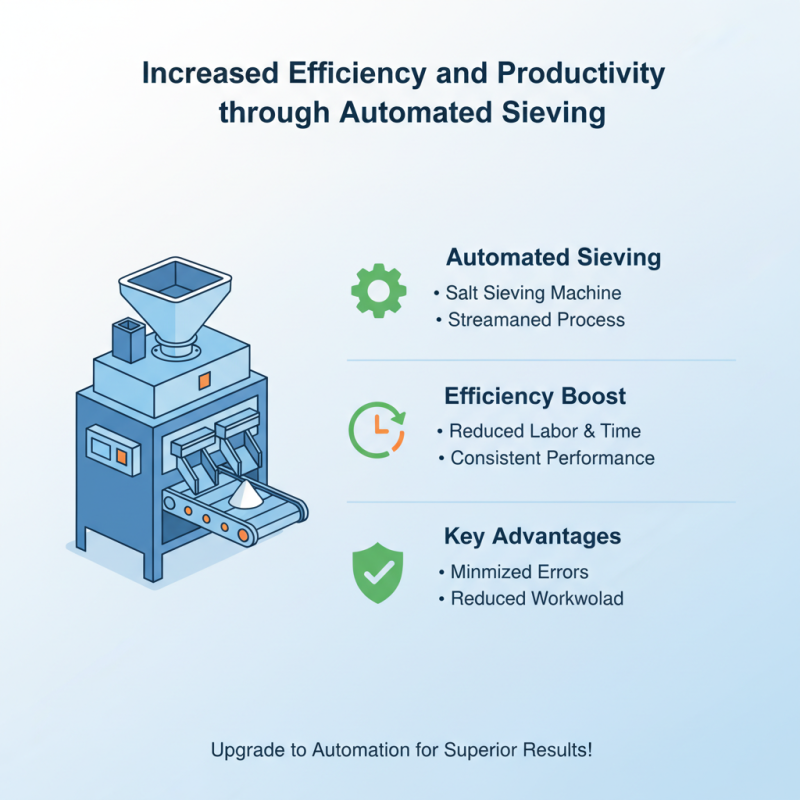
Automated sieving with a salt sieving machine greatly enhances efficiency. Traditional methods can be labor-intensive and time-consuming. Shifting to automation streamlines the entire sieving process. This not only reduces the workload on staff but also minimizes the potential for errors. Efficiency is achieved through consistent performance, which is crucial in a fast-paced business environment.
Using a salt sieving machine, businesses can maintain high productivity levels. Automation allows for continuous operation, leading to increased output. Workers can focus on other valuable tasks while the machine handles sieving. However, not every machine performs optimally in varying conditions. Regular maintenance and monitoring are necessary to ensure the best results. Companies must evaluate their specific needs before investing in this technology.
While automated sieving offers numerous advantages, it can be a learning experience. Training staff to operate the Salt Making Machine effectively takes time. Each team's dynamics will influence adoption rates. Companies should prepare for adjustments during this transition. Overcoming these challenges can lead to significant long-term gains.
Cost-Effectiveness: Long-Term Savings with Reduced Waste
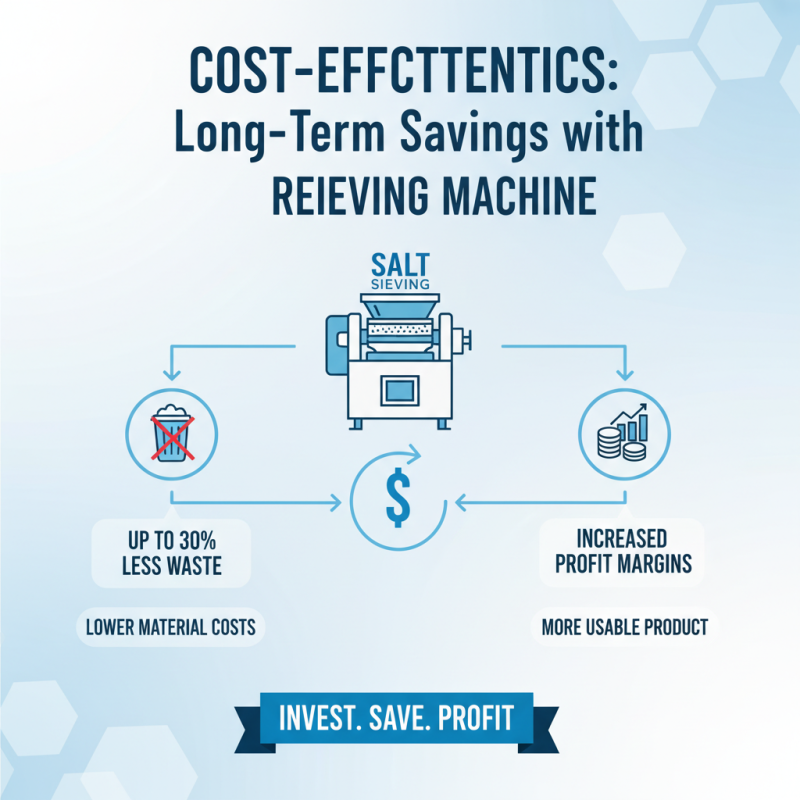
Investing in a salt sieving machine can significantly improve cost-effectiveness for your business. Research indicates that businesses using efficient sieving processes can cut down their waste by up to 30%. This reduction in waste directly correlates with lower material costs. When you minimize the amount of salt discarded during production, you retain more usable product. This not only saves money but can also enhance profit margins.
Moreover, a salt sieving machine increases processing efficiency. According to industry reports, companies adopting automated sieving systems have seen productivity boosts of around 25%. This efficiency means faster turnaround times. Yet, some might overlook the maintenance costs associated with these machines. Neglecting regular maintenance can lead to inefficiencies and unexpected downtime, countering initial savings.
Finally, implementing a salt sieving solution fosters better quality control. Consistent particle sizes lead to improved product quality. However, inconsistent monitoring can lead to variations that affect both product integrity and customer satisfaction. Balancing efficient processes with quality assurance is vital for sustainability in salt processing.
Flexibility and Versatility in Handling Different Salt Varieties
Flexibility and versatility are crucial for businesses handling various salt varieties. A salt sieving machine offers the ability to efficiently process different grain sizes and types of salt. This adaptability ensures that businesses can meet diverse customer demands, whether for culinary applications or industrial uses. Reports indicate that the salt market is expected to grow at a compound annual growth rate (CAGR) of 4.5% through 2025. This growth presents opportunities for businesses to leverage technology that enhances operational efficiency.
Employing a salt sieving machine allows for the precise separation of salt particles. This precision minimizes waste and maximizes product quality. For instance, utilizing an Air Heat Machine can further enhance the sieving process by providing a consistent drying environment. A well-maintained sieving machine can adjust to varying salt textures and moisture levels. However, it requires periodic maintenance and calibration to ensure optimal performance. Neglecting these aspects can lead to inconsistent product quality, impacting customer satisfaction.
In addition, different salt types may require distinct handling techniques. A traditional manual approach may not meet evolving industry standards. Advanced sieving machines can automatically switch settings based on the salt variety, showing their versatility. Yet, many businesses still rely on outdated equipment, risking inefficiency and reduced output. Adopting modern technology like salt sieving machines can be a game-changer for businesses striving to stay competitive.
Top 10 Benefits of Using a Salt Sieving Machine for Your Business
Minimizing Labor Costs and Manual Effort in Salt Processing
In the world of salt processing, minimizing labor costs is crucial. A salt sieving machine automates the separation of salt from impurities. This cuts down on human labor, which can be costly and time-consuming. Additionally, machines work faster, ensuring higher efficiency in production. Manual processing can lead to inconsistent results and worker fatigue.
Consider investing in a salt sieving machine if your business handles large volumes of salt. This machine reduces the need for continuous manual effort. When choosing a machine, focus on models that offer adjustable settings for different salt types. This versatility can enhance the quality of your output.
Tips: Regular maintenance is vital. A well-maintained machine lasts longer and operates more efficiently. Train staff on how to use the equipment properly. This ensures that your machinery, including any Packaging Machine, runs smoothly and meets safety standards. Addressing operational issues promptly can save you money and time in the long run. Reflect on your current processes; are they as efficient as they could be?
Top 10 Benefits of Using a Salt Sieving Machine for Your Business
| Benefit |
Description |
Impact on Business |
| Minimizes Labor Costs |
Reduces the need for manual labor, cutting staffing costs significantly. |
Cost savings that can be reallocated to other business areas. |
| Increases Efficiency |
Automates sieving processes, speeding up production times. |
Higher output and faster market responsiveness. |
| Consistent Quality |
Ensures uniform salt grain size, improving product quality. |
Enhances customer satisfaction and reduces returns. |
| Improves Safety |
Reduces manual handling, lowering the risk of injury. |
A safer work environment leads to reduced health costs. |
| Energy Efficient |
Utilizes less energy compared to manual processes. |
Lower utility bills, contributing to overall savings. |
| Less Waste |
Minimizes salt waste through precise sieving. |
Higher profits by maximizing usable product. |
| Customization |
Allows for adjustments to sieve specifications based on market needs. |
Flexibility to meet diverse customer demands. |
| Scalability |
Enables easy scaling up or down based on production needs. |
Helps adapt to market fluctuations efficiently. |
| Easy Maintenance |
Designed for quick cleaning and maintenance procedures. |
Minimized downtime and enhanced productivity. |
| Enhanced Reputation |
High-quality output builds brand credibility and trust. |
Attracts new customers and retains existing ones. |
Improved Consistency in Granule Size and Texture for Market Standards
In the competitive world of food production, granule size and texture directly affect product quality and consumer satisfaction. Maintaining uniformity in salt granules is crucial for meeting market standards. A salt sieving machine ensures that the granule size remains consistent, enhancing product appeal. Research from industry experts suggests that 75% of consumers prefer products with even textures. This preference drives businesses to seek better processing techniques, like using advanced sieving machines.
The ability of a salt sieving machine to enhance granule consistency can yield significant operational benefits. By adhering to precise specifications, businesses mitigate waste and improve production efficiency. Studies indicate that consistent granule size can lead to a 30% reduction in packaging errors. Variability in texture can lead to customer dissatisfaction and potential returns. Companies must reflect on their processing methods to avoid these pitfalls.
Investing in effective technology, such as the L Sealing Machine, can greatly enhance production. This equipment improves the sealing process, ensuring that salt maintains its integrity through transportation. Proper sealing combined with size consistency can prevent clumping, which is often a concern in salt products. These small changes can have a substantial impact on brand reputation and market competitiveness.
Boosting Business Reputation with Superior Product Quality
In the competitive landscape of the food industry, maintaining product quality is paramount. A salt sieving machine enhances this quality significantly. By ensuring uniformity in salt granules, it removes impurities and inconsistent sizes. Customers notice these details, leading to enhanced satisfaction. When they trust your product, word spreads, boosting your reputation.
Using a salt sieving machine can also improve the efficiency of your production process. This machine reduces manual labor and minimizes waste. With better control over the quality, businesses can focus on scaling up their operations. Yet, challenges may arise in training staff to use this technology effectively. Investing time in employee education ensures optimal usage and maximizes benefits.
Incorporating this machinery may require upfront costs. However, the long-term advantages outweigh initial investments. Quality control can lead to fewer returns or complaints. This, in turn, strengthens your brand’s credibility. Ultimately, ensuring superior product quality through advanced machinery can distinguish your business in a crowded market.
Enhancing Efficiency in Refined Salt Production: Insights from Industry Reports on Multi-Level Screening and Automated Packaging Solutions
In the refined salt production industry, the integration of multi-level screening and automated packaging solutions has proven to significantly enhance operational efficiency. Recent industry reports indicate that implementing a systematic approach to salt washing that includes advanced machinery leads to a reduction in processing times by up to 30%. Multi-level screening not only ensures the removal of impurities but also guarantees that the final product meets the highest quality standards, thereby increasing customer satisfaction and trust in the product.
Moreover, automation in the packaging process has exhibited substantial improvements in throughput. Studies suggest that automation reduces labor costs by approximately 20% while simultaneously increasing packaging accuracy and speed. This is especially crucial in a competitive market where operational efficiency can differentiate a business. The modern machinery used for salt washing, coupled with grading and packaging, creates a streamlined workflow that fosters better inventory management and quicker response times to market demands.
The salinity industry can significantly benefit from embracing these technological advancements. By adopting sophisticated machinery designed for washing, screening, and packaging, producers can ensure not only the integrity of their product but also a sustainable business model that accommodates growth and efficiency in an ever-evolving market landscape.
FAQS
: It can cut waste by up to 30%. This leads to lower material costs and higher profit margins.
Companies may see productivity boosts of around 25%. Faster turnaround times benefit overall operations.
Maintenance costs can be overlooked. Neglecting these can lead to inefficiencies and unexpected downtimes.
It ensures consistent particle sizes, improving overall product quality. Inconsistent monitoring can degrade quality.
Different grain sizes need unique processing. A versatile machine can meet diverse customer demands.
Regular maintenance is essential. Inconsistent upkeep can lead to variations in product quality and customer satisfaction.
The market might grow at a CAGR of 4.5% through 2025. Efficient technologies can leverage this growth.
Yes, they can automatically adjust settings. This adaptability makes them more efficient compared to manual methods.
Outdated machines can lead to inefficiency and lower output. Modern technology is vital for competitiveness.
It’s vital for sustainability in processing. Overlooking either aspect can harm business success and customer trust.
Conclusion
The article "Top 10 Benefits of Using a Salt Sieving Machine for Your Business" outlines the numerous advantages of incorporating a salt sieving machine into salt processing operations. One of the primary benefits is the enhanced purity and quality achieved in salt products, which directly impacts marketability. Automating the sieving process significantly increases efficiency and productivity, allowing businesses to handle larger volumes with minimal human intervention. Furthermore, utilizing a salt sieving machine can lead to long-term cost savings by reducing waste and minimizing labor costs.
Flexibility and versatility are additional benefits, as these machines can easily manage various salt types, ensuring that businesses can adapt to different market demands. Consistency in granule size and texture is crucial for meeting industry standards, and a salt sieving machine facilitates this by providing uniformity in product output. Ultimately, investing in a salt sieving machine boosts a business’s reputation by ensuring superior product quality, thereby enhancing competitiveness in the market.