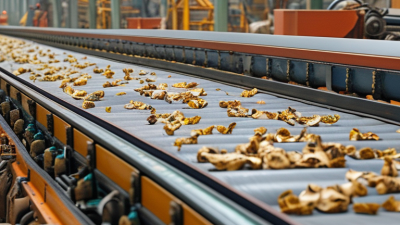
So, Belt Conveying Equipment is basically what keeps bulk materials moving continuously—think factories, mines, warehouses, ports, and processing plants. The basic setup is pretty straightforward: an endless belt, a drive pulley, a tail pulley, idlers, a take-up device, and a supporting frame. Material gets loaded in through a loading chute, then it travels along on the moving belt. The drive pulley's the one that supplies motion—through friction, of course. Simple in theory, right?
You know, R. Todd Swinderman—former president of Martin Engineering and a well-known conveyor-safety specialist—puts the basic idea pretty simply: “A belt conveyor is a system, not just a belt.” And honestly, that line really holds up when you’re out there doing inspections. A belt might look fine at first glance, but a misaligned pulley can quietly chew up its edge. Then there’s a blocked chute: next thing you know, you’ve got spillage, extra stress on the belt, and downtime you didn’t plan for. That’s why experienced operators keep an ear out for odd idler noise and keep an eye on how the belt tracks.
So, what exactly goes into belt conveying equipment? And how do all those parts work together to keep material moving reliably? That's what this article digs into. We'll also look at things like belt speed, carrying capacity, loading points, tension, and discharge arrangements. Take a rubber belt hauling crushed stone—it might roll over dozens of spinning idlers before it finally hits a transfer point. And around all those moving parts, dust control and guarding are still a must. Honestly, it's the little details that make the difference.
But let's be honest—no conveyor runs perfectly forever. Little by little, things like temperature swings, moisture, uneven loading, and weak maintenance can chip away at performance. And yeah, that's an uncomfortable reality we can't just ignore. A design might look great on paper, but put it next to a shaking crusher or a dusty stockpile and it can act totally different. That's where solid engineering, real inspection records, and well-trained people come in—they're what turn equipment capability into dependable day-to-day service.
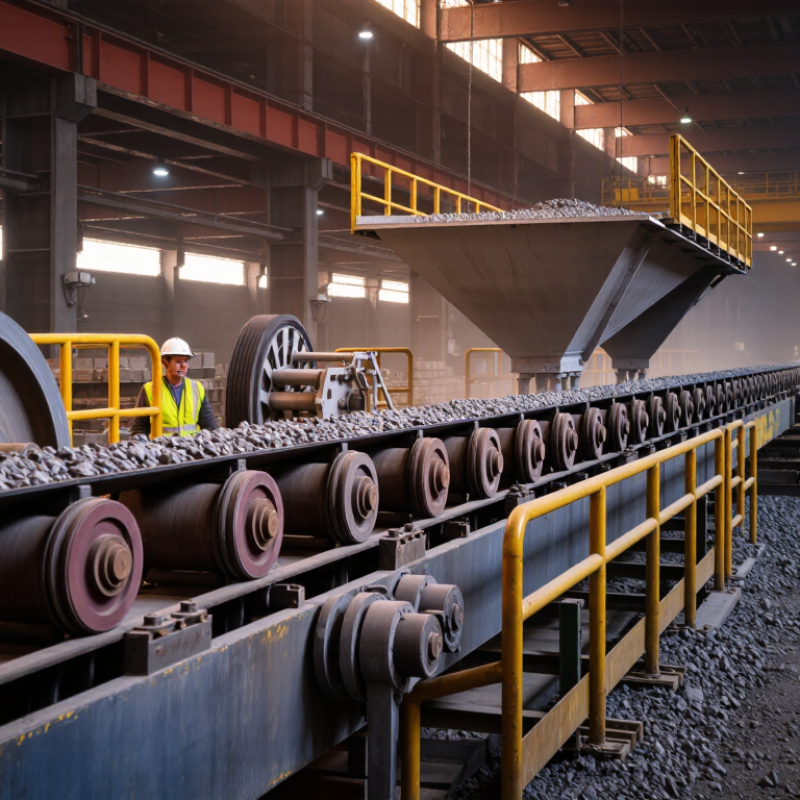
Belt conveying equipment is a material-handling system that moves bulk goods or packaged items over a fixed route. It usually includes a continuous belt, drive pulley, tail pulley, idlers, frame, tensioning unit, and belt cleaner. The drive pulley rotates through an electric motor and gearbox. Friction between the pulley and belt creates movement. Material is loaded onto the upper belt, travels across the idlers, and leaves at a discharge point. Simple in appearance, but alignment affects everything.
In Washed Salt Equipment, conveyors can move damp salt from washing, draining, or screening areas. Moisture may increase carryback and cause material to stick beneath the belt. Scrapers, sealed bearings, and suitable belt covers help control these problems. A practical field lesson is that small tracking errors often become expensive wear. That detail matters. Operators should inspect splices, rollers, guards, and emergency stops regularly. Dust, overloading, and poor tension can reduce service life. The ideal design also considers incline, capacity, particle size, cleaning access, and worker safety.
Tips: Keep the belt centered during operation. Remove buildup before it hardens. Do not ignore unusual noise or vibration. Check loading points for impact damage. A maintenance log improves reliability, although real conditions may still expose design weaknesses.
A belt conveyor moves bulk materials on a continuous loop. Its main working surface is the belt, usually made from layered rubber or reinforced polymer. The belt carries material between loading and discharge points. Its width, strength, and surface pattern must match the load.
The drive pulley powers the belt through a motor and gearbox. The tail pulley turns the belt at the opposite end. Idler rollers support the belt and reduce sag beneath the material. Carrying idlers hold the loaded side, while return idlers support the empty side. The conveyor frame keeps every component aligned. Even a small alignment error can make the belt drift.
A tensioning device maintains suitable belt tension during operation. Too little tension causes slipping, while excessive tension increases wear. Scrapers remove sticky material from the belt surface. Chutes guide material during loading and discharge. Guards, emergency stop devices, and sensors improve operating safety and monitoring.
In practical installations, dust, moisture, and uneven loading create daily challenges. Salt Washing Equipment may use conveyors to move wet salt after washing, so corrosion resistance and drainage deserve close attention. Operators should inspect roller noise, belt edges, and material buildup regularly. A missed inspection can become an expensive failure. Not every design choice works equally well. Experienced technicians often adjust speed, tension, and loading position after observing real operating conditions.
A belt conveyor moves material through controlled friction, not suction. An electric motor turns a drive pulley. That pulley grips the belt and creates a continuous loop. Idlers support the loaded section, while a return strand travels underneath. As the belt advances, material rides on its upper surface. A head pulley releases the load into a chute, hopper, or another process. The motion is simple.
Operators select belt width, speed, trough angle, and capacity from bulk density and feed rate. The Conveyor Equipment Manufacturers Association’s Belt Conveyors for Bulk Materials, 7th edition, connects these variables with practical conveyor design. The U.S. Department of Energy’s Industrial Motor Systems Market Opportunities Assessment reports that motor systems can consume 60% to 70% of manufacturing electricity. Efficient drives and correct tension therefore matter. A belt running too fast may spill powder at transfer points. A belt running too slowly may create a production bottleneck. Vacuum Drying Equipment may feed fragile solids onto a low-speed belt, where gentle handling reduces breakage. Yet this is not automatic.
Field checks reveal what drawings miss: belt tracking, pulley lagging, dust buildup, and unusual vibration. The U.S. Bureau of Labor Statistics reported 2.6 million nonfatal workplace injuries and illnesses in 2023. That figure does not prove conveyors cause injuries. It reinforces the need for guarding, emergency stops, and lockout procedures. A field-maintenance lesson is clear: small misalignment can become a large cleanup. That assumption deserves checking.
Belt conveyors move materials by transferring power from a motor-driven pulley to a continuous belt. Typical operating speeds vary with the material, belt width, loading method, and safety requirements. The ranges below are representative engineering values rather than limits for every conveyor system.
Belt conveying equipment moves materials continuously on a looped belt supported by rollers or a sliding bed. Its design depends on load, distance, speed, and site conditions. Grand View Research estimated the global conveyor systems market exceeded US$10 billion in 2023, showing the equipment’s importance in warehouses, mines, farms, and processing plants.
Flat belt conveyors are widely used for cartons, parcels, and packaged goods. Their level surface suits inspection and sorting tasks.
Troughed belt conveyors form a shallow channel, helping carry bulk materials such as grain, sand, and crushed stone.
Cleated belt conveyors use raised sections to control products on inclines. They are useful where loose items might slide backward.
Incline conveyors connect different floor levels. Curved belt conveyors save space, although tight turns can affect product stability. Modular plastic belts tolerate frequent washing and allow damaged sections to be replaced. Steel belt conveyors handle hot, sharp, or heavy material, but they require stronger drives and guarding.
The 2024 Conveyor Belt Market report from MarketsandMarkets projected continued growth through the decade, supported by automation and e-commerce expansion.
Yet growth does not make every design suitable. A belt can run smoothly while still damaging fragile goods. Real operating tests matter. Sometimes, the “best” conveyor is simply the easiest one to clean and adjust.
Belt conveying equipment transports materials continuously across factories, warehouses, mines, and distribution centers. A motor turns pulleys, while rollers support a moving belt. Workers can feed products at one end and receive them at another. At transfer points, properly aligned chutes reduce spillage and dust. Small details matter.
In mining operations, wide belts carry crushed stone, coal substitutes, and metal-bearing rock over long distances. Food processors use enclosed, washable conveyors for vegetables, baked goods, and packaged products. Belts with cleats can lift cartons or wet produce without sliding. In agriculture, conveyors move grain from storage bins to trucks, dryers, or cleaning systems.
Packaging facilities rely on them to space boxes before labeling and inspection. Recycling centers use slow belts so workers can identify different materials by sight. Construction sites may use compact conveyors to move soil, rubble, or concrete fragments through narrow areas.
Belt systems also support controlled heating and drying processes. A perforated belt can carry sliced food through Hot Air Heating Equipment, where warm air passes around each piece. This arrangement helps maintain even exposure, but airflow must be tested at several belt positions.
A layout that looks efficient on paper may create cold zones in practice. Equipment selection depends on material weight, moisture, temperature, belt speed, and cleaning requirements.
Operators should inspect tracking, tension, and pulley wear regularly. Neglected alignment causes uneven wear and unexpected downtime. Some designs are simply too optimistic.
What Is Belt Conveying Equipment and How Does It Work?
Belt conveying equipment moves bulk materials on a continuous belt supported by rollers or a sliding bed. A drive pulley supplies motion, while tail pulleys maintain the belt path. Performance depends on more than motor power. Material weight, belt speed, conveyor length, incline, and loading impact required tension.
CEMA’s Belt Conveyors for Bulk Materials, Seventh Edition, identifies belt tension as a function of load, lift, acceleration, and running resistance. Misalignment increases friction and can push material toward the belt edge. Wet fines may stick to the return belt, creating carryback around pulleys. That small buildup can become a serious tracking problem. It happens quietly.
Drive efficiency also deserves attention. The U.S. Department of Energy’s 2022 Motor Systems Market Assessment reports that motor-driven systems consume about 68% of U.S. manufacturing electricity. An overloaded conveyor therefore wastes energy quickly. Variable-speed control can reduce empty-running losses, but poor settings may create slipping or unstable feeding. ISO 5048 provides established methods for calculating belt conveyor power and tensions.
Field inspections remain essential. Check idler rotation, belt sag, pulley lagging, spillage, and emergency stop function. A clean design can still fail under uneven loading. I have seen operators blame the motor when worn idlers caused the real resistance. This is an easy mistake. Temperature, dust, moisture, and maintenance quality can change performance daily. Conservative calculations help, but actual operating data should challenge the original assumptions.
| Data Dimension | Typical Data or Criterion | How It Affects Performance | Practical Considerations |
|---|---|---|---|
| Basic conveying principle | A continuous belt is supported by idlers or a slider bed and driven by a powered pulley. | Transfers bulk materials or unit loads at a controlled and generally continuous rate. | The belt carries the load on the conveying run and returns empty on the return run. |
| Belt speed | Approximately 0.5–3.5 m/s is common for many bulk-material applications; the suitable value depends on the material and conveyor design. | Higher speed can increase capacity, but may also increase dust, spillage, belt wear, and material degradation. | Use lower speeds for fragile, dusty, abrasive, or easily segregated materials. |
| Conveyor capacity | Capacity is influenced by belt speed, belt width, cross-sectional load area, material bulk density, and loading efficiency. | Insufficient capacity causes bottlenecks; excessive loading increases spillage, belt stress, and drive demand. | A commonly used calculation structure is: Q = 3600 × A × v × ρ × η, where Q is mass flow, A is load area, v is belt speed, ρ is bulk density, and η is a loading factor. |
| Belt width | Common industrial widths range from roughly 400 mm to more than 2,000 mm, depending on the duty and required capacity. | A wider belt can carry a larger cross-sectional load at the same speed and can reduce material depth. | Width should match the material lump size, loading method, skirt arrangement, and required throughput. |
| Conveyor length and elevation | Length and lift vary widely; horizontal, inclined, and declined layouts are all used. | Longer conveyors increase belt resistance, while elevation change increases the required power for lifting material. | Consider take-up travel, belt stretch, transfer points, access, and emergency stopping distance. |
| Incline angle | Many conventional troughed belt conveyors operate at moderate inclines; the allowable angle depends on material flowability, moisture, particle size, and belt surface. | Excessive incline can cause rollback, sliding, spillage, and unstable loading. | Cleated belts, pocket belts, or specialized high-angle designs may be required for steeper conveying routes. |
| Material characteristics | Important properties include bulk density, particle size, abrasiveness, moisture, temperature, cohesion, and angle of repose. | These properties determine belt selection, loading profile, wear rate, carryback, dust generation, and achievable incline. | Material testing is recommended when properties vary significantly during operation. |
| Belt tension | Tension must be sufficient to transmit drive force, maintain belt contact with pulleys, and limit sag between idlers. | Too little tension can cause slip and mistracking; excessive tension can accelerate belt, splice, pulley, and bearing wear. | The take-up system should maintain appropriate tension across changing load and temperature conditions. |
| Drive power | Power demand depends on material flow, belt speed, conveyor length, elevation, friction, acceleration, and operating conditions. | An undersized drive may overheat or fail to start the loaded conveyor; an oversized drive can increase energy and equipment costs. | Starting torque, regenerative operation, braking, and variable-speed control should be evaluated for the complete conveyor system. |
| Idler alignment and spacing | Idler spacing is selected according to belt width, belt mass, load, and required sag control; loading zones usually need closer support. | Poor alignment or inadequate support can produce belt mistracking, excessive sag, spillage, and higher rolling resistance. | Regular inspection should check seized rollers, damaged frames, buildup, and alignment. |
| Loading and transfer points | Material should enter near the belt center, in the direction of belt travel, and at a velocity close to the belt speed where practical. | Poor transfer design causes impact damage, belt mistracking, dust, spillage, and uneven loading. | Use impact beds, properly adjusted skirts, chutes, and dust-control measures where required. |
| Belt tracking | The belt should remain centered on the pulleys and idlers throughout the operating cycle. | Mistracking can damage belt edges, increase spillage, activate safety switches, and shorten service life. | Check pulley squareness, frame alignment, belt splice quality, material buildup, and loading symmetry. |
| Belt cleaners and carryback | Primary and secondary cleaners are commonly used where sticky or fine materials adhere to the belt. | Effective cleaning reduces return-side buildup, contamination, spillage, and maintenance interruptions. | Cleaner pressure and blade condition must be compatible with the belt cover and splice. |
| Operating environment | Temperature, water, chemicals, dust, outdoor exposure, and corrosive conditions influence equipment selection. | Unsuitable materials or seals can lead to cracking, corrosion, swelling, electrical faults, and premature failure. | Select suitable belt covers, frames, bearings, motors, guards, and electrical protection for the site conditions. |
| Maintenance and safety | Routine checks should cover belt condition, splices, pulleys, idlers, cleaners, guards, emergency stops, and take-up systems. | Preventive maintenance improves availability, controls operating risk, and helps identify failures before major damage occurs. | Lockout and isolation procedures, pull-cord switches, guards, and accessible inspection points are essential for safe operation. |
Note: The values and criteria shown are general engineering references. Final conveyor performance depends on the complete system design, material testing, operating conditions, and applicable safety requirements.
It is a material-handling system that moves bulk goods or packages along a fixed route. A continuous belt carries material between loading and discharge points. Simple, but alignment matters.
An electric motor turns the drive pulley through a gearbox. Friction moves the belt across supporting rollers. Material travels on the upper belt and leaves at the discharge point.
Key parts include the belt, drive pulley, tail pulley, idlers, frame, and tensioning device. Scrapers remove buildup from the belt surface. Guards, sensors, and emergency stops support safer operation.
Belt conveyors can move bulk materials and packaged goods. They may handle damp, granular, or screened materials. The belt surface must match the material’s weight, size, and moisture.
Poor alignment can make the belt drift toward one edge. This increases friction, edge wear, and spillage. A small tracking error may become costly damage. It is easy to miss.
Moist material may stick beneath the belt and increase carryback. It can also encourage buildup around pulleys and rollers. Scrapers, drainage, sealed bearings, and suitable belt covers can help.
Important factors include belt width, speed, length, incline, load weight, and particle size. Uneven loading increases resistance and may waste energy. Variable speed can reduce empty-running losses, but poor settings may cause slipping.
Inspect belt edges, splices, rollers, guards, emergency stops, and loading points. Listen for unusual noise and watch for vibration. Remove buildup before it hardens. A maintenance log helps, though it cannot reveal every design weakness.
Overloading, poor tension, dust, moisture, and worn idlers can reduce service life. Too little tension causes slipping. Too much tension increases wear. The motor is not always the real problem.
Belt Conveying Equipment is a material-handling system designed to transport bulk goods or packaged products continuously and efficiently over short or long distances. It generally consists of a conveyor belt, drive pulley, tail pulley, idlers, frame, motor, and control system. During operation, the motor turns the drive pulley, causing the belt to move along the idlers and carry materials from the loading point to the discharge area. Proper tension and alignment help maintain stable movement and reduce wear.
Common types include flat belt conveyors, troughed belt conveyors, cleated belt conveyors, inclined conveyors, and reversible conveyors. They are widely applied in mining, construction, manufacturing, agriculture, warehousing, logistics, and ports. Performance depends on factors such as belt speed, load capacity, material characteristics, conveyor length and slope, pulley condition, maintenance quality, and environmental conditions. Careful equipment selection and regular inspection can improve efficiency, safety, service life, and overall operating reliability.