




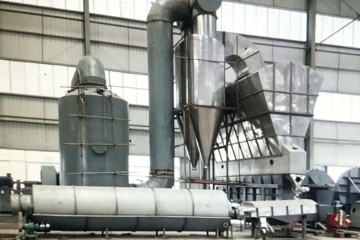
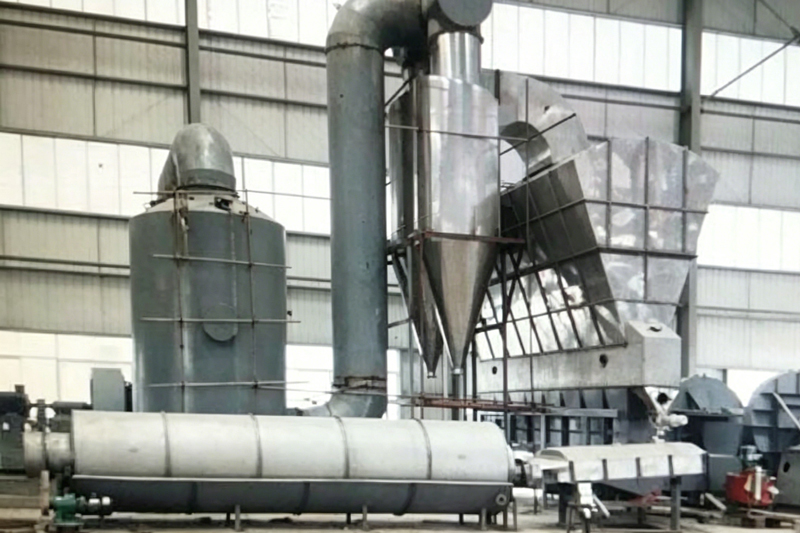
Anhydrous Calcium Chloride Drying Equipment
Core Overview of Equipment
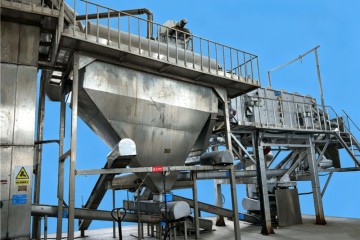
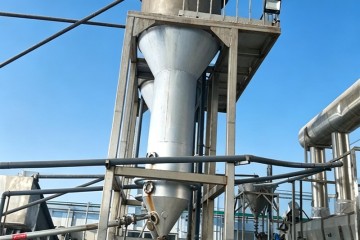
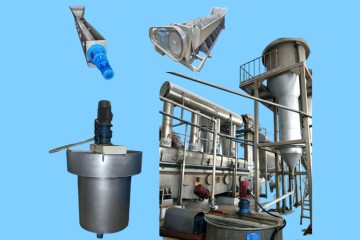
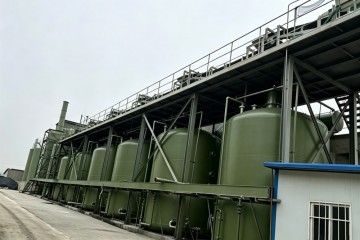
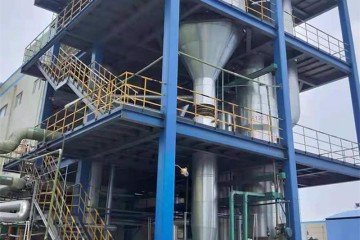
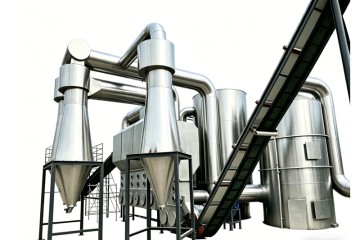
This anhydrous calcium chloride drying equipment is specially designed for ≥35% concentration calcium chloride reaction liquid. It innovatively adopts an integrated process of "tail gas preheating flash evaporation + boiling fluidized bed atomization crystallization + high-temperature drying + screening and cooling", realizing full-process automated production from raw material concentration to finished product packaging. Through precise parameter regulation, the equipment strictly controls the particle size and content of products, and can fully meet the needs of large-scale and high-quality production.
|
Item |
Details |
| Equipment Type | Integrated equipment of tail gas preheating + boiling fluidized bed drying + screening and cooling |
| Processing Capacity | Customizable according to customer requirements (1t/h - 10t/h) |
| Core Control Parameters | Concentration after flash evaporation: 42 - 45%, temperature: 90° - 100°; drying temperature: 360 - 420℃; finished product content: 92 - 94%, particle size: 0.2 - 0.4mm; temperature after cooling: 50 - 60℃ |
| Automation Level | Full automatic conveying, temperature control and screening, requiring only a small amount of manual on-duty |
Scope of Applicable Raw Materials
The equipment is developed for specific raw materials with strong adaptability. The specific applicable scope is as follows:
|
Raw Material Type |
State |
Concentration Requirement |
| Calcium Chloride Reaction Liquid | Liquid, no obvious impurities | ≥35% |
| Similar Halide Solutions | Liquid, stable composition, non-corrosive | Concentration similar to calcium chloride reaction liquid |
Working Principle of Equipment
The equipment is based on the principles of heat exchange, atomization crystallization and high-temperature drying, realizing efficient transformation of materials through multi-stage processes:
1.Preheating and Flash Evaporation Stage: The waste heat of drying tail gas is skillfully used to preheat ≥35% concentration calcium chloride liquid. The flash evaporation process quickly increases the material concentration to 42 - 45%, and simultaneously raises the temperature to 90° - 100°, creating suitable conditions for subsequent atomization crystallization.
2.Atomization Crystallization Stage: The preheated calcium chloride liquid is pumped into the boiling fluidized bed by a high-pressure pump. Under the action of high-speed airflow, it is atomized into tiny droplets. The droplets contact with the high-temperature environment in the bed and quickly crystallize into spherical particles of 0.1 - 0.4mm.
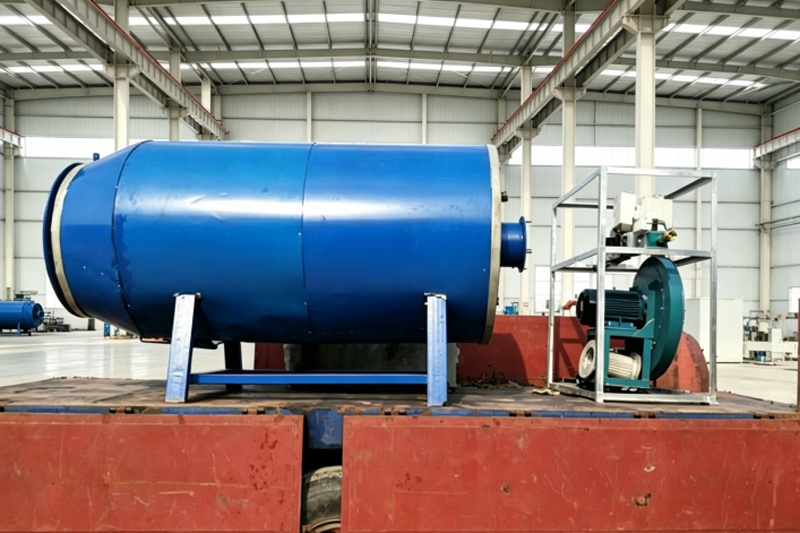
|
model |
Output heat (104Kcal) |
Output air volume (m3/h) |
Hot air temperature (℃) |
Gas consumption (Nm3/h) |
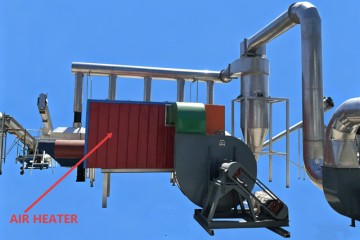
| ZRQ-10 | 8 ~ 10 | 1850 ~ 6900 | 150 ~ 350 | 10~12.5 |
| ZRQ-15 | 10 ~ 15 | 2400 ~ 10400 | 150 ~ 350 | 12.5 ~ 19 |
| ZRQ-30 | 25 ~ 30 | 4400 ~ 20800 | 150 ~ 550 | 31.5 ~ 37.5 |
| ZRQ-60 | 40 ~ 60 | 9610 ~ 41600 | 150 ~ 550 | 50 ~ 75 |
| ZRQ-90 | 60 ~ 90 | 13400 ~ 62500 | 150 ~ 550 | 75~ 115 |
| ZRQ-180 | 120 ~ 180 | 21400 ~ 125000 | 150 ~ 550 | 150~225 |
| ZRQ-240 | 200 ~ 240 | 23800 ~ 166000 | 150 ~ 550 | 250 ~ 300 |
| ZRQ-360 | 250 ~ 360 | 30000~250000 | 150 ~ 550 | 320 ~ 450 |
3.High-Temperature Drying Stage: 360 - 420℃ high-temperature air is introduced into the fluidized bed, fully contacting with the spherical particles to quickly evaporate the residual moisture inside the particles. Precise temperature control ensures that the finished product content is stably maintained at 92 - 98%.
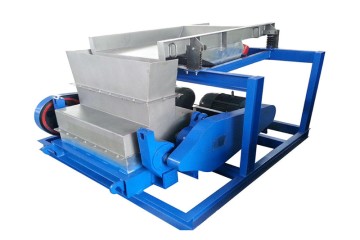
4.Screening and Cooling Stage: After the dried particles are cooled to 50 - 60℃, they enter the screening machine for classification. Particles of 0.2 - 0.4mm are packaged as finished products, particles smaller than 0.2mm are returned to the fluidized bed for reprocessing, and particles larger than 0.4mm are separately packaged.
4.Screening and Cooling Stage: After the dried particles are cooled to 50 - 60℃, they enter the screening machine for classification. Particles of 0.2 - 0.4mm are packaged as finished products, particles smaller than 0.2mm are returned to the fluidized bed for reprocessing, and particles larger than 0.4mm are separately packaged.
Refined Working Steps
|
Step Number |
Operation Process |
Core Parameter Control |
| 1 | Raw Material Conveying | 40% concentration calcium chloride liquid is transferred to the spray absorption tower by a pump |
| 2 | Tail Gas Preheating and Flash Evaporation | The waste heat of drying tail gas is used for flash evaporation, making the concentration reach 42 - 45% and the temperature reach 90° - 100° |
| 3 | Atomization Crystallization | The material is transferred to the boiling fluidized bed by a high-pressure pump to form spherical solids of 0.1 - 0.4mm |
| 4 | High-Temperature Drying | The hot air furnace provides 360 - 420℃ high-temperature air, drying to a content of 92 - 94% |
| 5 | Cooling Down | The material temperature is reduced to 50 - 60℃ through a rotary drum cooler |
| 6 | Finished Product Screening | The screening machine selects finished products of 0.2 - 0.4mm; particles smaller than 0.2mm are returned to the fluidized bed, and particles larger than 0.4mm are separately packaged |
| 7 | Finished Product Packaging | Finished products of 0.2 - 0.4mm are packaged and put into storage |
Core Advantages of Equipment
|
Advantage Category |
Specific Content |
| Energy Saving and High Efficiency | The waste heat of drying tail gas is used to preheat raw materials, and the thermal efficiency is improved by more than 30% compared with traditional equipment; atomization crystallization and high-temperature drying are carried out simultaneously, greatly shortening the production cycle |
| Precise and Controllable | Through multi-stage parameter regulation, the finished product content error is ≤0.5%, and the particle size qualification rate is ≥95%, ensuring stable and reliable product quality |
| Circular Utilization | Unqualified materials after screening are returned to the fluidized bed for reprocessing, and the material utilization rate is as high as 99%, effectively reducing production costs |
| Automatic Operation | The whole process from raw material conveying to finished product packaging is automatic, reducing manual intervention, and lowering labor costs and operation errors |
| Environmental Protection and Cleanliness | A closed production process is adopted to reduce dust and waste gas emissions, meeting strict environmental protection requirements; the equipment is easy to clean and maintain |