




Acid Method Bromine Extraction Process & Technology, Sulfuric Acid Process for Natural Brine Bromine Extraction, Industrial Acidification Bromine Recovery Process
Overview
Acid bromine extraction, also known as air stripping+sulfur dioxide reduction absorption, is the most widely used, mature, and cost-effective technology for extracting bromine from underground brine, salt lake brine, and seawater. It has the characteristics of high bromine recovery rate, stable operation, and low energy consumption, and is the preferred solution for modern large-scale bromine plants.
Working principle
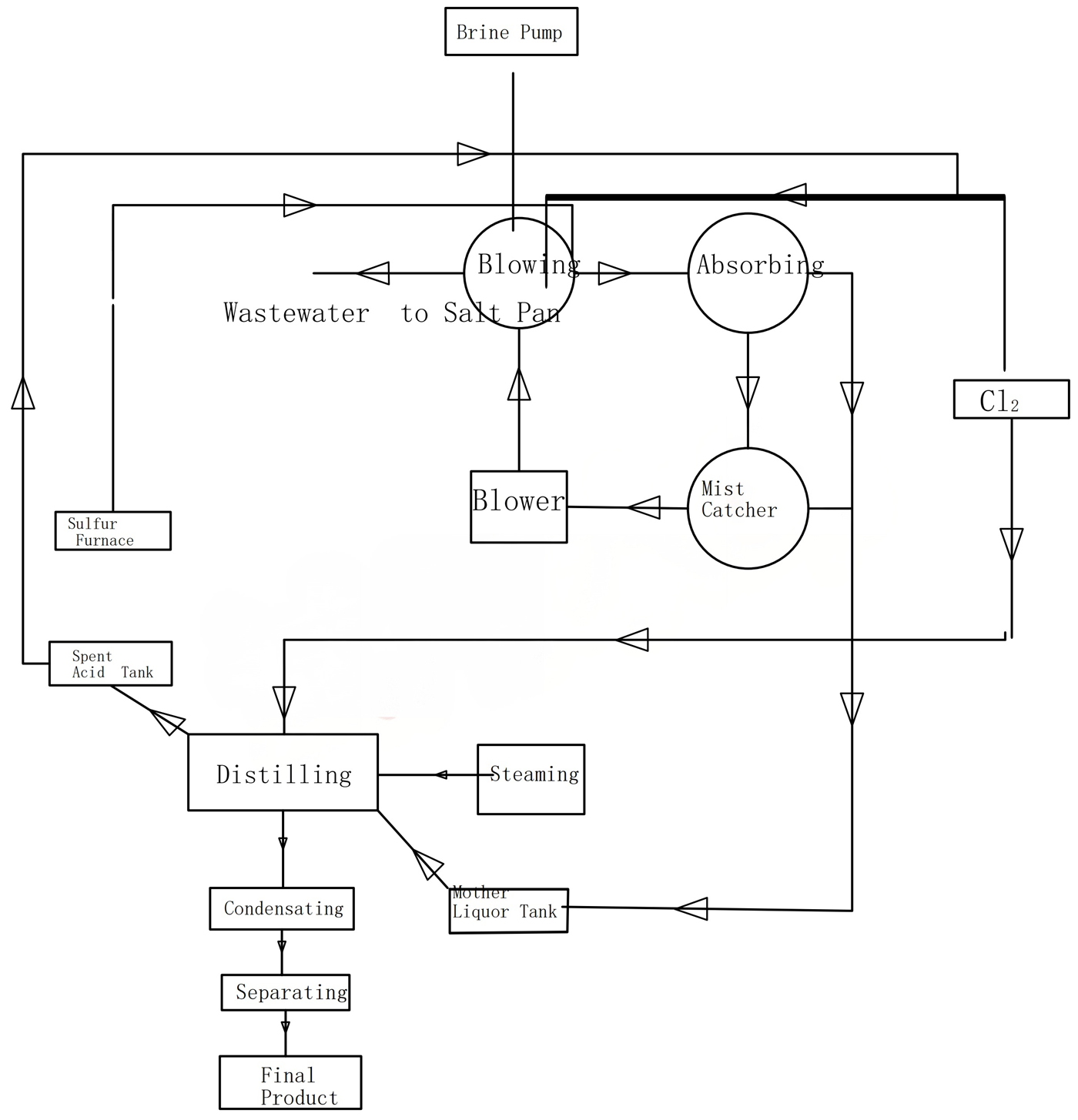
This process converts bromide ions (Br ⁻) in the original brine into high-purity elemental bromine through four core stages. During the process of extracting bromine, it does not affect the subsequent production of raw salt.
1) Acidification and oxidation
Acid the original brine with sulfuric acid and control the pH between 2.0 and 3.5 to prevent hydrolysis of chlorine and bromine. Next is oxidation, which will be tested on a small scale in the laboratory using oxidants such as concentrated sulfuric acid or acidified potassium permanganate; In large-scale industrial production, chlorine gas is mainly used, which is introduced to oxidize the bromide ion Br ⁻ into bromine molecules (Br ₂).
2) Air blows out
The oxidized brine enters the blowing tower and is blown back into the air to blow volatile bromine out of the liquid phase, forming a bromine gas mixture.
3) Reduction and absorption
If hazardous elemental bromine is not required, it can be efficiently enriched with bromine by reducing it to hydrobromic bromide (HBr) using sulfur in the second absorption tower. If elemental bromine is needed, the following steps need to be taken.
4) Distillation and Purification
Concentrated HBr is re oxidized with chlorine gas and distilled with steam. After condensation and separation, finished bromine with a purity of up to 99.95% or higher can be obtained.
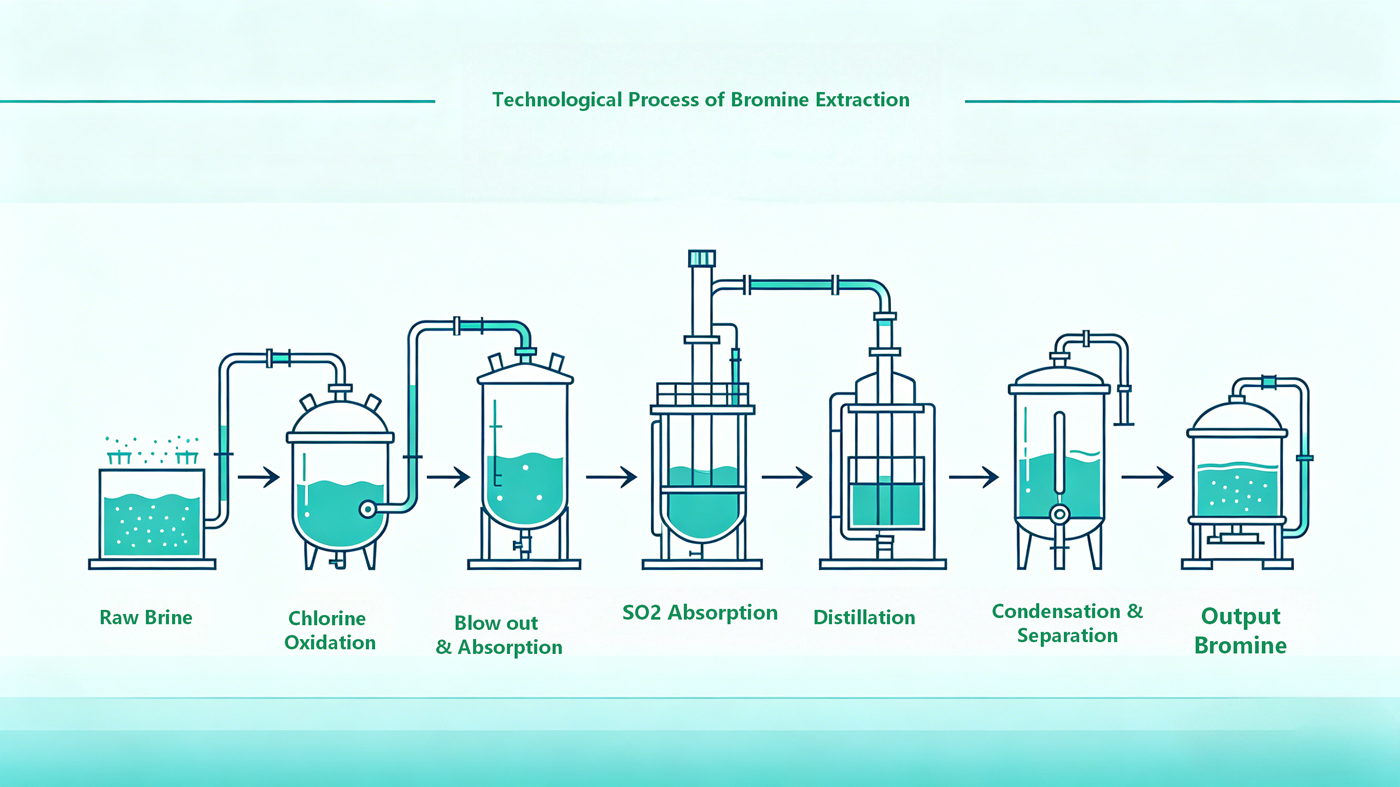
Complete process flow
Advantages of core equipment
·High extraction rate
·Low consumption of steam and electricity
·Mature and reliable technology, suitable for long-term continuous operation
·Strong adaptability to medium to high concentrations of bromine containing brine
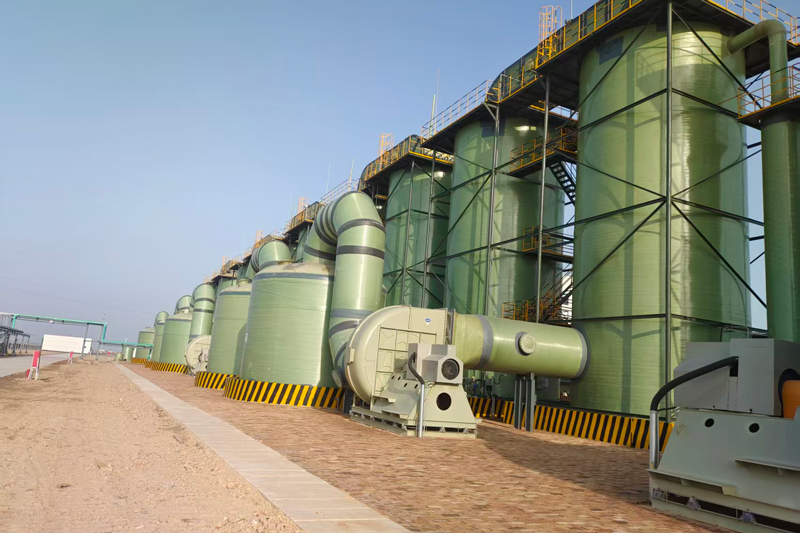
·Reasonable equipment layout for easy automatic control and maintenance
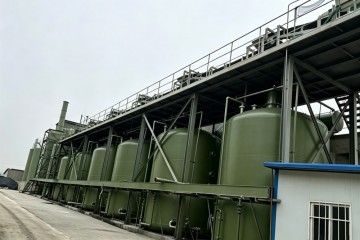
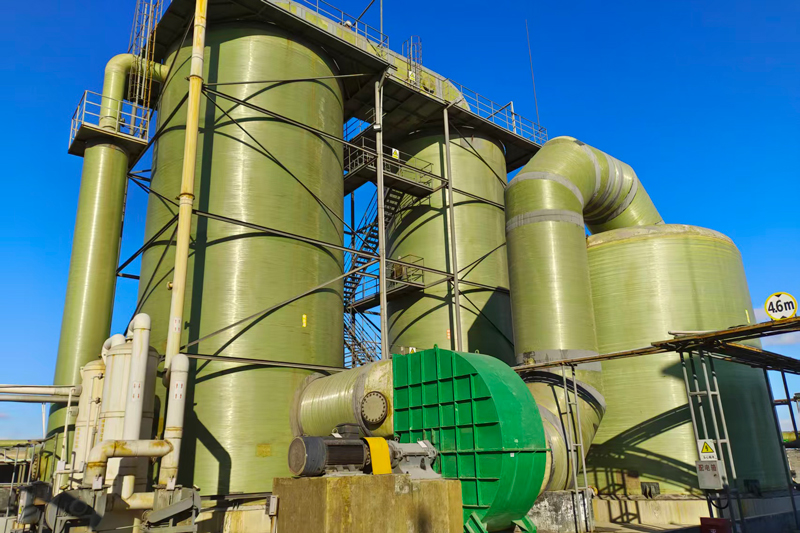
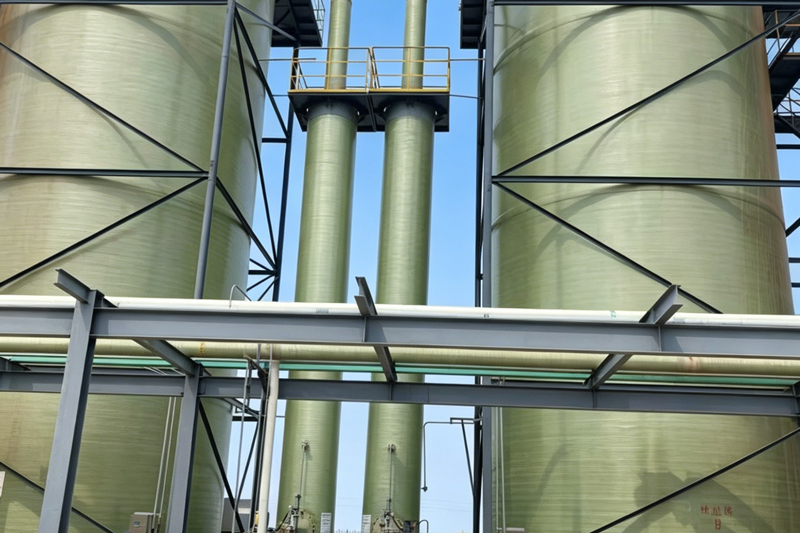
·Corrosion resistant fiberglass structure ensures long service life